





India claims Kashmir status FO
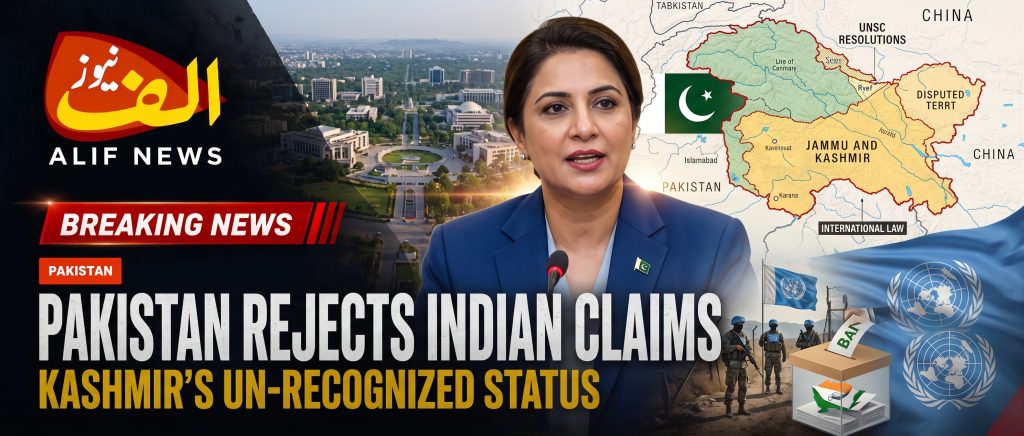
Cartography and geopolitics collided this week in a sharp diplomatic exchange between Islamabad and New Delhi. Following recent assertions by India’s Ministry of External Affairs over official border depictions, Pakistan’s Foreign Office (FO) responded with a pointed rebuttal: India’s unilateral claims and domestic maps have “no bearing” on the internationally recognized disputed status of Jammu and Kashmir.
The pushback from Foreign Office spokesperson Ambassador Sajjad Haider Khan goes beyond standard diplomatic rhetoric. It tackles an ongoing push to normalize territorial annexation through ink, administrative decrees, and political posturing. India claims Kashmir status FO.
The Spark: Global Map Projections and Disputed Lines
The latest war of words grew out of an unexpected debate at the United Nations. When the UN General Assembly voted to back a resolution adopting the Equal Earth cartographic projection—a map intended to reflect landmass proportions more accurately than the centuries-old Mercator projection—India supported the measure, but added a caveat.
New Delhi’s Ministry of External Affairs maintained that global resolutions cannot dictate boundary depictions, insisting that any international map must show the entirety of Jammu, Kashmir, and Ladakh under India’s borders according to its domestic cartography.
Islamabad’s reaction was immediate and uncompromising.
According to the Foreign Office, drawing a border on a national map does not magically erase international law. The legal reality on the world stage remains anchored to one standard: United Nations Security Council resolutions, where Jammu and Kashmir is formally designated as disputed territory.

Ink vs. International Law
For decades, both nations have traded statements across international forums, but Islamabad’s latest message centered on a few critical pillars:
- The Authority of UN Cartography: The FO made clear that the only cartographic representation holding international legal standing is the official United Nations map, which designates the entire region as disputed territory. Domestic redrawing holds zero jurisdiction outside New Delhi’s offices.
- The Irrelevance of Unilateral Acts: Since the revocation of Article 370 in August 2019, India has attempted to treat the dispute as a settled internal administrative matter. The FO reiterated that administrative reclassifications and military deployments cannot override multilateral treaties.
- The Core Issue of Self-Determination: The Foreign Office underscored that a dispute concerning millions of people cannot be settled until the Kashmiri population exercises their right to a free, impartial plebiscite held under UN auspices.
Beyond Diplomatic Cable Traffic
Why does this matter right now?
Diplomatic pushbacks are often dismissed as routine exchanges, but words carry real strategic weight when regional tensions simmer. The region has experienced persistent friction, ranging from diplomatic demarches over international envoys visiting the valley to military operational readiness along the Line of Control.
When states attempt to cement disputed borders through school textbooks, global trade agreements, or cartographic mandates, calling out the legal status quo prevents unilateral moves from slipping into accepted global consensus.
By reminding the international community that the Kashmir dispute remains active on the UN Security Council’s agenda, Pakistan is signaling that narrative adjustments do not equal legal settlement.
The Road Ahead
You can rebrand administrative boundaries, issue updated atlases, and lobby foreign embassies, but the human and geopolitical core of Jammu and Kashmir remains unresolved.
Until Islamabad and New Delhi engage in genuine dialogue that prioritizes the aspirations of the Kashmiri people over unilateral declarations, drawing lines on paper will remain an exercise in bureaucratic wishful thinking. As the Foreign Office made clear this week, international facts cannot be erased with domestic ink.