




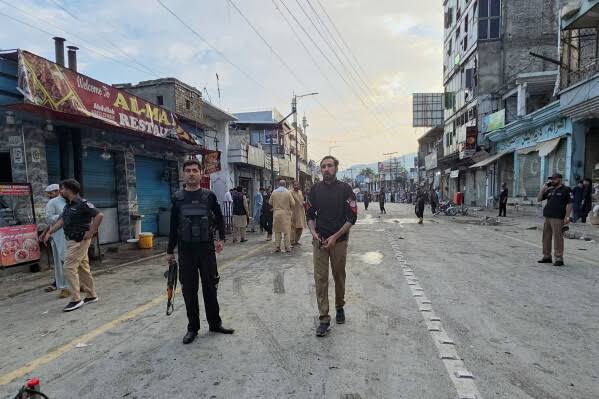
The attack occurred on August 2 near the Kabal Police Station, where residents and police personnel had gathered for an anti-militancy demonstration. Reuters later reported that the death toll had risen to 17, while dozens of people were injured. The Tehreek-e-Taliban Pakistan, commonly known as the TTP, claimed responsibility for the attack.
The incident has once again placed Pakistan’s growing security crisis at the centre of national debate.
Protest for Peace Becomes Target of Violence
The gathering in Kabal was reportedly organised by local people concerned about the return of militant activity in the Swat Valley.
Participants were calling on the authorities to restore peace and take stronger action against armed groups. The fact that a peace demonstration itself was attacked has increased anxiety among residents who remember the severe instability experienced by Swat in previous years.
The attack was particularly significant because it occurred close to a police facility and involved both civilians and members of law enforcement.
Pakistan’s Leadership Orders Investigation
President Asif Ali Zardari and Prime Minister Shehbaz Sharif strongly condemned the Swat attack.
The president ordered a comprehensive investigation and called for those responsible to be brought to justice. The prime minister directed the authorities to provide proper medical treatment to people injured in the incident.
The statements reflect the government’s determination to respond, but the public will be watching closely to see whether the investigation produces arrests and prevents similar attacks.
Condemnations alone may not restore public confidence. Communities affected by militant violence increasingly expect visible security improvements, better intelligence coordination and faster action against suspected networks.
A Wider Pattern of Militant Violence
The Swat incident was not an isolated security event.
Only days earlier, militants attacked a police post in Hangu district, killing five police officers and injuring several others. The attack highlighted the pressure faced by law-enforcement personnel across Khyber Pakhtunkhwa.
A separate explosive device also targeted a police vehicle near Peshawar on August 2, causing injuries and damaging the vehicle.
Together, these incidents suggest that police officers and public security facilities remain major targets. They also demonstrate how militant violence can affect several districts within a short period.
Why Swat Matters
Swat is internationally known for its natural beauty and tourism industry, but the region has also experienced periods of militant influence and military operations.
A return of insecurity could have consequences beyond the immediate loss of life. Fear of attacks may affect tourism, local businesses, education, transportation and investment.
Hotels, restaurants, tour operators, drivers and small traders all depend on visitors feeling safe. Even a limited rise in violence can damage the region’s economic recovery by discouraging domestic and international tourism.
The security of Swat is therefore not only a law-and-order issue. It is also connected to employment, development and the economic future of local communities.
Pakistan-Afghanistan Tensions Add to the Crisis
Pakistan has repeatedly accused Afghanistan’s Taliban-led government of allowing TTP members to operate from Afghan territory.
Afghan authorities have denied these allegations. This disagreement has become a major source of tension between Islamabad and Kabul as Pakistan experiences increased militant violence in its border regions.
The dispute makes Pakistan’s security challenge more complicated.
Domestic police and military operations may disrupt militant networks inside Pakistan, but a lasting solution may also require effective border management, intelligence cooperation and sustained diplomatic engagement with Afghanistan.
Without regional cooperation, militant groups may continue to take advantage of difficult terrain and political tensions along the border.
The Challenge Facing the Government
Pakistan’s government now faces pressure to respond on several fronts.
It must protect vulnerable communities, improve intelligence-sharing among security institutions and strengthen security around police facilities and public gatherings. Authorities must also prevent militant violence from damaging local economies and creating fear among residents.
At the same time, security operations must be carefully managed to protect civilians and maintain public trust.
Communities can provide valuable information about suspicious activities, but they are more likely to cooperate when they believe the state will protect them and respond effectively to their concerns.
Public Confidence Will Be the Real Test
The Swat attack has created another difficult moment for Pakistan’s security institutions.
The country has faced militancy before and has developed significant counterterrorism experience. However, the latest incidents show that armed groups can still exploit security gaps and target both police officers and ordinary citizens.
The government’s response will be judged by more than official statements.
People will look for credible investigations, stronger protection, improved coordination and long-term policies that address the conditions allowing militant organisations to return.
Conclusion
The attack in Swat is a warning that Pakistan’s security crisis requires urgent and coordinated action.
The victims were gathered around a demand shared across the country: the right to live peacefully without fear of militant violence.
Pakistan’s leadership must now turn its promises into measurable action. Restoring confidence will require accountability, regional diplomacy, effective policing and sustained support for communities living in the areas most affected by terrorism.