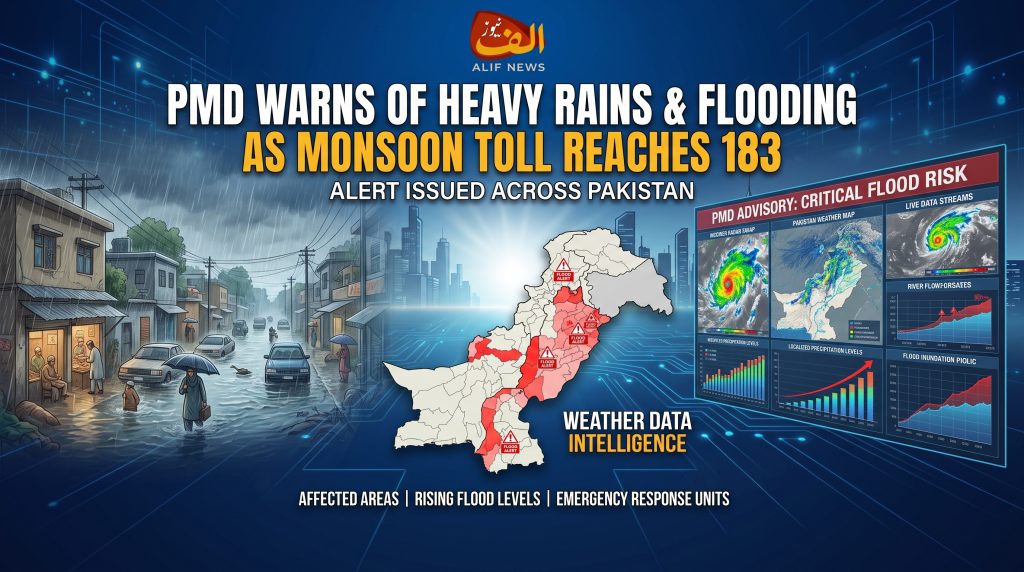






ISLAMABAD — August 4, 2026: Pakistan is facing a deepening weather emergency as the latest available figures from the National Disaster Management Authority show that at least 126 people have died in rain-related incidents since June 26.
Authorities warned that heavy to very heavy rainfall could trigger flash floods, overflowing hill torrents, urban flooding and widespread waterlogging across several regions of the country.
Punjab and Khyber Pakhtunkhwa Report the Highest Losses
According to the latest publicly reported NDMA figures, 55 deaths were recorded in Khyber Pakhtunkhwa, while 47 people were killed in Punjab.
In the most recent reporting period, three people died in Sindh’s Tharparkar district and one person was killed in a rain-related incident in Rawalpindi. At least 16 people were also injured across Sindh, Punjab and Khyber Pakhtunkhwa.
The rising death toll shows that Pakistan’s monsoon crisis is no longer limited to flooded roads and disrupted transport. Weak buildings, collapsing roofs, lightning, fast-moving water and damaged infrastructure are creating life-threatening conditions for communities across the country.
Flash-Flood Risk Across Several Provinces
The NDMA warned that a strong monsoon system could produce intense rainfall across Punjab, central and eastern Sindh and eastern Balochistan.
Flash flooding was considered possible in the hill torrents of Dera Ghazi Khan, streams in Khyber Pakhtunkhwa and parts of northern Balochistan.
Urban flooding and waterlogging were also forecast in several Punjab cities, including:
- Gujranwala
- Lahore
- Rawalpindi
- Faisalabad
- Sialkot
- Sargodha
- Jhelum
- Narowal
- Okara
- Sahiwal
Areas of Sindh facing waterlogging risks included Hyderabad, Badin, Jamshoro, Khairpur, Mirpurkhas, Sanghar, Thatta, Tharparkar and Umerkot.
Lahore House Collapse Highlights Structural Danger
The crisis became particularly visible after monsoon rain contributed to the collapse of a multistorey house in Lahore’s Baghbanpura neighbourhood.
At least nine members of one family were killed, while several others were injured. Rescue teams worked for nearly 24 hours to recover people from the rubble. Residents said continuing rain had weakened the poorly maintained structure before it collapsed.
The tragedy highlights a major but often overlooked risk during the monsoon season: unsafe housing.
In older and densely populated neighbourhoods, rainwater can weaken roofs and walls that already suffer from poor construction or limited maintenance. Even when floodwater does not enter a home, prolonged rainfall can make a damaged building dangerous.
Pakistan’s Cities Remain Vulnerable
Urban flooding is becoming one of Pakistan’s most serious seasonal challenges.
Drainage systems in many cities struggle to handle intense rainfall. Roads can become submerged within a short period, trapping vehicles, disrupting businesses and delaying ambulances and rescue teams.
Rapid construction has also reduced the amount of open land capable of absorbing rainwater. Encroachments around natural waterways and blocked drains can further increase the danger.
The problem is therefore not caused by rain alone. Weak planning, insufficient drainage maintenance and uncontrolled construction can turn a strong monsoon spell into a major urban disaster.
Rural Communities Face Different Risks
In rural areas, the crisis can damage homes, crops, livestock, roads and irrigation systems.
Flooded farmland may reduce crop production and harm the income of families that depend on agriculture. Damage to local roads can also prevent residents from reaching hospitals, schools and markets.
The economic effects may continue after the water recedes. Families can face repair costs, food shortages, lost employment and increased prices for essential goods.
Climate Crisis Increases the Pressure
Pakistan has experienced increasingly unpredictable weather, including heatwaves, droughts and extreme monsoon rainfall.
The country remains highly vulnerable to climate-related disasters despite contributing a relatively small share of global greenhouse-gas emissions.
Pakistan’s catastrophic floods of 2022 killed more than 1,700 people, affected tens of millions and caused extensive damage to homes, agriculture and infrastructure. Authorities have warned that severe weather conditions cannot be treated as rare or isolated events.
What Authorities Must Do Now
The immediate priority is to issue timely warnings and move people away from dangerous buildings, low-lying neighbourhoods and flood-prone waterways.
Provincial and local authorities also need to:
- Clear drainage channels before intense rainfall
- Inspect weak residential and commercial buildings
- Keep rescue teams and medical facilities ready
- Restrict travel through flooded roads and waterways
- Provide shelters for displaced families
- Protect food supplies, livestock and agricultural land
Public warnings must be clear, localised and delivered through television, mobile alerts, radio and community networks.
Public Safety Advice
Residents in affected areas should follow official weather and disaster-management alerts.
People should avoid crossing flooded roads, streams or underpasses because water depth and current strength can be difficult to judge. Families living in damaged buildings should seek assistance rather than waiting for visible signs of collapse.
Electrical equipment and exposed wiring can also become dangerous in flooded areas.
Conclusion
Pakistan’s monsoon emergency is becoming a national test of disaster preparedness.
The reported death toll of 126 is not only a weather statistic. It represents families, homes and communities affected by preventable and unpredictable dangers.
The government must combine emergency rescue work with long-term investment in drainage, safer housing, early-warning systems and climate-resilient infrastructure.
Without those improvements, every intense monsoon spell risks becoming another national crisis.