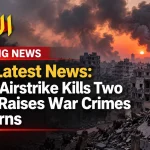





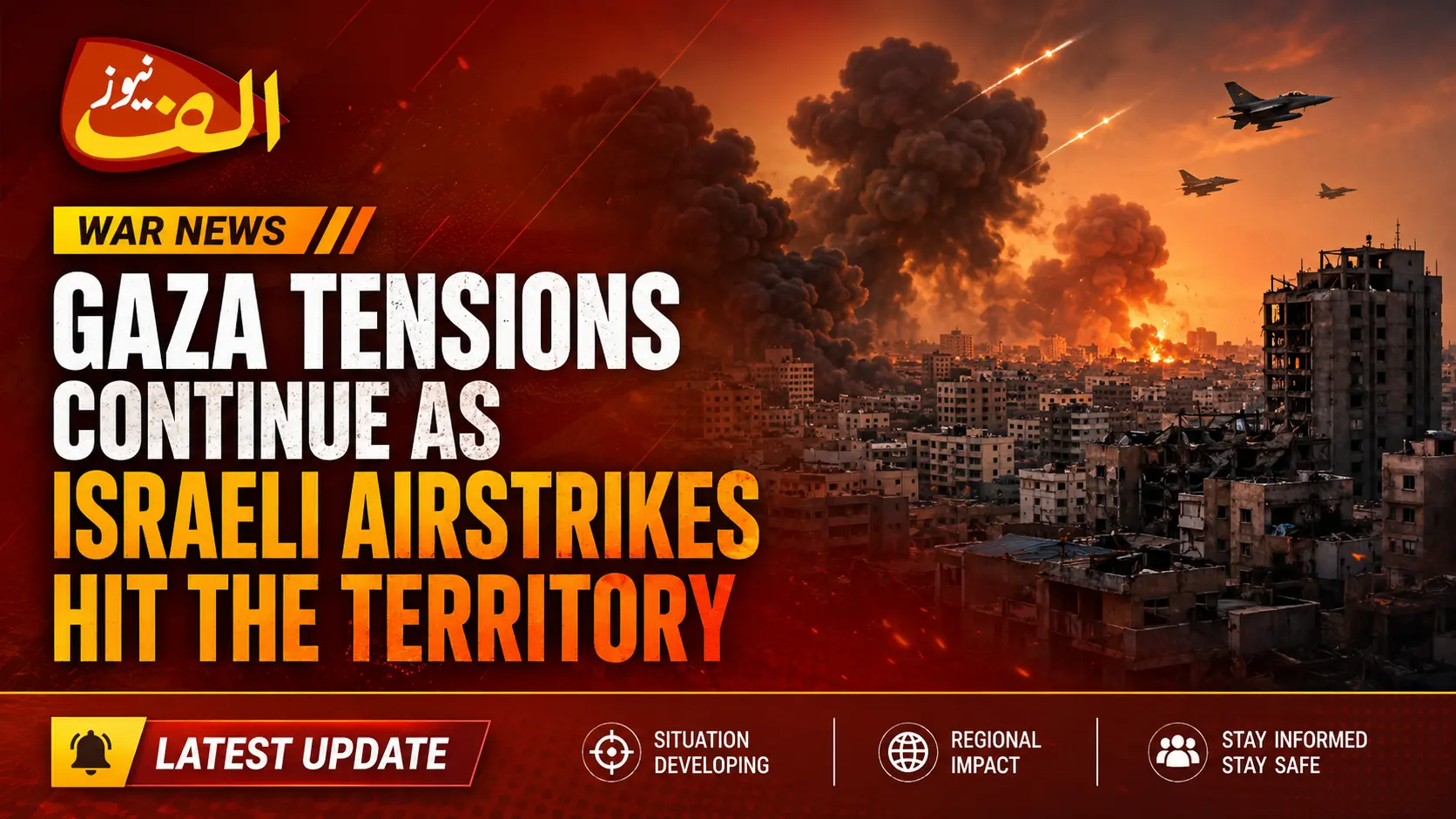
Tensions in the Gaza Strip remain high as renewed Israeli airstrikes and military activity continue despite ongoing international efforts to preserve the ceasefire and prevent another major escalation in the region.
Recent strikes have again raised concerns about civilian safety, the future of the ceasefire agreement, and whether diplomatic efforts can deliver lasting stability for Palestinians living in Gaza.
Israeli Airstrikes Hit Gaza
On August 23, Israeli airstrikes hit areas in central Gaza, including Zawayda and the Nuseirat refugee camp. Palestinian health officials reported casualties and injuries following the strikes. Israel said the escalation followed launches of balloons, drones and kites from Gaza toward Israeli territory.
The Israeli military said it was examining some of the reported incidents and maintained that its continuing operations were intended to prevent attacks by Hamas and other armed groups in Gaza.
The latest incidents demonstrate how fragile the security situation remains even after the U.S.-backed ceasefire that came into effect in October 2025.
Further Strikes Reported Across Gaza
Additional Israeli airstrikes and gunfire were reported on August 24 in locations including Khan Younis, Bureij and Deir Al-Balah.
Palestinian health officials reported further civilian casualties. The Israeli military said one strike in Deir Al-Balah targeted a Hamas militant and stated more broadly that its operations were aimed at preventing imminent attacks by Hamas and other militant groups.
Israel also issued evacuation warnings before carrying out some strikes, according to residents and reports from the territory.
These developments have renewed fears that continuing military operations could undermine attempts to stabilize Gaza.
Gaza Ceasefire Remains Under Pressure
A U.S.-backed ceasefire introduced in October 2025 significantly reduced major fighting, but it has not completely stopped military operations and casualties.
Hamas has accused Israel of violating the ceasefire, while Israel argues that military action remains necessary to respond to security threats and prevent militant groups from rebuilding their capabilities.
The disagreement over security, disarmament and Israeli military withdrawal remains one of the biggest obstacles to a lasting settlement.
International Concern Over Continued Gaza Attacks
International concern over the Gaza situation has also increased.
Nikolay Mladenov, the official overseeing the U.S.-backed Gaza ceasefire initiative, told the United Nations Security Council that continued Israeli attacks could threaten progress toward implementing the peace plan.
According to the Associated Press, the current proposal includes the disarmament of Hamas and a transition toward civilian administration in Gaza. Israel has maintained that its forces will not fully withdraw until Hamas has surrendered its weapons.
The differences highlight the challenges facing mediators trying to convert the ceasefire into a permanent political agreement.
Humanitarian Situation Remains a Major Concern
Years of conflict have placed enormous pressure on Gaza’s civilian population and infrastructure.
Continuing military operations create additional uncertainty for families already dealing with displacement, shortages and damaged infrastructure.
Humanitarian organizations and international officials continue to call for civilian protection, reliable humanitarian access and renewed diplomatic efforts aimed at preventing further escalation.
What Happens Next in Gaza?
The coming period will be critical for the future of the Gaza ceasefire.
A lasting reduction in violence will depend on whether Israel, Hamas, the United States and regional mediators can resolve disagreements surrounding disarmament, security arrangements, governance and military withdrawal.
Without progress on these issues, isolated strikes and security incidents could continue to threaten the ceasefire.
However, diplomatic efforts remain active, and international officials continue to push both sides toward implementation of a broader peace framework.
The international community is closely watching Gaza as renewed tensions once again demonstrate how quickly the situation can deteriorate.
For Palestinians living in Gaza, the central hope remains an end to continued violence and a political solution capable of delivering long-term peace, security and reconstruction.