




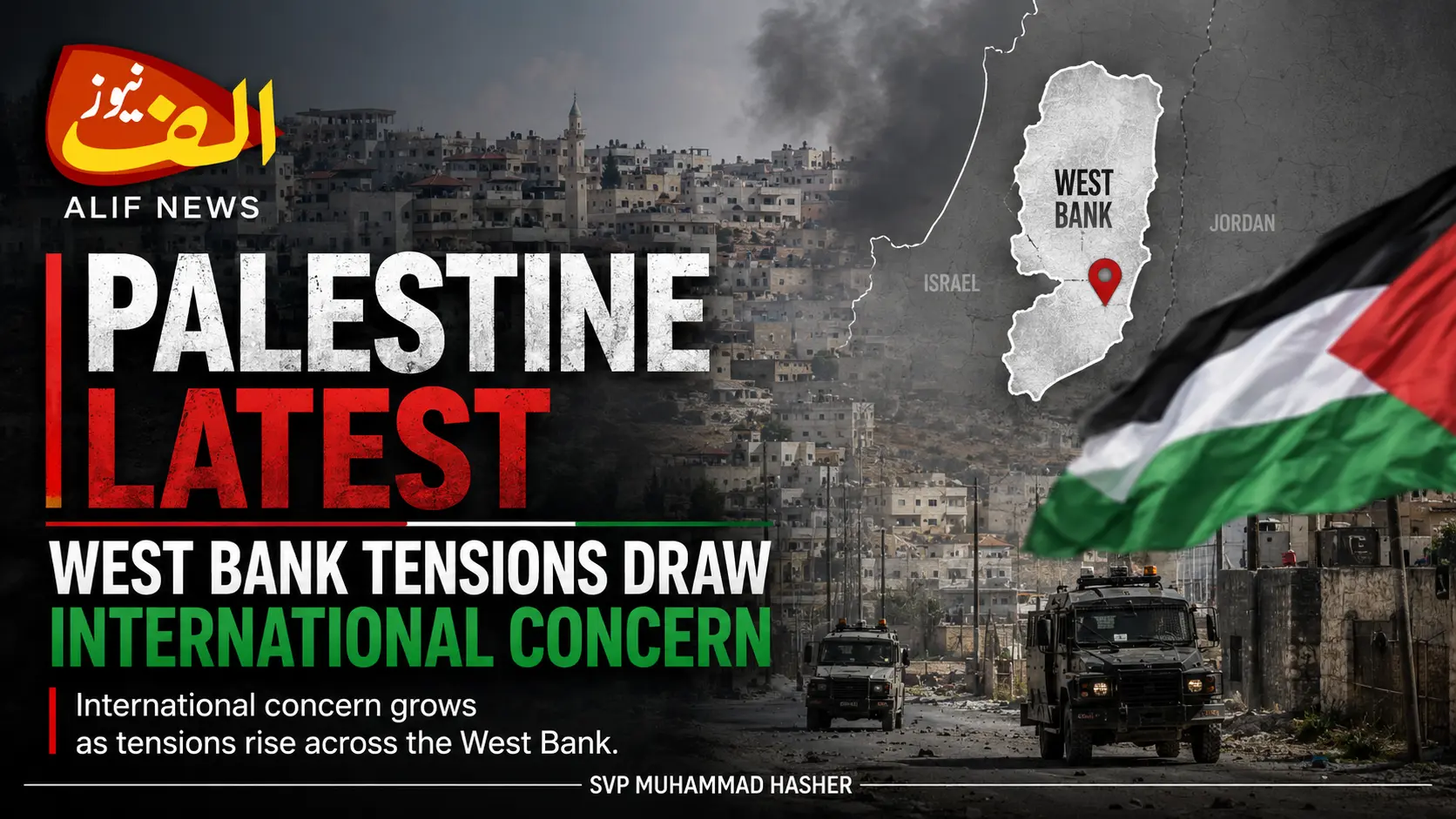
Tensions in the Israeli-occupied West Bank are once again attracting growing international attention as violence, confrontations and disputes involving Palestinian communities and Israeli settlers continue to raise serious concerns.
Recent developments have prompted calls from international political and religious leaders for authorities to prevent further escalation and protect civilians.
The situation comes at a sensitive time for the wider Middle East, with developments in Gaza and other regional conflicts continuing to influence Israeli-Palestinian relations.
West Bank Tensions Continue to Rise
Recent weeks have seen several incidents across the West Bank involving Palestinians, Israeli settlers and Israeli security forces.
One of the areas receiving significant attention has been Qusra, a Palestinian community in the northern West Bank.
Reports in August said groups of Israeli settlers surrounded several Palestinian homes in Qusra over multiple nights. Utilities to some homes were disrupted during the confrontation, while Israeli troops were deployed in an attempt to control the situation.
The Israeli military described the siege as illegal and declared the area a closed military zone. The incidents also prompted unusually strong criticism from U.S. officials.
US Senators Raise Concern Over West Bank Violence
International political pressure has also increased.
On August 26, a large group of Democratic members of the United States Senate sent a letter to Israeli Prime Minister Benjamin Netanyahu calling for stronger action against escalating settler violence in the West Bank.
The senators urged Israeli authorities to investigate attacks and ensure that security forces intervene when civilians are targeted.
They also raised concerns regarding Palestinian arrests and called for investigations involving American citizens who have died in incidents in the West Bank in recent years.
The move represents increasing concern among some American lawmakers about conditions in the Palestinian territories.
Pope Calls for End to Violence
Religious leaders have also spoken about the situation.
Pope Leo called for an end to violence against Palestinians in the West Bank on August 16 following reports of increasing attacks and the situation in Qusra.
His comments added to wider international appeals for restraint and protection of civilians.
Rights groups have warned that continuing confrontations and disputes over land could further destabilize Palestinian communities and make future political negotiations more difficult.
Recent Incidents Increase Concern
Further incidents have increased fears that tensions could spread.
On August 21, a 17-year-old Palestinian was killed during a confrontation involving Israeli settlers near Hebron, according to reporting based on Palestinian and Israeli accounts.
Rights organizations have also reported an increase in settler-related incidents in different parts of the West Bank during 2026.
Separately, violence involving Israeli security forces and Palestinians has continued in several areas, including around Nablus and Jericho.
These developments have added to international concern over whether the situation could escalate further.
Why the West Bank Is Important
The West Bank remains one of the central issues in the decades-long Israeli-Palestinian conflict.
Palestinians seek the West Bank, East Jerusalem and Gaza as territories for a future independent Palestinian state.
Israeli settlements have expanded across parts of the West Bank over several decades. Their status remains one of the most contentious issues in Israeli-Palestinian diplomacy.
The international community has repeatedly emphasized that a lasting political solution will require agreement on borders, security, settlements and Palestinian statehood.
Gaza Conflict Adds to Regional Pressure
Developments in the West Bank are also closely connected to wider tensions surrounding Gaza.
Although diplomatic initiatives have sought to prevent a return to large-scale fighting in Gaza, military incidents have continued and disagreements remain over implementation of peace arrangements.
International officials have warned that renewed escalation could undermine attempts to achieve a longer-term political settlement.
As a result, instability in either Gaza or the West Bank can quickly affect the broader Israeli-Palestinian situation.
International Community Calls for Restraint
Governments, international organizations and religious leaders are increasingly calling for de-escalation.
Their concerns focus on civilian safety, settler violence, Israeli security operations, Palestinian rights and the possibility that continuing instability could make a future peace agreement more difficult.
The latest pressure from American lawmakers is particularly significant because the United States remains one of Israel’s most important international allies.
International attention is therefore likely to remain focused on how Israeli authorities respond to violence and whether measures are taken to prevent further confrontations.
What Could Happen Next?
The situation in the West Bank remains highly sensitive and can change rapidly.
Diplomatic pressure may increase if violence continues, while further confrontations could create additional difficulties for existing Gaza peace initiatives and broader efforts toward an Israeli-Palestinian political settlement.
For Palestinians living in the West Bank, concerns about security, movement, settlements and access to land remain central issues.
For Israel, officials continue to cite security threats and the need to prevent attacks against Israeli civilians.
Finding a sustainable solution will therefore require both immediate efforts to reduce violence and longer-term political negotiations addressing the underlying Israeli-Palestinian conflict.
Alif News will continue to monitor developments in Palestine, Gaza and the West Bank and provide readers with verified updates on major regional and international developments.