




Gujranwala Crime Rate 2026, For many people in Gujranwala, public safety is not something measured only through police reports. It is felt in ordinary moments: a shopkeeper closing late at night, a student riding home on a motorcycle, a family parking outside a busy market, or workers travelling before sunrise.
That is why recent figures showing a decline in several major crimes across the Gujranwala region are significant. They suggest an improvement in the broader law-and-order picture during 2026, although recent incidents and reports from individual localities show that the experience is not the same everywhere.
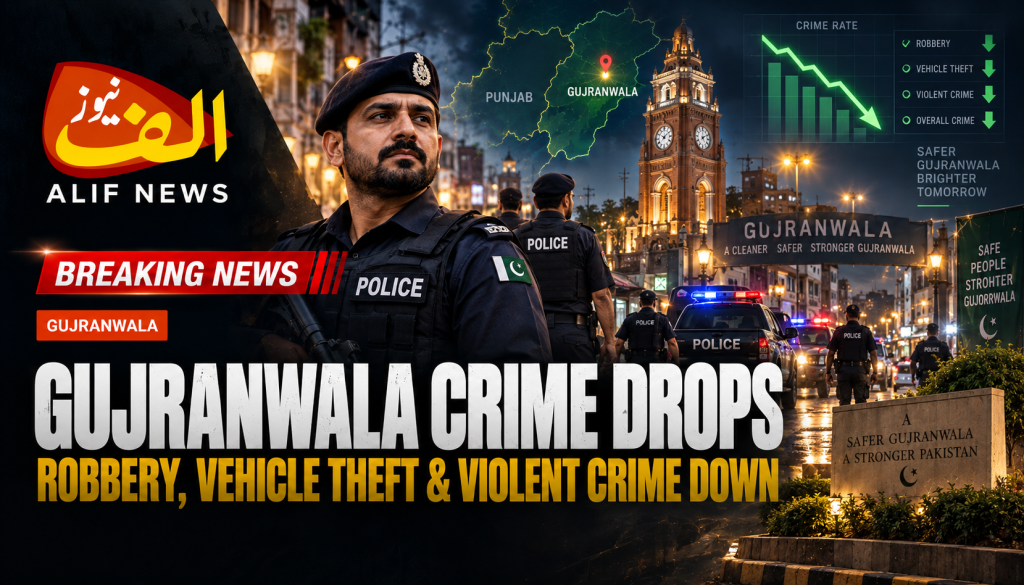
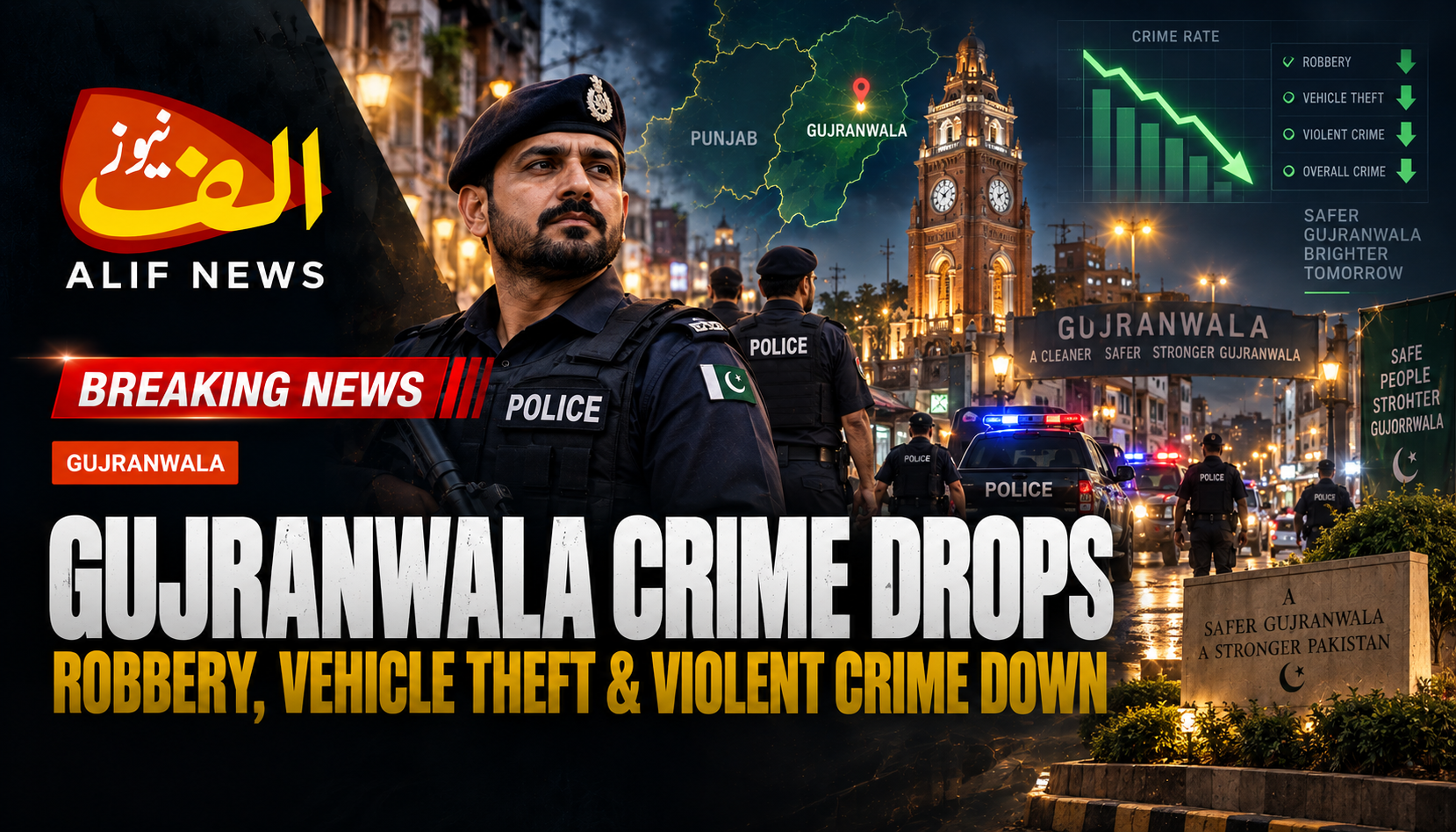
According to figures presented during a regional police command conference and reported by Dunya News, crimes against property in the Gujranwala region fell by 47 percent between January and July 2026 compared with the same period in 2025. Crimes against persons were reported to have declined by 25 percent.
Those numbers provide encouraging signs, but they deserve a closer look.
Robbery and Dacoity Record Major Declines
Some of the largest reported reductions involved crimes that directly affect residents on roads, in markets and around residential areas.
Regional figures showed dacoity cases falling by around 89 percent, while robbery cases were reported to be down by approximately 79 percent during the January-to-July comparison. Kidnapping for ransom was reported to have declined by 86 percent.
Earlier figures covering the first five months of 2026 showed a similar pattern. Dacoity cases fell from 65 in the comparable 2025 period to eight, while robbery cases declined from 7,438 to 1,685, according to another regional report.
For residents, these are not abstract categories.
A robbery can mean losing a phone, monthly salary, motorcycle or business cash. Beyond the financial loss, such incidents often change people’s routines. A person who has been robbed once may avoid certain streets, stop travelling after dark or feel uncomfortable carrying valuables.
If the decline continues, the real benefit will be measured not just in police statistics but in whether people feel more confident going about their daily lives.
Vehicle Theft and Snatching Also Reported Lower
Vehicle crime is especially important in Gujranwala because motorcycles are a basic form of transport for thousands of workers, students and small-business owners.
The January-to-July regional comparison reported a 90 percent decline in car snatching and a 75 percent fall in car theft. Motorcycle theft was reported to have decreased by roughly 56 percent, while motorcycle snatching and related cases also showed substantial reductions.
For someone who depends on a motorcycle to reach work every morning, losing it can affect far more than transportation. It can interrupt employment, education and family responsibilities.
That makes reductions in vehicle-related crime particularly meaningful for middle- and lower-income households.
Serious Violent Crime Shows Improvement
Reported crimes against individuals also decreased across the region.
The January-to-July figures showed crimes against persons dropping from 12,959 cases in the comparable 2025 period to 9,695 in 2026. Murder cases were reported to be down by approximately 37 percent, while several other serious offence categories also showed reductions.
Earlier five-month figures had put the decline in murder cases at around 43 percent, from 263 cases to 149.
The broader trend is encouraging, but crime statistics should always be read in context.
A regional decline does not mean crime has disappeared, and it does not necessarily mean every town, village or neighbourhood has experienced the same level of improvement.
Some Local Areas Still Report Security Problems
That difference becomes clear when looking beyond the regional totals.
A September report from Tatlay Aali described concerns about increasing theft and other offences in an area where only 25 police officials were reportedly responsible for around 80 villages and a population exceeding 100,000. Residents also raised concerns about theft of agricultural equipment, solar equipment, batteries and other property.
Recent individual incidents have also continued to appear in local reporting.
On September 14, Dunya News reported that two alleged robbers stopped a motorcyclist and took Rs87,000 and a mobile phone, with police registering a case.
Reports from Rahwali and Daska in September have similarly described motorcycle theft, mobile-phone theft and street robbery cases.
These incidents do not cancel out the regional decline. Instead, they show why citywide or regional figures need to be combined with neighbourhood-level reporting.
Why Reporting and Transparency Matter
One issue that deserves continued attention is how crime data is collected and communicated.
A reduction in registered cases can reflect better policing, stronger surveillance, arrests of repeat offenders and preventive operations. But public confidence also depends on victims being willing and able to report crime.
If residents feel that registering a complaint is difficult or unlikely to produce results, some incidents may never enter official statistics.
That makes accessible police stations, digital reporting systems, responsive investigation teams and regular publication of crime figures important.
Punjab Police maintains a public crime-statistics section sourced from its Investigation Branch, providing a useful official reference point for broader crime categories and public information.
Greater district- and police-station-level transparency would make it easier for residents to understand where improvement is occurring and where additional attention is needed.
Safer Streets Require More Than Police Operations
Police operations are only one part of local safety.
Street lighting, functioning CCTV cameras, secure parking, responsive emergency services and cooperation between residents and law enforcement can all reduce opportunities for crime.
Businesses can help by preserving CCTV footage when incidents occur. Residents can report suspicious activity instead of relying on rumours circulating through social media. Police, in turn, need to make sure reporting produces timely follow-up.
This relationship matters because public safety works best when citizens trust that reporting a crime is worthwhile.
A Positive Trend That Still Needs Monitoring
The Gujranwala crime rate 2026 figures provide genuine reasons for cautious optimism.
Reported declines in robbery, dacoity, vehicle theft and several violent-crime categories suggest that the region has made measurable progress compared with 2025.
At the same time, incidents reported during September and concerns from areas such as Tatlay Aali show that improvement is uneven and that some communities continue to face real security problems.
For residents, the most convincing evidence will ultimately be what they experience outside their homes.
A safer Gujranwala is not simply one where a yearly chart shows fewer cases. It is one where a shopkeeper can close at night without fear, a student can travel home safely, families feel secure in their neighbourhoods and victims trust the system enough to report crime when it happens.
The latest figures suggest progress. The challenge now is making sure that progress reaches every part of the region and continues beyond a single reporting period.
Sources and External Links
For the published article, retain these reputable external references: Punjab Police’s official Crime Statistics page Punjab Police Crime Statistics, Dunya News‘ January-to-July Gujranwala regional crime report Gujranwala regional crime report — August 2026, and its first-five-month comparison Gujranwala crime comparison — June 2026.