



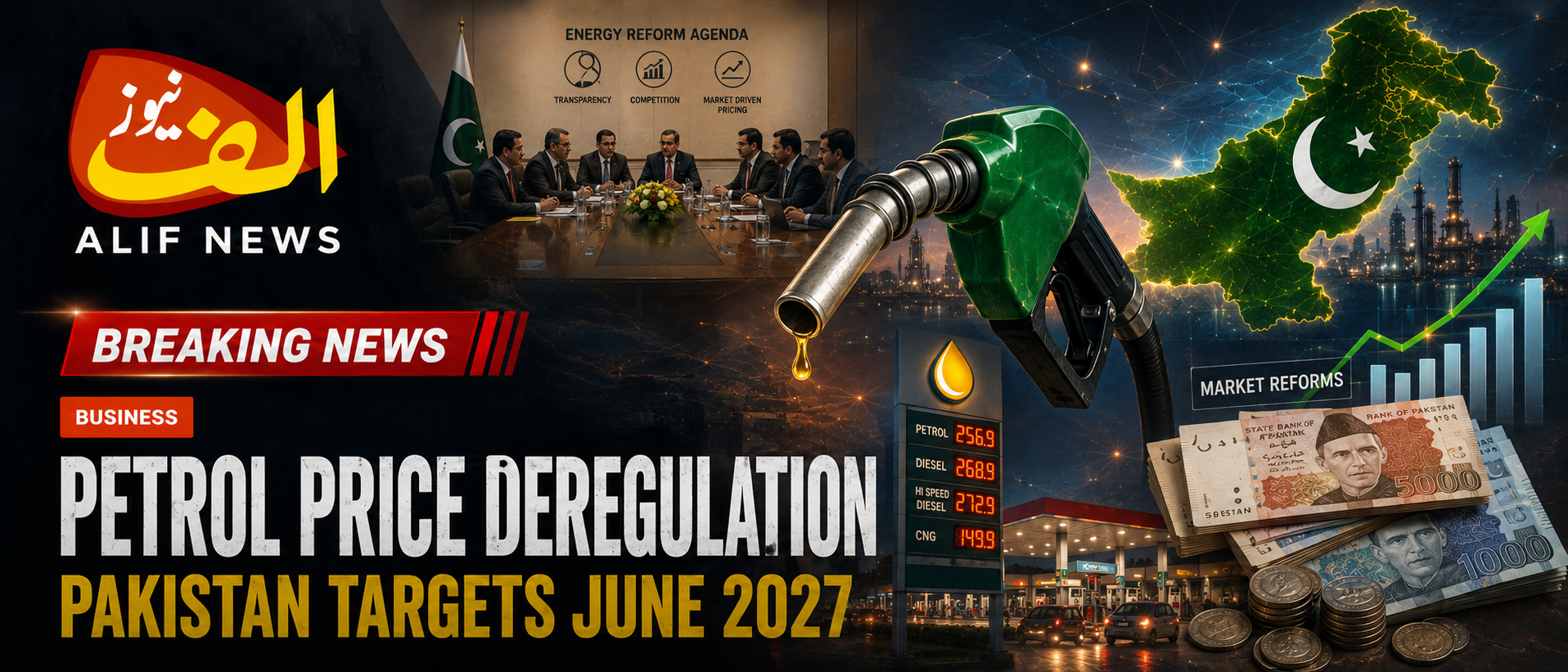
Pakistan Plans Petrol Price Deregulation by June 2027, So Pakistan is preparing for another major change in the way petrol prices are determined, with the government setting June 2027 as a likely target for deregulating petrol pricing.
The proposal was discussed at the latest meeting of the Petroleum Pricing Committee, chaired by Federal Minister for Petroleum Ali Pervaiz Malik. According to the Petroleum Division, the idea is to move gradually toward a more competitive, market-based system while trying to protect consumers from sudden and excessive price swings.
For ordinary motorists, the word “deregulation” may sound technical. In simple terms, it could eventually mean that petrol prices are influenced more directly by competition, market conditions and the commercial decisions of fuel companies instead of relying entirely on the existing government-controlled pricing framework.
The government, however, has not yet announced that deregulation will happen immediately or that June 2027 is a final legally fixed deadline. The Petroleum Division described it as a likely target, and the committee’s recommendations are still expected to be submitted to the prime minister for consideration and approval.
Why Is Pakistan Changing Its Petrol Pricing System?
Pakistan’s fuel pricing system has already been going through major changes during 2026.
In July, the Petroleum Division held consultations with OGRA, refineries, oil marketing companies and industry bodies regarding a move toward more frequent petroleum price adjustments. The ministry described that reform as part of a broader effort to improve transparency, consumer protection and competition in the petroleum market.
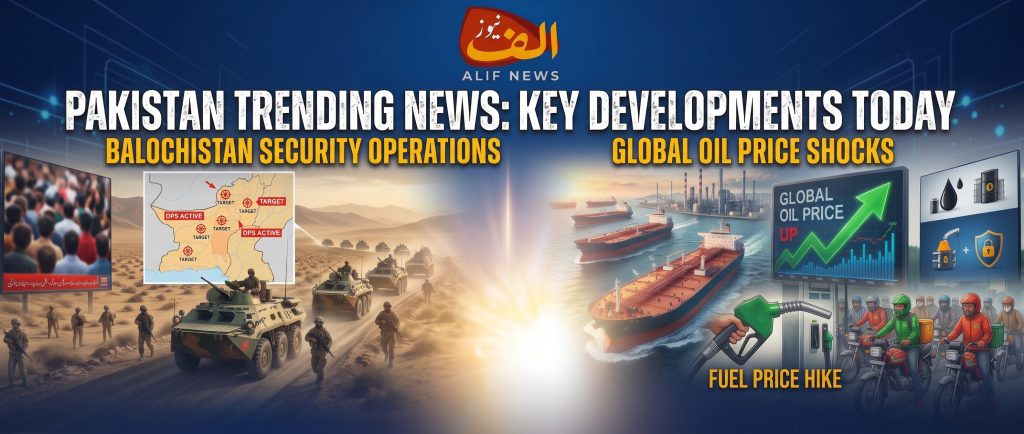
Fuel prices are especially sensitive because Pakistan imports a significant share of its petroleum requirements, leaving domestic costs exposed to international oil prices, freight expenses, exchange-rate movements, taxes and regional supply disruptions.
Recent volatility in the Middle East has added another layer of uncertainty to energy markets. Earlier Petroleum Pricing Committee discussions specifically referred to uncertainty around the Strait of Hormuz and the need to study international pricing practices.
The government appears to be trying to create a pricing system that can respond more quickly to market changes without exposing consumers to uncontrolled shocks.
What Does Petrol Deregulation Actually Mean?
Deregulation does not necessarily mean that every petrol station will suddenly be free to charge any amount it wants.
The exact rules have not yet been finalised.
What the government has confirmed is that it wants a gradual transition toward competitive market-based petrol pricing. The Petroleum Pricing Committee has also said the reform should improve transparency and predictability while protecting consumers from undue volatility.
This distinction is important.
A competitive market can potentially give fuel companies more flexibility, but an effective system would still need regulatory oversight, quality standards, supply requirements and safeguards against anti-competitive behaviour.
That is why OGRA remains a central part of the reform process.
OGRA Asked to Review Oil Marketing Companies
One significant part of the latest meeting concerned Pakistan’s oil marketing companies, commonly known as OMCs.
The Petroleum Pricing Committee directed OGRA to submit written recommendations on the consolidation and performance of existing OMCs, including their use of modern technology and industry best practices.
This could become an important part of deregulation.
If petrol pricing becomes more market-driven, competition between fuel suppliers may become more important. Regulators would therefore need to make sure the market remains competitive and that consumers are not harmed by weak competition or poor industry practices.
A deregulated system without sufficient oversight could create problems, while stronger competition could potentially encourage companies to improve services and efficiency.
The final structure will determine which direction the market takes.
What About Diesel Prices?
The government’s current plan focuses specifically on petrol deregulation.
High-Speed Diesel is being treated somewhat differently.
The Petroleum Pricing Committee approved guiding principles for rules-based intervention in diesel pricing during emergencies. These rules are expected to include defined price-shock triggers and possible corrective measures.
That matters because diesel has a much wider economic impact than simply powering private vehicles.
Trucks, buses, agricultural machinery and commercial transport depend heavily on diesel. Sharp changes in diesel prices can therefore affect transport costs, food supply chains and the movement of goods across Pakistan.
The government appears to be taking a more cautious approach before moving diesel toward a similar deregulated structure.
IFEM Pricing System Is Also Being Revised
Another technical but important part of the reform involves the Inland Freight Equalization Margin, or IFEM.
The committee reviewed the existing IFEM mechanism and agreed on a revised method for calculating it. OGRA also said the audit for fiscal year 2025-26 should be completed by the end of calendar year 2026.
IFEM plays a role in balancing transportation costs for petroleum products across different areas of Pakistan.
Without such mechanisms, consumers living far from ports or major fuel depots could potentially face significantly different transportation-related costs compared with consumers in other cities.
Changes to IFEM are therefore more than an accounting adjustment. They could influence how the future pricing system works across Pakistan’s different regions.
Government Prefers Fuel Reserves Over a Stabilisation Fund
The Petroleum Pricing Committee also reviewed the idea of creating a price stabilisation fund.
After studying different international models, the committee indicated that maintaining adequate fuel reserves may be more appropriate than establishing a stabilisation fund, particularly as the country moves toward eventual market deregulation.
Fuel reserves can become particularly important during international supply disruptions.
Pakistan has already experienced how quickly geopolitical tensions can affect oil markets. Having sufficient reserves may provide the country with a greater buffer during temporary supply problems, although reserves alone cannot fully protect consumers from long-term international price increases.
Could Petroleum Taxes Also Change?
Another major question is taxation.
A subcommittee headed by Naeem Ghauri is expected to meet the chairman of the Federal Board of Revenue to examine whether Pakistan’s petroleum taxation regime needs to be reviewed as market conditions change.
This could be one of the most important parts of the entire reform.
Consumers often focus on the international oil price, but the amount paid at a petrol pump also includes government taxes, levies and other pricing components.
Even if the underlying market becomes more competitive, taxes will continue to influence the final retail price unless the government changes the taxation structure as well.
No final tax changes have been announced as part of the current committee recommendations.
Reform Comes as Fuel Prices Remain Under Pressure
The deregulation discussion is happening at a sensitive time for Pakistani consumers.
On September 3, the government increased petrol by Rs2.29 per litre to Rs346.16, while High-Speed Diesel increased by Rs1.11 to Rs372.03 per litre.
The Petroleum Division has also continued issuing frequent fuel-price notifications, including another petroleum products notification dated September 4.
This means fuel prices are already changing much more frequently than many Pakistani consumers were used to in previous years.
For households, delivery workers, transport businesses and small companies, even relatively small changes can become noticeable when they accumulate over time.
Will Deregulation Make Petrol Cheaper?
At this stage, nobody can responsibly promise that deregulation will automatically make petrol cheaper.
That will depend on how the final system is designed, the level of competition between oil companies, global crude prices, the rupee exchange rate, taxes, freight costs and regulatory safeguards.
A competitive pricing system could potentially improve efficiency and transparency. On the other hand, international oil-market shocks could still push prices higher.
The government itself is framing the reform around predictability, market efficiency and consumer protection, rather than promising permanently lower petrol prices.
That is an important difference for consumers to understand.
What Happens Next?
The Petroleum Pricing Committee will now move its recommendations toward the next stage.
Its final report is expected to be submitted to Prime Minister Shehbaz Sharif for consideration and approval. If the proposal moves forward, the transition toward deregulation is expected to be gradual rather than immediate.
Between now and June 2027, several questions will need clear answers.
Pakistan Plans Petrol Price Deregulation by June 2027
The government will need to define how prices will be set, what role OGRA will play, how competition among oil marketing companies will be protected, what happens during emergencies, how fuel reserves will be maintained and whether petroleum taxes need reform.
For millions of Pakistanis, however, the biggest question will remain much simpler:
Will the new system make fuel pricing fairer, more transparent and more predictable?
Pakistan Plans Petrol Price Deregulation by June 2027, That answer will depend less on the word “deregulation” itself and more on how the new market is actually designed and regulated.
Pakistan is clearly moving toward a more market-oriented petroleum pricing system. The coming months will determine whether that reform can create genuine competition while still protecting consumers from sudden fuel-price shocks. Website Development Service.