




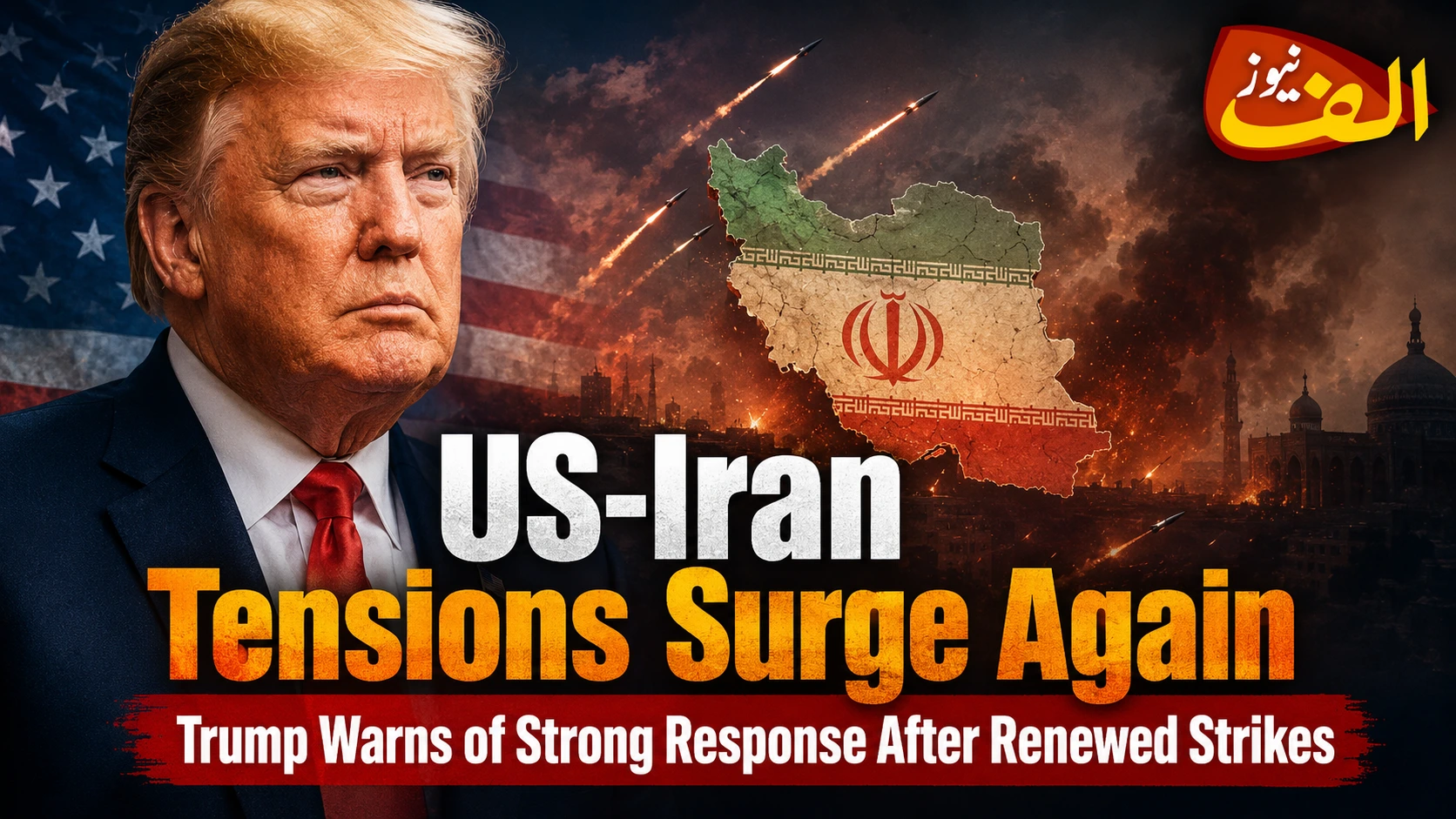
Tensions between the United States and Iran have risen sharply again after both countries exchanged direct military strikes for the first time in about a month, raising fresh concerns that the conflict could return to a more dangerous phase.
US Iran Tensions
U.S. President Donald Trump warned Iran that Washington could respond forcefully to further attacks, after Iranian forces launched missiles toward U.S. military positions in Jordan. The Iranian action came after American forces struck targets on Iran’s Larak Island in the strategically important Strait of Hormuz.
The renewed confrontation has attracted international attention because it ended a period in which military exchanges between Washington and Tehran had become less frequent and economic pressure, sanctions and disputes over shipping had increasingly dominated the conflict.
What Triggered the Latest US-Iran Escalation?
The latest round began when U.S. forces carried out strikes on Iranian military positions on Larak Island.
According to U.S. officials, American forces had observed personnel linked to Iran’s Islamic Revolutionary Guard Corps preparing equipment that Washington believed could be used to deploy sea mines in the Strait of Hormuz.
The United States described its operation as a limited action aimed at stopping an immediate threat to international shipping. Iran, however, strongly condemned the strike and promised a response.
Tehran later announced that it had launched missiles at U.S. military sites in Jordan. Jordanian authorities said several incoming missiles were intercepted.
The exchange represented the first direct military confrontation between Iran and the United States in roughly a month, ending a temporary lull in major attacks.
Trump Warns Iran of Stronger Action
Following Iran’s response, President Trump adopted a tough tone and warned that the United States could hit Iran hard if attacks against American forces continued.
Trump has continued to argue that Washington will defend U.S. personnel and its interests in the Middle East while increasing economic pressure on Tehran.
However, the possibility of further retaliation has created fears that a limited exchange could develop into another cycle of strikes and counter-strikes.
Both Washington and Tehran have indicated at different points that they do not want an uncontrolled expansion of the conflict, but their military actions show how quickly tensions can escalate when one side believes the other has crossed a red line.
Strait of Hormuz Remains at the Center of the Crisis
One of the most important factors in the dispute is the Strait of Hormuz.
The narrow waterway between Iran and Oman is one of the world’s most strategically important energy routes. Oil and gas shipments from major Gulf producers regularly pass through the area before reaching global markets.
Because of its importance to international energy supplies, any military confrontation around the Strait can quickly affect oil prices, shipping costs and global investor confidence.
The United States has accused Iran of threatening freedom of navigation and attempting to strengthen its control over shipping movements in the area. Tehran, meanwhile, views its position in the Strait as a major source of strategic leverage against Washington.
The latest U.S. operation on Larak Island therefore carried significance beyond the immediate military targets involved. It once again placed the future of shipping through the Strait of Hormuz at the center of the confrontation.
Oil Markets React to Renewed Fighting
Global energy markets responded quickly to the renewed tensions.
Oil prices moved higher as investors considered the possibility that another escalation could disrupt production or transportation through the Gulf.
Following further U.S.-Iran hostilities, West Texas Intermediate crude moved above $90 per barrel, while Brent crude also climbed as markets priced in the risk of prolonged Middle East supply disruptions.
Higher energy prices are particularly concerning because the impact can spread well beyond the oil industry.
Expensive crude can increase transportation, manufacturing and electricity costs, potentially contributing to inflation in countries that rely heavily on imported energy.
The Strait of Hormuz therefore remains not just a military concern but an issue with major consequences for the global economy.
Military Confrontation Continues After Month-Long Lull
The confrontation did not end with the initial exchange.
On September 1, U.S. forces launched another series of strikes against targets linked to Iran, according to U.S. Central Command and international news reports. Iran responded with additional attacks as the confrontation intensified.
The renewed military activity demonstrated how fragile the previous reduction in fighting had been.
Before the latest escalation, much of the pressure between the two countries had shifted toward sanctions, port restrictions, economic measures and negotiations over the Strait.
Now, military force has once again become a significant part of the confrontation.
Diplomacy Faces a Difficult Test
Despite the military threats, diplomacy has not disappeared entirely.
Iranian President Masoud Pezeshkian has publicly supported finding a diplomatic solution, while regional mediators have continued efforts to prevent the confrontation from expanding.
The problem is that major disagreements remain between Tehran and Washington.
The United States wants broader commitments relating to security in the Strait of Hormuz and Iran’s nuclear activities, while Tehran continues to demand relief from economic pressure and sanctions.
Repeated military exchanges also make negotiations more difficult because each attack reduces trust and creates political pressure for retaliation.
Analysts therefore warn that without a sustainable agreement, temporary periods of calm may continue to be interrupted by new confrontations.
Growing Political Pressure Inside the United States
The conflict also has domestic political consequences for President Trump.
A Reuters/Ipsos poll published on September 4 found that only about one-quarter of Americans surveyed believed the Iran war was worthwhile, showing the political challenge facing the administration as the United States approaches its midterm elections.
Energy prices are another concern.
Continued instability in the Middle East has contributed to higher fuel costs, creating pressure on households, businesses and transportation networks. That means decisions about Iran could increasingly influence not only foreign policy but also domestic economic and political debates in the United States.
What Happens Next?
Much will depend on whether Washington and Tehran choose retaliation or restraint.
Further attacks on U.S. military facilities could lead Washington to expand its operations against Iranian targets. At the same time, additional American strikes could prompt Iran to target U.S. positions or allied interests elsewhere in the Middle East.
That creates a dangerous cycle in which even a relatively limited military incident could trigger a broader regional confrontation.
For international markets, governments and civilians across the region, preventing another major escalation remains extremely important.
The renewed exchange of strikes has shown that the U.S.-Iran conflict remains highly unpredictable. After nearly a month of reduced direct military activity, the latest confrontation has once again demonstrated how quickly tensions surrounding Iran, American forces and the Strait of Hormuz can return to the center of global attention.
For now, the world will be watching both Washington and Tehran closely to see whether their next moves lead toward another round of escalation—or reopen the door to diplomacy.seo services in pakistan