




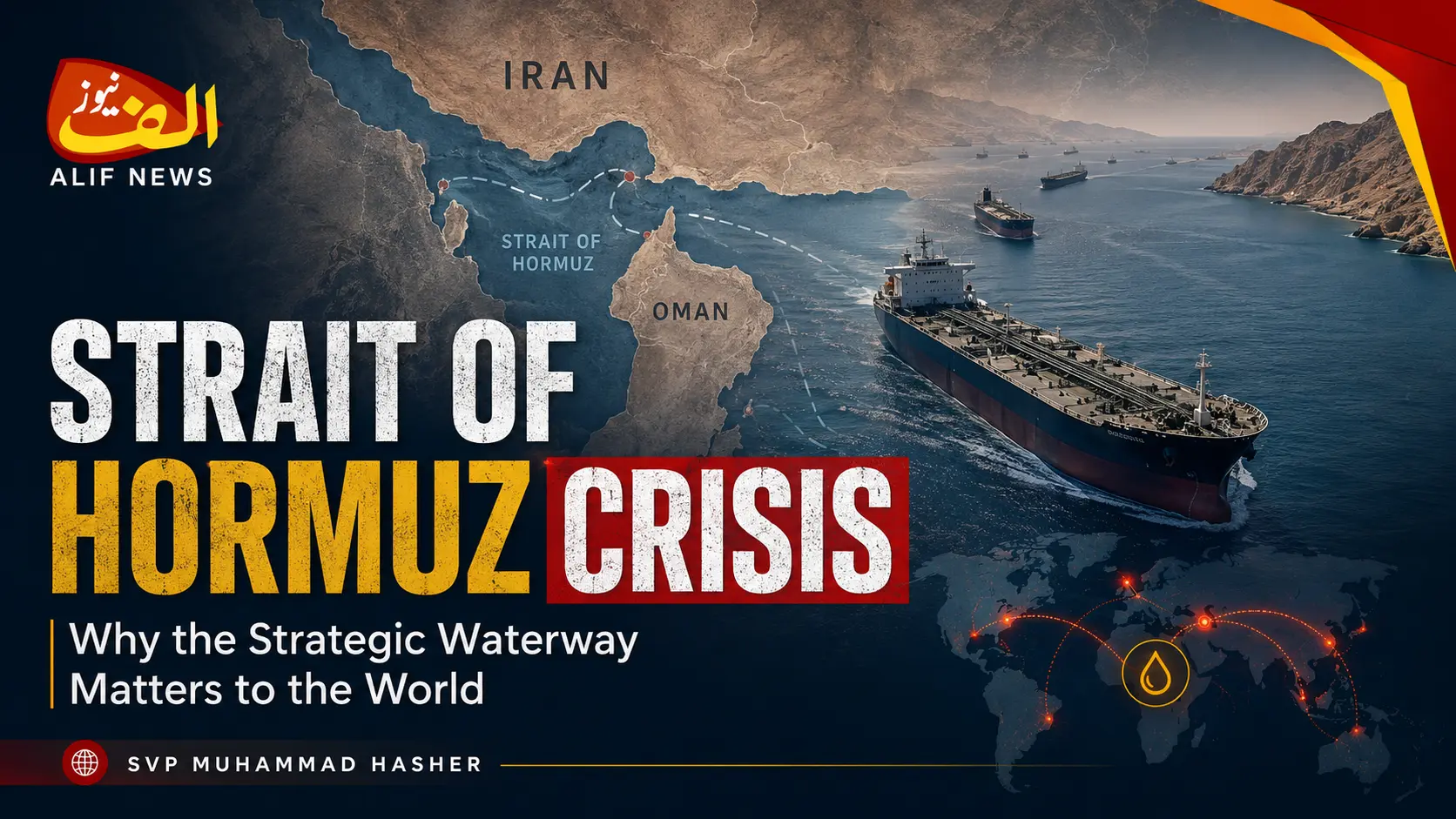
The Strait of Hormuz Crisis has once again placed one of the world’s most important maritime routes at the centre of international attention. Located between Iran and Oman, the Strait of Hormuz connects the Persian Gulf with the Gulf of Oman and the wider Arabian Sea.
Strait of Hormuz Crisis
Although geographically narrow, the waterway carries enormous economic and strategic importance. Oil tankers, liquefied natural gas carriers and other commercial vessels normally use the route to transport energy supplies from major Gulf producers to markets around the world.
The latest tensions involving Iran have therefore made the Strait of Hormuz much more than a regional issue. Disruption there can affect global energy prices, shipping costs, businesses and consumers thousands of kilometres away.
Why Is the Strait of Hormuz So Important?
The Strait of Hormuz is one of the world’s most important oil transit chokepoints.
According to the U.S. Energy Information Administration, approximately 20.9 million barrels per day of oil and petroleum liquids passed through the Strait of Hormuz during the first half of 2025. That volume was equivalent to roughly 20% of global petroleum liquids consumption and around one-quarter of internationally traded maritime oil.
This explains why any serious disruption in the area can immediately attract international attention.
Major oil and gas producers in the Persian Gulf depend heavily on secure maritime access through the strait. Energy shipments moving toward Asian and other international markets commonly pass through this narrow corridor.
Where Is the Strait of Hormuz?
The Strait of Hormuz lies between Iran to the north and Oman to the south.
It connects the Persian Gulf with the Gulf of Oman and Arabian Sea, providing a crucial maritime gateway between energy-producing Gulf states and international shipping routes.
Its geographical position gives the strait exceptional strategic importance. Unlike ordinary shipping routes, replacing its capacity is extremely difficult.
Several pipelines can bypass the strait, particularly infrastructure operated through Saudi Arabia and the United Arab Emirates, but their combined spare capacity is only sufficient to replace part of the normal oil flow through Hormuz.
What Is Happening in the Strait of Hormuz?
The current crisis has severely disrupted normal commercial movement through the waterway.
Latest shipping data reported on August 28 showed only seven visible commodity vessel transits through the strait on Thursday, compared with 17 the previous day and below the recent 10-day average of 15.
Shipping figures can change because some vessels may operate without publicly visible tracking signals, but the numbers demonstrate how far traffic remains from normal conditions.
At the same time, diplomatic efforts are continuing.
Iran has been discussing conditions for restoring more normal navigation, while negotiations with Oman have focused on arrangements for maritime traffic through the waterway.
Qatar has also been involved in diplomatic efforts aimed at reducing tensions and protecting freedom of navigation.
Iran and Oman’s Role in the Crisis
Iran and Oman occupy opposite sides of this strategically important route, making both countries central to any lasting solution.
Recent negotiations between Tehran and Muscat have considered arrangements for managing shipping corridors through Iranian and Omani waters.
However, several political and security issues remain unresolved, meaning negotiations over the future operation of the Strait of Hormuz remain extremely important for regional and global markets.
A stable agreement could help restore greater confidence among shipping companies and energy traders.
Why Does the Strait Matter for Global Oil Prices?
Oil markets depend heavily on stable transportation.
Even when enough oil is being produced globally, disruption to major shipping routes can make transporting that oil more expensive and difficult.
When uncertainty increases around the Strait of Hormuz, shipping companies may face greater operating costs while energy traders begin pricing geopolitical risk into international oil markets.
This can contribute to volatility in crude oil prices.
The impact does not remain limited to oil-producing nations. Higher energy costs can eventually influence transportation, manufacturing, electricity generation and consumer prices in many countries.
Asia Is Especially Important
Asian economies are among the biggest destinations for Gulf energy exports.
Countries with large industrial sectors and significant energy demand depend heavily on imported oil and gas. Any prolonged disruption around the Strait of Hormuz could therefore create supply concerns across Asian markets.
This makes the security of the strait an international economic issue rather than simply a dispute involving Iran and neighbouring states.
Why Alternative Routes Cannot Fully Replace Hormuz
Some Gulf countries have invested in pipelines and ports designed to reduce dependence on the Strait of Hormuz.
Saudi Arabia has infrastructure capable of transporting oil toward the Red Sea, while the United Arab Emirates operates a pipeline allowing some crude exports to reach the port of Fujairah outside the strait.
However, the U.S. Energy Information Administration estimates that existing Saudi and UAE pipelines provide around 4.7 million barrels per day of bypass capacity—far below the volume that normally moves through Hormuz.
This difference highlights why the strait remains difficult to replace.
Global Shipping Is Also Affected
The Strait of Hormuz is not important only because of crude oil.
Petroleum products, liquefied natural gas and other commercial cargoes also move through the region.
When shipping companies consider a route unsafe or unpredictable, insurance costs, delivery schedules and transportation planning can all be affected.
Gulf countries are now increasing investment in pipelines and alternative ports as governments seek greater resilience against future disruption to Hormuz.
What Could Happen Next?
Much will depend on diplomacy between Iran, Oman and other regional and international actors.
Restoring reliable commercial navigation could reduce pressure on energy markets and improve confidence among international shipping companies.
However, continued political disagreements could keep the Strait of Hormuz at the centre of global attention.
The situation is especially important because energy markets react not only to actual supply disruptions but also to expectations about what could happen next.
Conclusion
The Strait of Hormuz Crisis demonstrates how one relatively narrow waterway can influence the global economy.
Its importance comes from geography, energy dependence and the enormous volume of international trade that normally passes through it.
For Iran and Gulf countries, the strait is a critical regional route. For oil-importing nations, it is a vital part of global energy security.
As diplomatic negotiations continue, governments, energy companies and financial markets will closely watch every development surrounding the Strait of Hormuz.
A stable and secure waterway could help ease pressure on international markets, while prolonged disruption could continue affecting oil supplies, shipping and the broader global economy.