




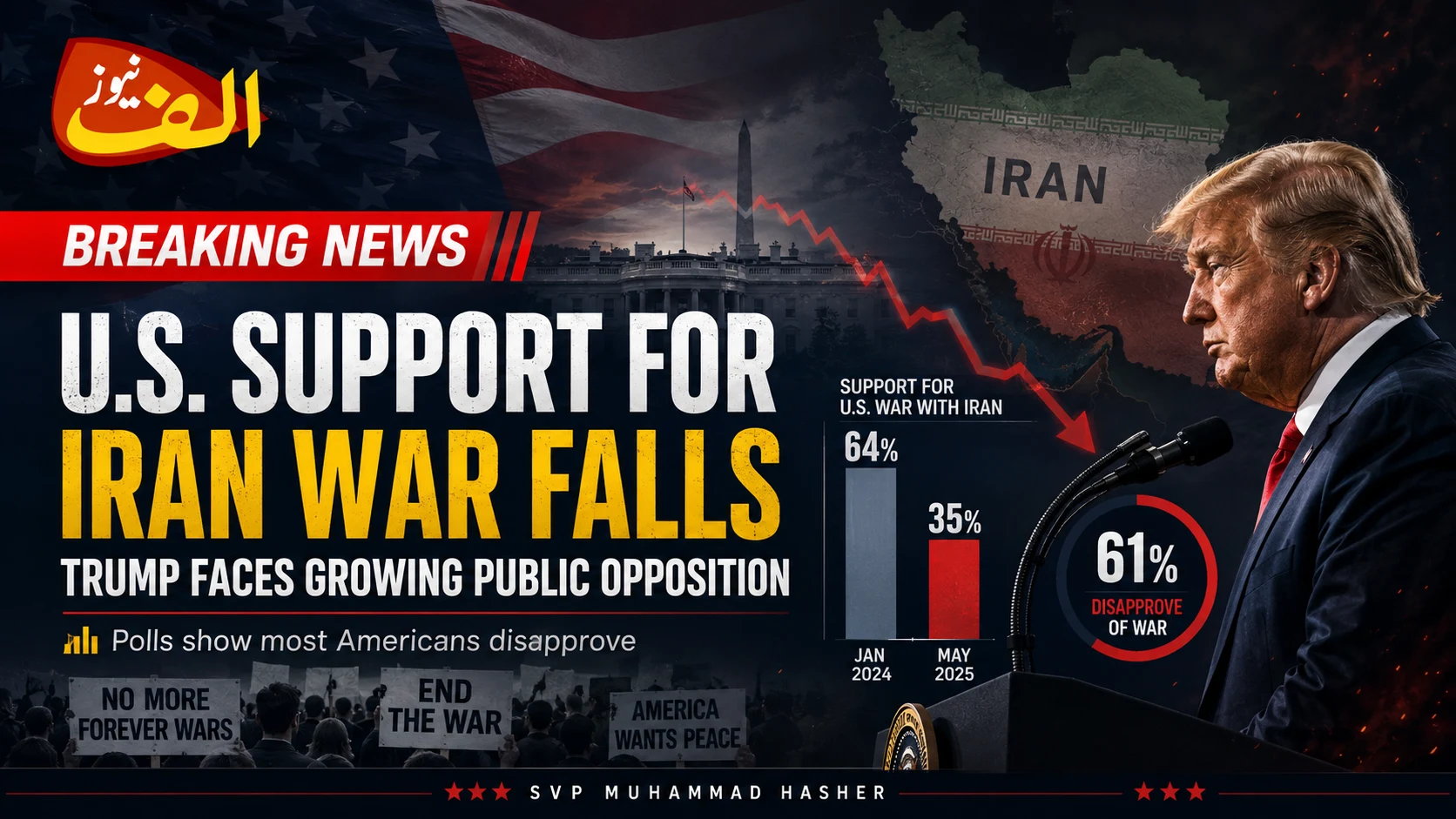
Recent polling shows declining American support for the ongoing war with Iran, creating a growing political challenge for U.S. President Donald Trump as the conflict reaches the six-month mark.
A Reuters/Ipsos poll released this week found that only 31% of Americans support U.S. military action against Iran, down from 37% in March. President Trump’s overall approval rating stood at 33%, matching the lowest level recorded during his current presidency.
The findings suggest that public concerns over the duration of the conflict, rising energy prices and its broader economic impact are becoming increasingly important issues in the United States.
American Support for Iran War Declines
The Reuters/Ipsos survey found that support for the Iran war has fallen since the early stages of the conflict.
Only 31% of respondents said they supported U.S. military action against Iran. Support has also weakened among Republicans, although a majority of Republican respondents continue to back the military campaign.
Republican support stood at approximately 69%, compared with 77% earlier in the conflict.
The shift is significant because President Trump has traditionally received strong support from Republican voters on national security and foreign policy.
Most Americans Expect a Long Conflict
One of the biggest concerns reflected in recent polling is how long the Iran war could continue.
The Reuters/Ipsos poll found that approximately 83% of Americans expect the conflict to last for a long time.
The war reached its six-month point on August 28, despite earlier expectations from the Trump administration that the campaign could be relatively short. Trump has recently indicated that he is not in a rush to reach an agreement with Tehran, while his administration has increased economic pressure on Iran.
The prolonged conflict has therefore become an increasingly important domestic political issue.
AP-NORC Poll Also Shows Growing Opposition
Reuters/Ipsos is not the only recent survey showing declining enthusiasm for the conflict.
An AP-NORC poll published in late July found that roughly two-thirds of Americans believed the Iran war had not been worth fighting.
The same poll showed that approval of Trump’s handling of Iran had fallen to around 28%, while only about two in ten Americans supported continuing military action.
While different polling organizations use different questions and methodologies, the surveys point toward the same broader trend: American public support for continued military involvement is under pressure.
Rising Gas Prices Add Political Pressure
The economic consequences of the Iran conflict are also affecting public opinion.
Disruption surrounding the Strait of Hormuz, one of the world’s most important energy shipping routes, has contributed to higher oil and fuel prices.
Reuters reported that U.S. gasoline prices have climbed above $4 per gallon, roughly $1 higher than a year earlier. President Trump has been preparing discussions with refiners and fuel retailers as his administration looks for ways to reduce prices.
Higher fuel costs are particularly politically sensitive because they directly affect household budgets.
For many American voters, the Iran conflict is therefore no longer only a foreign-policy issue. It is also connected to inflation, transportation costs and everyday living expenses.
Trump Administration Increases Economic Pressure on Iran
As the military conflict continues, the Trump administration has increasingly turned toward economic pressure.
Washington has announced additional sanctions and warned governments and businesses against expanding economic relations with Tehran.
Iran has rejected the sanctions and continues to argue that pressure will not force it to accept U.S. demands.
At the same time, Qatar, Pakistan and Oman have been involved in diplomatic efforts aimed at reducing tensions and restoring more normal shipping through the Strait of Hormuz.
This combination of military, economic and diplomatic pressure shows how complicated the conflict has become after six months.
Iran War Could Become a Major Domestic Issue
The changing public mood could have significant consequences for the Trump administration.
With U.S. congressional midterm elections approaching, Republicans will be watching whether dissatisfaction with the war affects voters’ views on the economy and the administration’s overall performance.
Reuters reported that Trump’s approval remains at 33%, while independents have also shown weakening support for the administration.
However, public opinion remains divided along political lines. Republican voters remain considerably more supportive of the conflict than Democrats and independents.
This means the Iran war could increasingly become part of wider political debates over U.S. foreign policy, government spending and the cost of living.
What Happens Next?
Six months into the conflict, there is still considerable uncertainty over how and when the Iran war could end.
Iran continues to resist U.S. pressure, while Washington is combining sanctions with continued military and diplomatic options.
Meanwhile, regional countries are trying to establish channels that could eventually lead to negotiations.
The latest polling suggests that the Trump administration may also face increasing pressure at home to find a path toward ending the conflict.
Whether diplomacy succeeds or the confrontation continues could influence not only the future of Iran and the wider Middle East but also American domestic politics in the months ahead.
Alif News will continue to monitor the Iran conflict, U.S. policy and major developments across the Middle East.