




Savour Foods tax returns 2025-2026, For millions across Islamabad, Rawalpindi, Lahore, and beyond, Savour Foods is woven into everyday memories. It is the default stop after university exams, the predictable choice for family lunches, and a beloved fixture of Pakistan’s street-to-plate culinary identity.
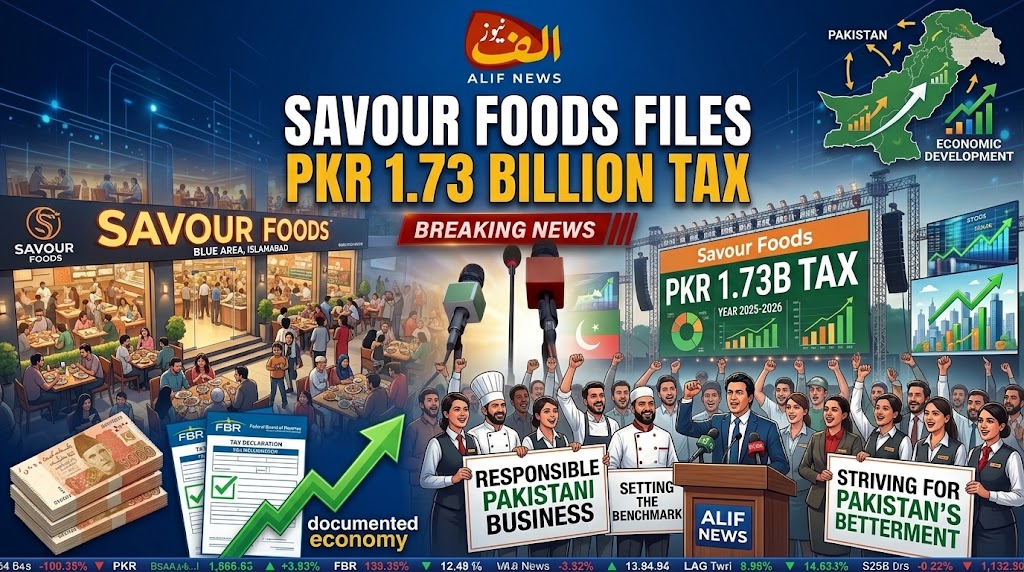
Yet, this week, the homegrown food giant is making headlines for something far outside its kitchen. In its latest financial filing for the 2025–2026 cycle, Savour Foods announced it has filed PKR 1.73 billion in tax returns.
In an economic climate where tax compliance and documentation are among the fiercest public policy debates in the country, a nine-figure tax return from a local food brand isn’t just an accounting update—it is a significant statement on corporate citizenship.
Walking the Talk: Responsibility Beyond the Kitchen
Pakistan’s food and hospitality industry is immense, employing millions and serving tens of millions daily. Yet, historically, large swathes of the retail and food-service sector have remained cash-heavy and stubbornly informal, frequently prompting regulatory audits and digital invoicing mandates.
Savour Foods tax returns 2025-2026
By putting forward a confirmed PKR 1.73 billion tax return, Savour Foods has demonstrated what genuine economic responsibility looks like in practice:
- Transparent Enterprise: Moving beyond informal retail practices into full fiscal compliance shows that volume-driven, local food enterprises can compete at scale while remaining documented.
- Direct Contribution to the National Exchequers: In a year where Pakistan’s fiscal consolidation depends heavily on widening domestic tax bases rather than relying on external borrowing, an indigenous brand contributing billions directly aids public finance.
- Corporate Accountability: It shifts the narrative from pure profit-making to actively participating in the nation’s economic machinery.
Every plate of pulao served at their counters has directly translated into measurable state revenue.
Setting the Standard for the Food Service Industry
The broader significance of this filing lies in the precedent it creates.
For years, compliant corporate sectors—such as telecommunications, banking, and multinational FMCGs—have shouldered a disproportionate tax burden, often arguing that the high-turnover retail and restaurant industries avoid their fair share.
Savour Foods’ PKR 1.73 billion figure proves that local culinary enterprises can thrive, expand across major metropolitan hubs, maintain high customer volume, and still meet their national tax obligations. It effectively removes the excuse that compliance hampers commercial growth.

For competing food chains, traditional dining houses, and fast-food franchises, this milestone sets a clear, competitive standard. Building a recognizable brand name is no longer just about footfall, flavor consistency, or expansion; it is about corporate maturity and fiscal responsibility.
Building Pride in Indigenous Brands
There is a distinct sense of pride in seeing a purely Pakistani brand—built from the ground up on local soil—stand tall as a Pillar of national economic development.
Economic revival in Pakistan will not happen solely through boardrooms and multilateral aid packages; it requires domestic businesses taking ownership of their role in national prosperity. When homegrown giants step up, pay their fair share, and operate with transparency, they build consumer trust that goes far deeper than menu pricing.
Savour Foods has proven that serving the nation isn’t just about feeding millions daily—it’s about fueling the economy that makes it all possible.