




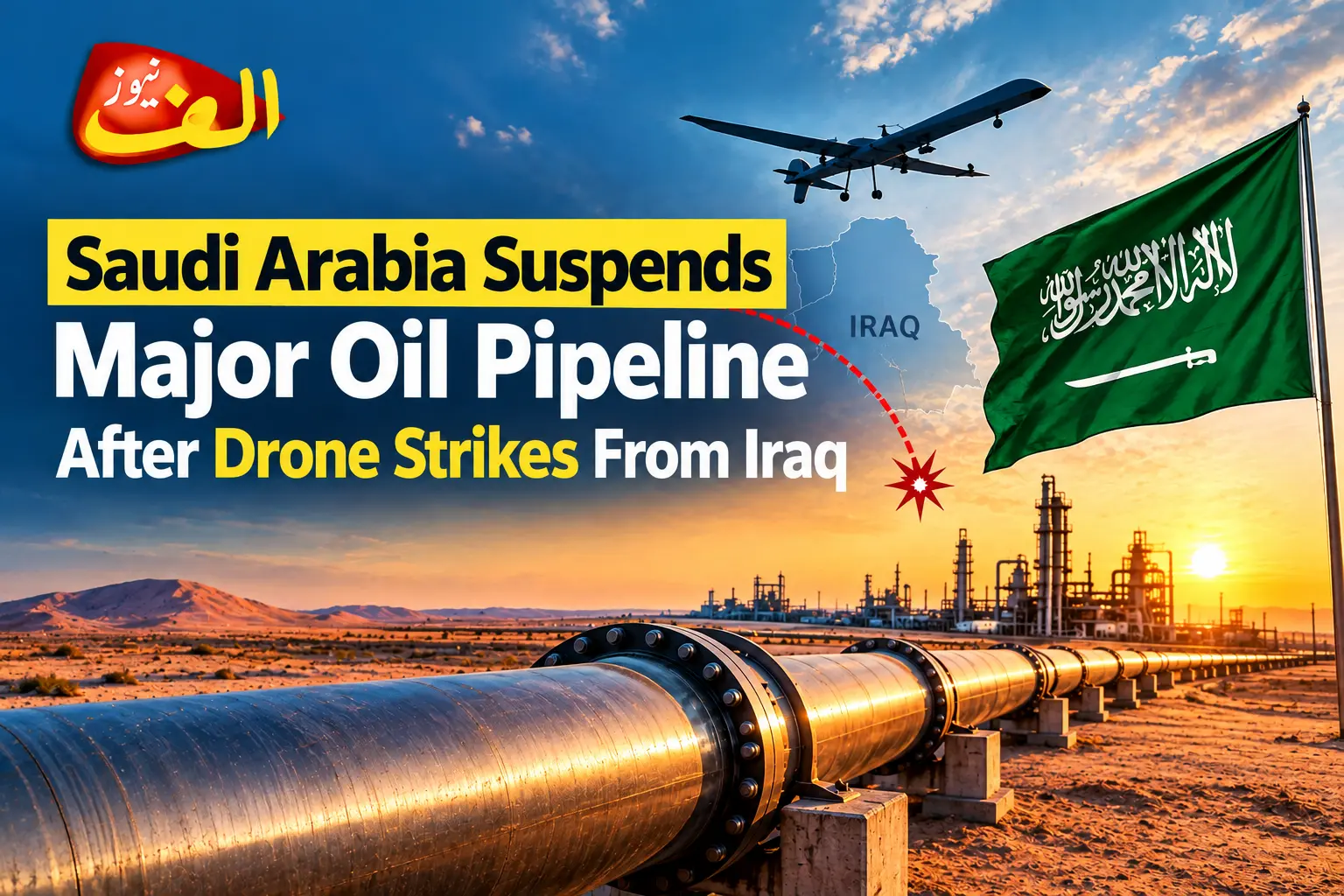
Saudi Arabia has temporarily suspended operations on its strategically important East-West oil pipeline after several drones targeted the infrastructure in the Riyadh and Madinah regions. Saudi authorities said the drones were launched from Iraqi territory, while Iraq has condemned the incident and launched an investigation.
Saudi Arabia oil pipeline attack
The attack represents a significant development in the already tense Middle East security situation, particularly because the East-West pipeline has become increasingly important for Saudi oil exports amid disruptions around major regional shipping routes.
What Happened to the Saudi Oil Pipeline?
According to Saudi Arabia’s Ministry of Foreign Affairs, several drones targeted sections of the East-West Pipeline in the Riyadh and Madinah regions. The attack caused injuries and physical damage, which authorities are currently assessing and repairing.
Saudi Arabia’s Energy Ministry subsequently ordered the temporary shutdown of the pipeline as a precaution. Emergency and specialist teams were deployed to secure the infrastructure and evaluate its condition.
The incident reportedly occurred on Thursday morning, with satellite imagery later showing signs of fire and damage along the pipeline’s route near Medina.
Why Is the East-West Pipeline So Important?
The East-West Pipeline, also known as Petroline, stretches for roughly 1,200 kilometres across Saudi Arabia. It connects oil-producing facilities near the Persian Gulf with the Red Sea port of Yanbu.
Its strategic importance has increased because it provides Saudi Arabia with an alternative route for exporting crude without relying entirely on the Strait of Hormuz. Reuters reported that the pipeline has recently been carrying approximately 4 to 5 million barrels of oil per day, representing around 4% to 5% of global oil supply.
That makes any prolonged disruption potentially important not only for Saudi Arabia but also for international energy markets.
Saudi Arabia Holds Off on Immediate Retaliation
Despite strongly condemning the attack, Saudi Arabia has so far decided not to launch an immediate response.
Riyadh said it made the decision after a request from the Iraqi prime minister, giving Baghdad an opportunity to investigate the incident and take measures to prevent further attacks originating from Iraqi territory.
Saudi Arabia nevertheless emphasized that it reserves the right to take necessary measures to protect its sovereignty, security, infrastructure and population.
This approach indicates that Riyadh is currently trying to avoid an immediate escalation with Iraq while closely monitoring the investigation.
Iraq Takes Action After the Attack
The Iraqi government has condemned the attack and opened an investigation into how the drones were launched from its territory.
Iraq also dismissed a military commander responsible for operations in Maysan province after investigations determined that the drones had originated from Iraqi territory. The development adds political pressure on Baghdad to prevent armed groups operating inside the country from using Iraqi territory to launch attacks against neighbouring states.
No group has officially claimed responsibility for the pipeline attack.
Impact on Global Oil Markets
The timing of the attack is particularly significant because global energy markets are already under pressure from wider disruptions in the Middle East.
The East-West Pipeline has been an important alternative for Saudi crude exports because it allows oil to reach the Red Sea without travelling through the Strait of Hormuz. Any extended shutdown could therefore create additional uncertainty for international oil supplies.
Energy analysts and markets are likely to closely watch how quickly Saudi Arabia can restore normal pipeline operations and whether additional attacks occur.
A prolonged disruption could increase concerns about crude availability, transportation costs and fuel prices, particularly if other major Middle Eastern supply routes remain affected.
Wider Regional Tensions Add to the Concern
The pipeline incident comes amid a broader deterioration in regional security.
At the same time, Iran-aligned Houthi forces in Yemen have reportedly expanded their presence around the strategically important Bab el-Mandeb Strait, another major route connecting the Red Sea with the wider global shipping network.
The combination of pressure around the Strait of Hormuz, the Red Sea and now Saudi Arabia’s alternative oil infrastructure has increased concerns about the security of energy and shipping routes across the region.
What Happens Next?
The immediate priority for Saudi authorities is expected to be the inspection and security of the East-West Pipeline before normal operations can resume.
For Iraq, the investigation will be closely watched, particularly because Baghdad has publicly condemned the attack and promised action against those responsible.
The bigger question is whether the pipeline incident remains an isolated event or becomes part of a wider pattern of attacks against Saudi energy infrastructure.
For global markets, the duration of the shutdown will be critical. If the pipeline returns to normal operations quickly, the impact may remain limited. A prolonged closure, however, could add further pressure to an already unsettled global oil market.
Conclusion
The Saudi Arabia oil pipeline attack has introduced another major security concern into an already volatile Middle East situation. The temporary closure of the East-West Pipeline highlights the vulnerability of critical energy infrastructure even when alternative export routes are designed to reduce dependence on major maritime chokepoints.
Saudi Arabia’s decision to delay retaliation while giving Iraq time to investigate could help prevent an immediate escalation. However, Riyadh’s warning that it retains the right to protect its interests shows that the situation remains highly sensitive.
The coming days will be important for determining whether the pipeline can safely resume operations and whether authorities can identify those behind the drone attacks. For international energy markets, the key issue will be whether this disruption remains temporary or develops into a larger threat to regional oil supplies.