




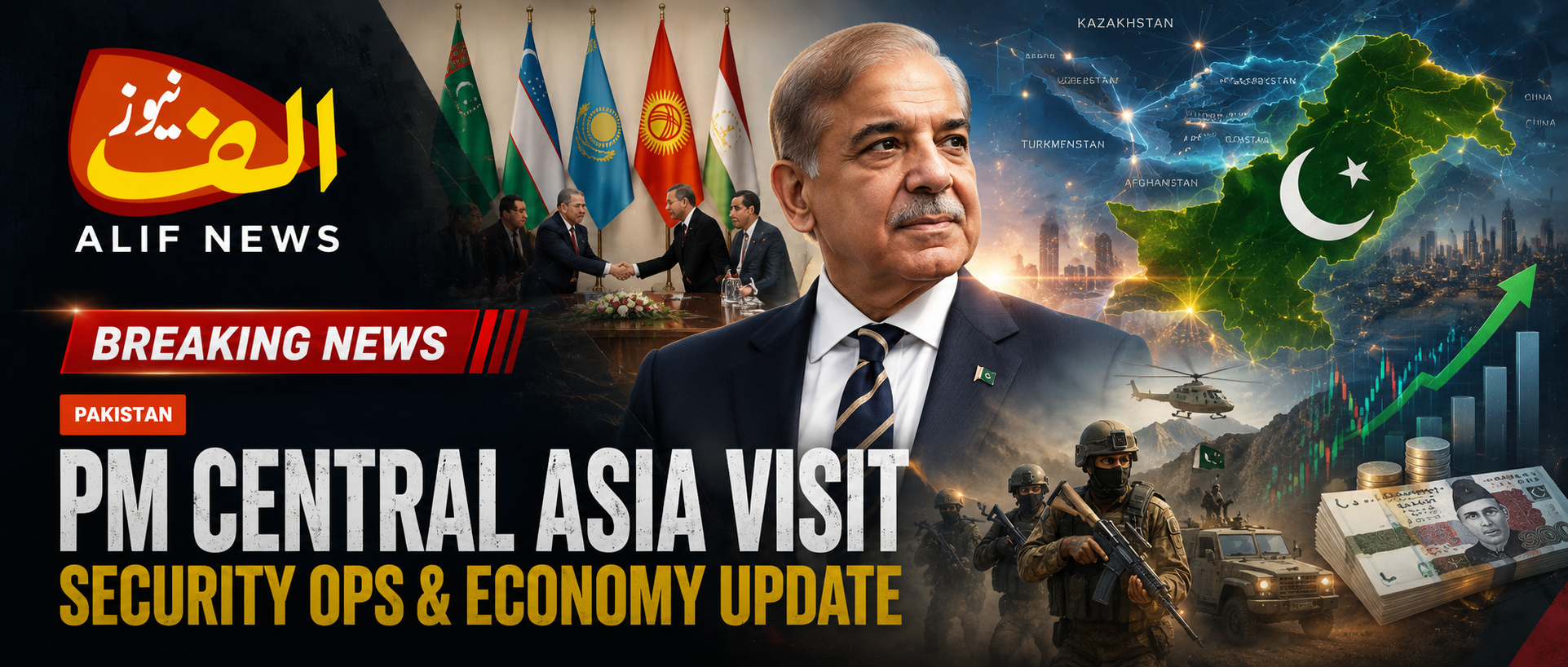
Pakistan Counter Terrorism Operations, Pakistan entered September with three major national developments unfolding at the same time: Prime Minister Shehbaz Sharif concluded an important diplomatic visit to Kyrgyzstan, security forces continued counter-terrorism operations in Balochistan, and fresh economic data showed both signs of recovery and renewed pressure from inflation.
Taken separately, these stories may look like diplomacy, security and economics. Together, however, they show the broader challenge facing Pakistan: improving regional connectivity and trade while maintaining internal security and protecting an economic recovery that remains vulnerable to external shocks.
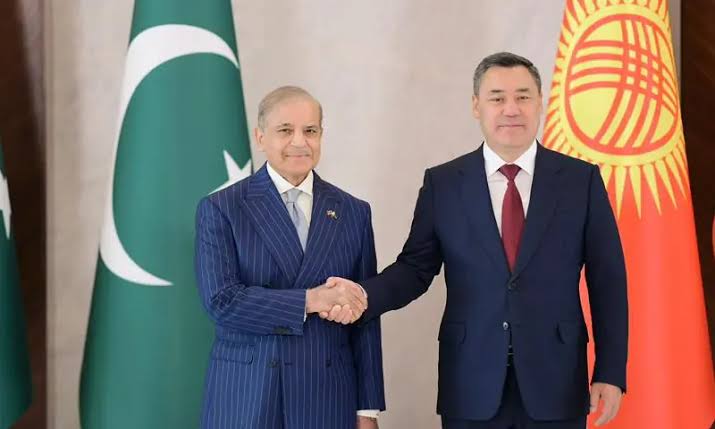
Prime Minister Shehbaz Sharif returned from Kyrgyzstan on September 2 after a three-day official visit in which he attended both the Shanghai Cooperation Organisation Council of Heads of State summit and the SCO Plus Summit. Pakistan also formally assumed the SCO chairmanship for the coming year.
Shehbaz Sharif’s Kyrgyzstan Visit Expands Pakistan’s Central Asia Push
Central Asia has become increasingly important in Pakistan’s foreign economic strategy.
Kyrgyzstan may not be one of Pakistan’s largest trading partners today, but Islamabad sees the region as an opportunity for trade, transit, energy cooperation and wider connectivity between South Asia and Central Asia.
During talks in Bishkek, Prime Minister Shehbaz Sharif and Kyrgyz President Sadyr Japarov agreed to work toward increasing bilateral trade to $200 million within two years. The two sides also discussed investment, industrial cooperation, business-to-business links, transit trade and energy projects.
According to official reporting, the visit produced 16 memoranda of understanding, covering cooperation in different sectors.
The trade target is ambitious considering current Pakistan-Kyrgyzstan commercial activity remains relatively small. But that is also why the agreement matters.
Pakistan is attempting to move its Central Asian engagement beyond ceremonial diplomacy and toward practical economic cooperation.
A transit trade agreement could be particularly important. Kyrgyzstan is landlocked, while Pakistan offers access to Arabian Sea ports and wider shipping routes. In return, stronger transport links through Central Asia could give Pakistani businesses better access to regional markets.
Energy was another major part of the talks.
Both countries reaffirmed support for the CASA-1000 electricity project and agreed on further cooperation involving hydropower, renewable energy, energy infrastructure and technology.
Pakistan Takes Over SCO Chairmanship
The diplomatic importance of the Bishkek visit went beyond bilateral relations with Kyrgyzstan.
Pakistan formally assumed the chairmanship of the Shanghai Cooperation Organisation for the coming year under the theme “Turning Vision into Action: Connectivity, Innovation and Shared Prosperity.”
This gives Islamabad an opportunity to shape the regional agenda around areas where Pakistan has direct interests: connectivity, trade, technology, energy, security and economic cooperation.
At the SCO Plus Summit, Shehbaz Sharif highlighted priorities including information technology, artificial intelligence, energy, poverty reduction, disaster management, healthcare and regional development.
Pakistan is expected to host the next SCO Plus meeting in Islamabad in 2027.
That creates both an opportunity and a test.
Chairing a major regional organisation gives Pakistan diplomatic visibility, but the real measure of success will be whether Islamabad can convert meetings and declarations into practical trade, investment and connectivity projects.
Pakistan Counter Terrorism Operations Major Domestic Challenge
While Pakistan was expanding diplomatic engagement abroad, security forces were dealing with another serious challenge at home.
Security forces reported killing 21 terrorists in operations across Balochistan, following attacks and attempted attacks in the province. The operations came after militants targeted locations including the Quetta-Taftan highway and a Customs House facility.
According to ISPR reporting cited by national media, security personnel and a Customs official were among those killed during the violence.
Security forces also continued sanitisation operations in affected areas.
For Pakistan, counter-terrorism is not only a military or law-enforcement issue Pakistan Counter Terrorism Operations.
Persistent insecurity affects roads, trade routes, investment confidence, tourism, businesses and daily life. This is particularly important in Balochistan because several major national and regional connectivity plans depend on secure transport corridors.
There is therefore a direct link between Pakistan’s economic ambitions and its internal security situation.
A country can sign trade agreements and connectivity projects, but businesses will remain cautious if transport routes or commercial infrastructure face repeated security threats.
This is why counter-terrorism operations remain central to the wider national economic picture.
Security Was Also Part of Pakistan’s SCO Diplomacy
Interestingly, security was also one of the main themes in Prime Minister Shehbaz Sharif’s regional diplomacy.
During his SCO engagements, the prime minister reiterated Pakistan’s position that terrorism in all forms should be condemned and called for stronger regional cooperation against terrorist networks.
He also said Pakistan remained committed to working through the SCO’s Regional Anti-Terrorist Structure.
In the bilateral meeting with Kyrgyzstan, both governments also discussed stronger defence and security cooperation.
This highlights Pakistan’s attempt to address terrorism at more than one level: through domestic operations, border and intelligence measures, and regional diplomatic cooperation.
Pakistan Economy Shows Recovery — but Inflation Is Rising Again
The economic side of the story is more mixed.
Pakistan’s Finance Division, in its Monthly Economic Update and Outlook for August 2026, said the economy is expected to maintain recovery momentum due to improving macroeconomic fundamentals, fiscal discipline and a relatively stable financial environment Pakistan Counter Terrorism Operations.
That is encouraging after several years of severe economic pressure.
Pakistan has made progress in stabilising its external position and rebuilding confidence under its IMF-backed reform programme. Earlier this year, the IMF completed another review of Pakistan’s programme and allowed further disbursements under the Extended Fund Facility and Resilience and Sustainability Facility.
But the latest inflation numbers show that households are still under pressure.
Pakistan Bureau of Statistics data showed headline CPI inflation rising to 11.1% year-on-year in August 2026, up from 9.2% in July.
Urban inflation reached 10.4%, while rural inflation climbed to 12.2%.
These numbers matter because macroeconomic stability does not automatically mean immediate relief for ordinary families.
Consumers experience the economy through food prices, electricity bills, transport costs, school expenses and fuel prices.
Even if reserves improve or fiscal indicators strengthen, people may still feel financially squeezed if inflation remains elevated.
Diplomacy and the Economy Are Becoming More Closely Connected
The Kyrgyzstan visit therefore should not be viewed only as foreign-policy activity.
Pakistan’s wider diplomatic strategy increasingly has an economic objective.
Trade agreements, transit corridors, energy connections and investment partnerships are being presented as ways to create longer-term economic opportunities.
Pakistan’s existing regional trade efforts also show this pattern. Alif News previously reported on Islamabad’s efforts to deepen commercial cooperation with Iran, including discussions on investment, transport and cross-border trade. Must read and visit to bkenagic