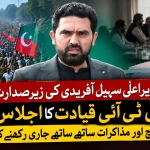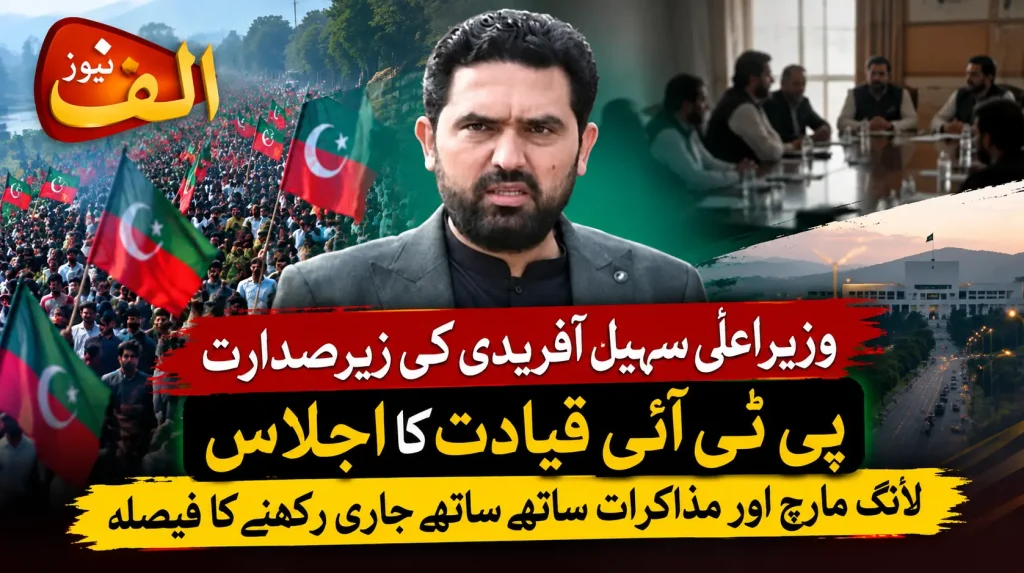


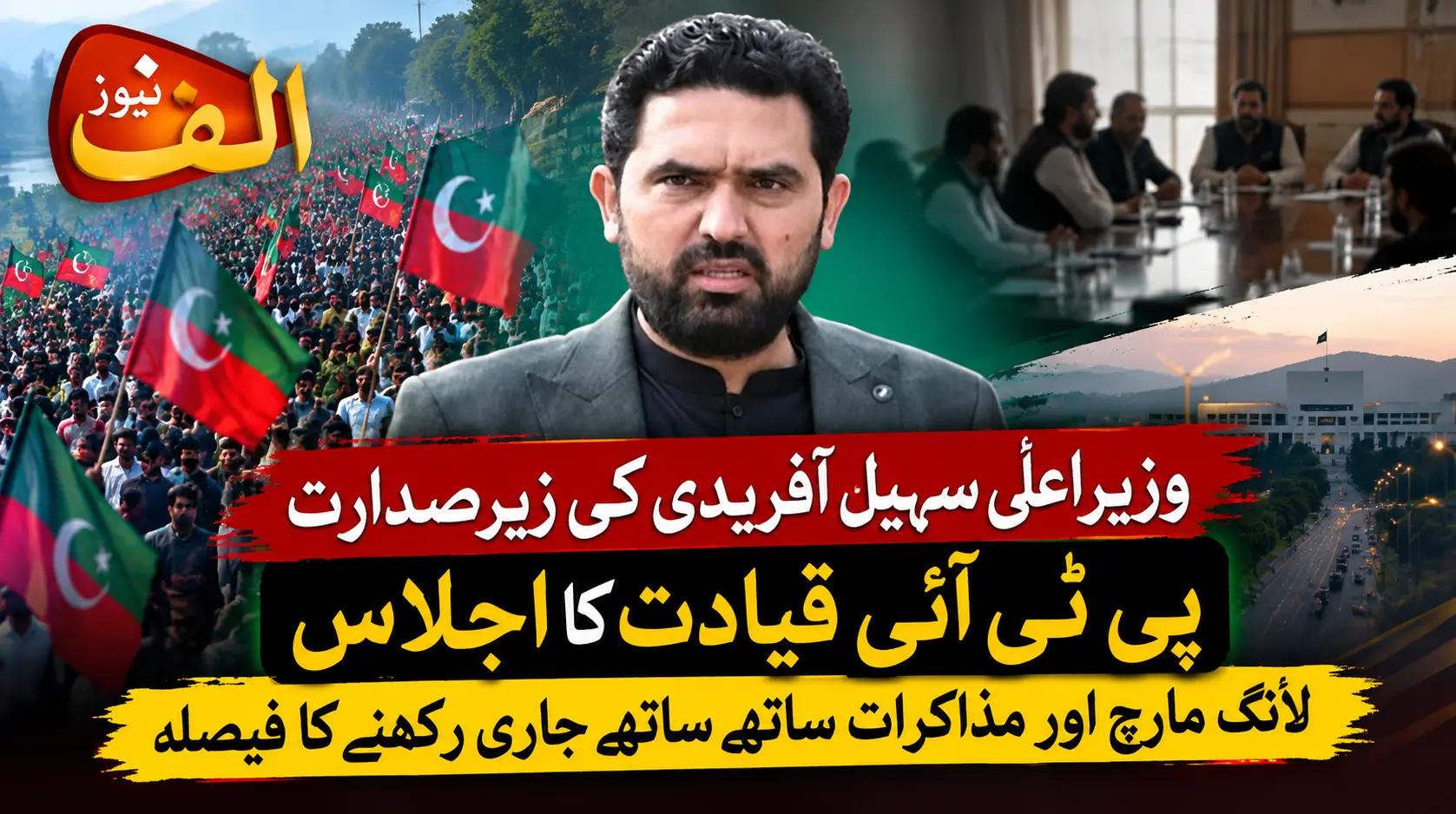
Pakistan’s political landscape remains tense as Khyber Pakhtunkhwa Chief Minister Sohail Afridi has reportedly chaired a significant meeting of Pakistan Tehreek-e-Insaf (PTI) leadership, where the party decided to continue its long march preparations and political negotiations simultaneously.
The reported decision reflects PTI’s strategy of maintaining public pressure while keeping the possibility of dialogue open. As political uncertainty continues, the development has brought renewed attention to the party’s protest plans, demands, and future relationship with the federal government.
Sohail Afridi PTI Long March
The approach raises important questions about whether protests and negotiations can move forward together and what this strategy could mean for Pakistan’s political stability.
PTI Leadership Discusses Future Political Strategy
According to the reported development, the meeting chaired by Chief Minister Sohail Afridi focused on PTI’s future political course, including its protest movement and ongoing negotiations.
The central decision was to pursue two political approaches at the same time: continuing preparations for the long march and maintaining channels for negotiations.
This approach suggests that PTI does not intend to suspend its political mobilization simply because discussions are taking place.
The meeting also highlights the growing political significance of the Khyber Pakhtunkhwa leadership within PTI’s broader decision-making structure.
As the party evaluates its options, coordination between provincial leadership, senior party officials, and political organizers is likely to play an important role in determining its next steps.
Long March to Remain Part of PTI’s Political Campaign
The long march remains a central element of the political strategy described in the meeting’s reported outcome.
Political marches have historically been used by parties in Pakistan to demonstrate public support, highlight grievances, and demand action from governments.
For PTI, continuing the long march campaign could serve several purposes:
- Maintaining political momentum and keeping supporters engaged.
- Drawing national attention to the party’s demands.
- Increasing political pressure while negotiations continue.
- Demonstrating organizational strength and public mobilization.
- Reinforcing the party’s position during political discussions.
However, the effectiveness of this strategy will depend on the level of public participation, the government’s response, and the ability of political leaders to prevent confrontations.
A major protest movement can attract significant attention, but it can also create challenges involving traffic disruptions, public safety, and economic activity.
Negotiations to Continue Alongside Political Protests
One of the most important aspects of the reported decision is PTI’s willingness to continue negotiations while maintaining its protest plans.
Political dialogue can provide an opportunity for competing parties to discuss disagreements, explore possible compromises, and reduce tensions.
By keeping negotiations open, PTI may be seeking to demonstrate that its protest campaign does not necessarily exclude a political settlement.
However, successful negotiations generally require meaningful engagement, clearly defined objectives, and a willingness from all sides to consider workable solutions.
The simultaneous continuation of protests and dialogue could also create difficulties if either side interprets public mobilization as an attempt to undermine the negotiating process.
Whether this dual-track approach produces meaningful results will depend on developments in the coming days.
Chief Minister Sohail Afridi’s Role in PTI’s Political Direction
Chief Minister Sohail Afridi’s reported leadership of the meeting highlights the political role of Khyber Pakhtunkhwa in PTI’s organizational strategy.
The province has remained an important political base for PTI, making its leadership particularly relevant to the party’s national activities.
As chief minister, Afridi also faces the challenge of balancing provincial governance responsibilities with his political role.
The distinction is important because the responsibilities of a provincial government include public administration, development, security coordination, and service delivery.
Political analysts may therefore closely examine how the provincial leadership manages these responsibilities while participating in a national political campaign.
The meeting also places Afridi in the spotlight as PTI supporters and political observers look for indications of the party’s next moves.
Background: Why PTI and the Federal Government Remain at Odds
The latest political tensions follow unsuccessful negotiations between the federal government and opposition representatives in early October.
On October 3, talks ended without an agreement on several key matters, including access to former Prime Minister Imran Khan and cooperation on counterterrorism measures in Khyber Pakhtunkhwa.
PTI representatives maintained that the long march would proceed, while government representatives stressed the importance of security cooperation and public order
On October 4, Interior Minister Mohsin Naqvi publicly accused the Khyber Pakhtunkhwa chief minister of undermining the negotiations. The allegations were part of a broader disagreement over the conditions for a political settlement.
The dispute illustrates the difficulty of finding common ground when political demands and security concerns are being discussed simultaneously.
PTI Long March Gains Momentum Across Khyber Pakhtunkhwa
PTI’s long march began on October 4 from Lakki Marwat, with supporters mobilizing from several districts of Khyber Pakhtunkhwa.
The movement has been led by Chief Minister Sohail Afridi, with participants traveling through different parts of the province.
Reuters reported on October 5 that thousands of Imran Khan’s supporters had begun marching toward Islamabad, calling for his release.
By October 9, Afridi had called on supporters from across Pakistan to join the march at Swabi Interchange on October 11, indicating that the protest movement was entering another important stage.
These developments show that the march is not simply a symbolic political announcement but an organized movement with multiple stages.
Federal Government’s Position on PTI Protests
The federal government has expressed concern about the potential consequences of the long march, particularly regarding security, public order, and the movement of protesters toward Islamabad.
Prime Minister Shehbaz Sharif urged PTI on October 7 to end the march and resolve its differences through dialogue.
Pakistan Today
Government representatives have also emphasized that Khyber Pakhtunkhwa authorities must cooperate with federal institutions on counterterrorism issues.
From the government’s perspective, political negotiations should not compromise security responsibilities or create conditions that could lead to unrest.
PTI, meanwhile, has argued that its demands require meaningful political engagement and that the right to peaceful protest must be respected.
The competing positions demonstrate the challenges facing both sides as they attempt to manage the dispute.
Can Negotiations and the Long March Continue Together?
The strategy of pursuing negotiations while maintaining political protests presents both opportunities and risks.
For PTI, continuing the march could strengthen its negotiating position by demonstrating sustained public support.
At the same time, dialogue offers a possible route toward addressing political grievances without further confrontation.
However, there are several potential challenges.
First, large-scale demonstrations may increase pressure on law enforcement agencies and local administrations.
Second, public statements from political leaders could make compromise more difficult if positions become increasingly rigid.
Third, disagreements over security arrangements and the conditions for negotiations could delay any settlement.
Finally, prolonged political uncertainty could affect public confidence and distract attention from economic and governance priorities.
The outcome will depend largely on whether both sides can establish a credible process for addressing their differences.
Political Implications for Pakistan
The confrontation between PTI and the federal government has implications beyond the immediate protest campaign.
Political stability is important for economic planning, investment confidence, institutional cooperation, and effective governance.
If negotiations produce progress, they could help reduce political polarization and establish a framework for addressing future disputes.
If talks remain unsuccessful, however, further demonstrations and political confrontation could intensify uncertainty.
The role of provincial governments is also significant. Cooperation between federal and provincial institutions is particularly important in matters involving security and public administration.
The ongoing situation therefore represents not only a dispute between political parties but also a test of Pakistan’s ability to manage disagreements through constitutional and democratic processes.
What Could Happen Next?
Several possible developments may shape the next phase of PTI’s political campaign.
Renewed negotiations: Government and opposition representatives could resume discussions if both sides agree on an acceptable framework.
Further protest mobilization: PTI could continue organizing supporters and expanding its demonstrations.
Greater political involvement: Other political parties and parliamentary representatives could become involved in efforts to resolve the dispute.
Security and administrative decisions: Authorities may review security arrangements in response to planned demonstrations.
A possible political compromise: Both sides could explore measures that address specific demands while reducing the risk of confrontation.
None of these outcomes is guaranteed, and developments will depend on decisions made by political leaders in the coming days.
Conclusion
The reported decision by PTI leadership under Chief Minister Sohail Afridi to continue the long march and negotiations simultaneously reflects the party’s attempt to combine public mobilization with political engagement.
The broader developments of early October confirm that PTI’s protest movement has continued despite unsuccessful talks with the federal government.
For Pakistan, the central challenge is whether competing political forces can find a peaceful and constitutional solution to their differences.
As PTI supporters prepare for the next phase of the march and political leaders consider further dialogue, the coming days could prove significant for the country’s political direction.
Ultimately, meaningful negotiations, respect for peaceful political participation, and cooperation on public security will be essential to reducing tensions and protecting democratic stability.