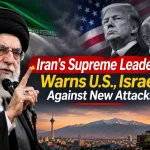


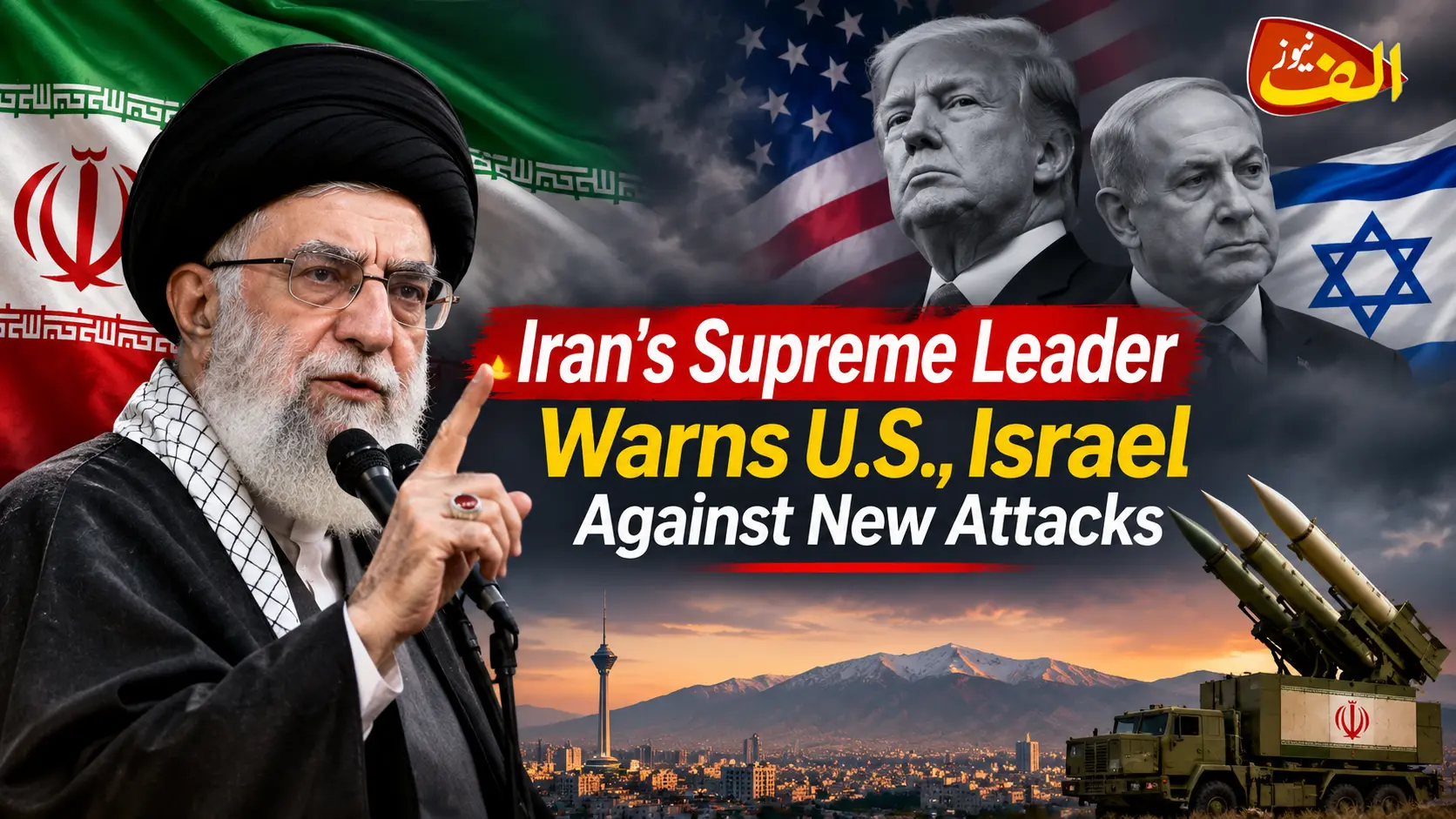
Iran’s Supreme Leader Ayatollah Mojtaba Khamenei has issued a strong warning to the United States and Israel, declaring that any renewed military aggression against Iran would trigger a swift and powerful response. The warning comes as tensions rise across the Middle East, raising concerns about another major regional conflict.
Iran Issues Strong Warning to the United States and Israel
Iran’s Supreme Leader Ayatollah Mojtaba Khamenei has warned the United States and Israel against launching fresh military attacks on Iranian territory, emphasizing that Tehran is prepared to respond decisively to any renewed aggression.
According to a written statement attributed to Khamenei and published through his official channels, Iran’s armed forces have been instructed to maintain a high level of readiness and prepare for potential threats.
Iran Supreme Leader Warns U.S. and Israel
The Iranian leader warned that the country’s military would determine the timing, scale, and conditions of its response if another attack occurred.
His statement reflects growing tensions between Tehran, Washington, and Tel Aviv, particularly following months of military confrontation and diplomatic uncertainty.
The latest warning has attracted international attention as regional governments attempt to prevent another devastating escalation.
Supreme Leader Orders Military to Prepare for Possible Attacks
During a reported meeting with senior Iranian military commanders, Mojtaba Khamenei emphasized the importance of strengthening the country’s defensive and offensive capabilities.
The discussions reportedly involved several important military figures, including:
- Ali Abdollahi: Chief of Staff of Iran’s Armed Forces.
- Amir Hatami: Commander of the Iranian Army.
- Ahmad Vahidi: Commander of the Islamic Revolutionary Guard Corps (IRGC).
According to the statement, Khamenei directed military leaders to prepare for immediate and effective retaliation against any renewed attacks.
He also reportedly instructed commanders to review and update potential military targets associated with the United States and Israel.
The guidance suggested that Iran would not necessarily limit its response to a single geographic area.
Such language has raised concerns that any future confrontation could extend beyond Iranian territory and involve other parts of the Middle East.
However, the statement represents Iran’s declared military position and does not establish that a new attack or response is inevitable.
Background: The Iran-U.S.-Israel Conflict
Relations between Iran, the United States, and Israel have remained deeply strained for decades because of disagreements over nuclear development, regional security, military operations, and competing political interests.
The situation escalated dramatically on February 28, 2026, when U.S. and Israeli forces launched military strikes against Iran.
The attacks marked the beginning of a major confrontation that spread across the region.
Iran responded with attacks against targets in different parts of the Middle East, increasing fears of a broader conflict involving multiple countries.
One of the most significant developments was the killing of Iran’s former Supreme Leader, Ayatollah Ali Khamenei, during the opening phase of the conflict.
His son, Mojtaba Khamenei, subsequently became Iran’s new supreme leader.
The leadership transition took place during an exceptionally challenging period for the Islamic Republic, with military threats, economic pressure, and diplomatic uncertainty continuing to shape the country’s future.
Since assuming leadership, Mojtaba Khamenei has delivered important messages largely through written statements rather than public appearances.
His latest warning is therefore being closely examined by governments and security analysts attempting to understand Iran’s military and political intentions.
Why Iran Is Warning Against New Military Strikes
Iran’s warning comes amid reports that the United States and Israel are considering additional military options.
Washington has maintained that preventing Iran from developing nuclear weapons remains a major national security objective.
Israel also considers Iran’s military capabilities and regional activities significant security concerns.
Iran, meanwhile, maintains that it has the right to defend its sovereignty, national security, and territorial integrity.
Tehran has repeatedly argued that military pressure will not force the country to abandon its security interests.
The latest warning appears intended to discourage further attacks by demonstrating that Iran is prepared to impose serious military costs on its adversaries.
This approach is commonly described as military deterrence, in which a country attempts to prevent an attack by making clear that retaliation could be substantial.
However, deterrence can also increase the risk of miscalculation if opposing governments misunderstand one another’s intentions.
Qatar Leads Diplomatic Efforts to Prevent Another War
Despite the increasingly confrontational language, diplomatic efforts are continuing to reduce tensions.
Qatar has emerged as an important intermediary in discussions involving Iran and the United States.
A Qatari delegation visited Tehran on October 30, 2026, to hold discussions with Iranian officials concerning the possibility of renewed negotiations.
Reports also indicated that Iran had received a letter from U.S. Vice President JD Vance through diplomatic channels.
According to Iranian media reports available on October 31, Tehran had not yet formally responded to the communication.
The diplomatic initiative highlights the efforts of regional governments to prevent renewed military confrontation.
Qatar’s role is particularly significant because the Gulf state has maintained communication channels with competing regional and international powers.
Other countries, including Pakistan, Saudi Arabia, Turkey, and Oman, have also been involved in broader diplomatic discussions or efforts to reduce regional tensions.
Although negotiations remain uncertain, diplomatic engagement offers a potential alternative to further military escalation.
Regional Countries Fear a Wider Middle East Conflict
A renewed confrontation between Iran, Israel, and the United States could have serious consequences for neighboring countries.
Several Gulf states maintain security partnerships with Washington while also seeking stable relations with Tehran.
These relationships create a complicated regional security environment.
If military operations resume, governments across the region could face difficult decisions concerning their security commitments, diplomatic relationships, and protection of civilian populations.
Regional officials have expressed concern that another round of fighting could become more destructive than previous confrontations.
Saudi Arabian and Egyptian representatives have emphasized the importance of diplomatic solutions and warned against further escalation.
The situation has also raised concerns about critical infrastructure, commercial transportation, and regional stability.
A prolonged conflict would likely place additional pressure on countries already dealing with economic uncertainty and the consequences of earlier military operations.
Possible Impact on Global Oil Prices and International Trade
One of the most important international concerns surrounding the Iran conflict is its potential effect on global energy markets.
Iran is located near the Strait of Hormuz, one of the world’s most strategically important maritime routes for oil and gas transportation.
Disruption to shipping in this area can affect global energy supplies, transportation costs, and market confidence.
If tensions escalate into another major conflict, several economic consequences could follow.
1. Rising Oil Prices
Renewed military confrontation could increase uncertainty in global oil markets, especially if energy production facilities or shipping routes are threatened.
2. Disruption to International Shipping
Security risks in the Persian Gulf could force shipping companies to reconsider routes, increase insurance coverage, or delay transportation.
3. Increased Inflation
Higher energy and transportation costs could place additional pressure on consumers and businesses worldwide.
4. Pressure on Developing Economies
Oil-importing countries, including Pakistan, could face higher import expenses and additional pressure on domestic fuel prices if international energy costs increase.
The extent of these effects would depend on the duration, geographic reach, and severity of any renewed conflict.
What Does the Latest Warning Mean for Israel?
Israel has consistently expressed concern about Iran’s nuclear capabilities, missile systems, and relationships with armed groups across the Middle East.
Israeli officials have maintained that they must be prepared to address threats to the country’s national security.
Iran’s latest warning signals that Tehran intends to respond forcefully to any future Israeli military action.
This creates a challenging security environment in which both sides are attempting to demonstrate military readiness.
Analysts may interpret Iran’s statement as an effort to strengthen deterrence while negotiations remain possible.
However, heightened military readiness on both sides also increases the importance of communication and diplomatic restraint.
International Community Calls for Restraint
Growing tensions have renewed calls for peaceful dialogue from regional leaders and international observers.
At a security forum in Bahrain, Saudi and Egyptian officials emphasized the importance of avoiding another major conflict.
The central concern is that renewed hostilities could spread rapidly and create additional humanitarian and economic consequences.
Civilian populations would be particularly vulnerable to attacks affecting essential services, housing, transportation, and critical infrastructure.
International diplomatic efforts are therefore focused on preventing new hostilities while addressing the political and security disagreements underlying the confrontation.
A sustainable resolution would likely require agreements on military restraint, regional security concerns, and Iran’s nuclear activities.
What Could Happen Next?
The future of relations between Iran, the United States, and Israel remains uncertain.
Several possible developments could shape the situation in the coming days and weeks.
Diplomatic negotiations could advance: Qatar and other regional mediators may help create conditions for renewed discussions between Washington and Tehran.
Military tensions could continue: Iran, Israel, and the United States may maintain high levels of readiness while avoiding a direct large-scale confrontation.
Limited military incidents could cause escalation: An isolated strike or misunderstanding could increase pressure on governments to retaliate.
A broader political agreement could emerge: A negotiated arrangement addressing nuclear concerns, sanctions, and regional security could reduce the risk of renewed conflict.
No single outcome is guaranteed, and further developments will depend heavily on political decisions and diplomatic engagement.
Conclusion
Iran’s Supreme Leader Ayatollah Mojtaba Khamenei’s latest warning to the United States and Israel represents another significant development in the ongoing Middle East security crisis.
By instructing Iranian military commanders to prepare for immediate retaliation, Tehran has signaled that it intends to resist renewed military pressure.
At the same time, the involvement of Qatar and other regional diplomatic partners demonstrates that opportunities for negotiation remain.
For the international community, the situation presents serious challenges involving regional security, energy markets, economic stability, and civilian protection.
As tensions continue, the coming period could prove critical in determining whether the parties move toward renewed confrontation or a negotiated reduction in hostilities.
Ultimately, diplomatic engagement, careful communication, and restraint will be essential to preventing another destructive phase of conflict in the Middle East.