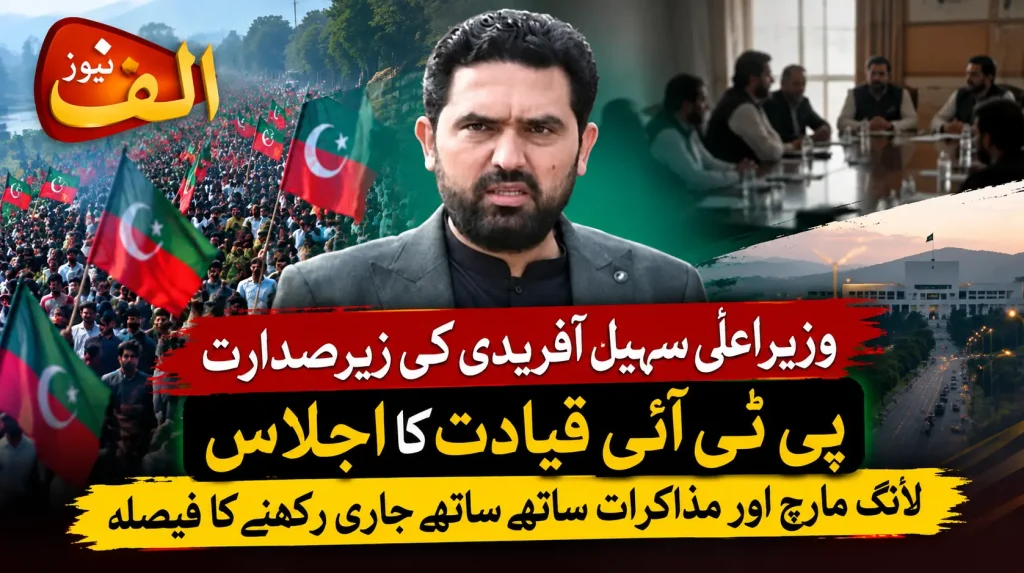



Islamabad, October 8, 2026 — Pakistan’s Federal Constitutional Court has reportedly scheduled a petition seeking the disqualification of Khyber Pakhtunkhwa Chief Minister Sohail Afridi for hearing, bringing a significant legal and political matter into focus.
Sohail Afridi Disqualification Case
The development could have important implications for the provincial government, the political landscape of Khyber Pakhtunkhwa, and the broader relationship between constitutional institutions and elected representatives.
The scheduling of the petition represents a procedural step in the judicial process. It does not mean that the chief minister has been disqualified or that the court has reached a final decision.
Federal Constitutional Court Takes Up Disqualification Petition
The petition seeking the disqualification of Chief Minister Sohail Afridi has attracted attention because of the constitutional questions that may arise during the proceedings.
The court is expected to examine the petition’s maintainability and relevant legal arguments before determining whether the case warrants further proceedings.
A petition challenging the eligibility of a sitting chief minister can raise questions concerning constitutional qualifications, disqualification provisions, and the legal standards applicable to elected representatives.
However, the specific allegations, legal grounds, and relief requested in this petition must be established from the court record rather than assumed.
Who Is Sohail Afridi?
Sohail Afridi is a political leader associated with Pakistan Tehreek-e-Insaf (PTI) and serves as Chief Minister of Khyber Pakhtunkhwa.
As chief minister, he holds a central position in the province’s executive administration, including responsibility for government policy, development priorities, and coordination with provincial institutions.
Any legal challenge involving the eligibility of a chief minister naturally attracts public interest because of the importance of the office and its role in provincial governance.
Constitutional and Legal Importance of the Case
Pakistan’s Constitution establishes qualifications and disqualifications for members of legislative assemblies. Depending on the circumstances of a particular case, constitutional provisions such as Articles 62 and 63 may become relevant.
However, the applicability of any constitutional provision depends on the allegations, evidence, jurisdiction, and legal arguments presented before the court.
Several important questions could arise during the proceedings:
- Whether the petition is maintainable before the Federal Constitutional Court.
- Whether the petitioner has established legally sufficient grounds for challenging the chief minister’s eligibility.
- What constitutional provisions and judicial precedents apply to the dispute.
- Whether the court requires responses, documents, or additional evidence from the concerned parties.
- What legal remedies, if any, are available under the applicable constitutional framework.
These are potential legal considerations, not confirmed findings or a description of the petition’s verified contents.
Possible Political Implications for Khyber Pakhtunkhwa
The case comes at a time when constitutional litigation and political disputes remain important subjects in Pakistan’s national political discussion.
Proceedings involving a sitting provincial chief minister may influence political debate even before a final judicial determination.
For the Khyber Pakhtunkhwa government, the immediate priority would ordinarily remain the continuation of administrative responsibilities, public services, and development initiatives.
Opposition parties may scrutinize the proceedings closely, while the chief minister’s political supporters may emphasize the importance of due process and the presumption that an elected official remains legally entitled to hold office unless a competent authority determines otherwise.
Importantly, the scheduling of a hearing does not itself alter the chief minister’s legal status.
Hearing Scheduled for October 15, 2026
According to reports published on October 8, the Federal Constitutional Court has scheduled the case for October 15, 2026, with Chief Justice Amin-ud-Din Khan heading the bench.
The petition was filed by Advocate Sher Afzal Marwat, who has challenged Sohail Afridi’s election as chief minister.
Marwat’s central argument is that a convicted individual cannot exercise the authority to nominate someone to a public office. The challenge concerns the reported role of former Prime Minister Imran Khan in Afridi’s nomination.
Petition Also Seeks Restoration of Ali Amin Gandapur
The case extends beyond a request to invalidate Sohail Afridi’s election.
According to earlier reporting, Sher Afzal Marwat has also requested the restoration of former Khyber Pakhtunkhwa Chief Minister Ali Amin Gandapur.
During previous proceedings, Marwat argued that Gandapur had not resigned voluntarily but had stepped down following instructions from the PTI founder. The petition therefore raises questions about the circumstances of the previous chief minister’s resignation and the subsequent election.
The Federal Constitutional Court had already taken up the matter in September and issued notices to the provincial government and the attorney general.
What Could Happen Next?
The October 15 hearing may provide greater clarity regarding the court’s assessment of the petition and the legal arguments presented by the parties.
Possible developments include further arguments, requests for additional documents, procedural directions, or the announcement of a judicial decision.
Until the court issues a binding ruling, it would be premature to conclude that Sohail Afridi will lose his position.
Conclusion
The Federal Constitutional Court’s decision to schedule the petition challenging Sohail Afridi’s election for October 15 marks another important development in Khyber Pakhtunkhwa’s political and constitutional affairs.
With Sher Afzal Marwat questioning the legality of Afridi’s nomination and seeking Ali Amin Gandapur’s restoration, the proceedings could clarify significant issues involving political nominations, resignations, and constitutional authority.
The outcome will depend on the evidence, applicable law, and judicial findings rather than political claims alone.
For now, Sohail Afridi remains Chief Minister of Khyber Pakhtunkhwa, and the upcoming hearing will be closely watched by political observers, legal experts, and the public.