

Pakistan has entered another period of heightened political tension after negotiations between the federal government and the opposition ended without an agreement, while Pakistan Tehreek-e-Insaf (PTI) supporters moved ahead with a long march toward Islamabad.
Government-Opposition Talks Collapse in Pakistan
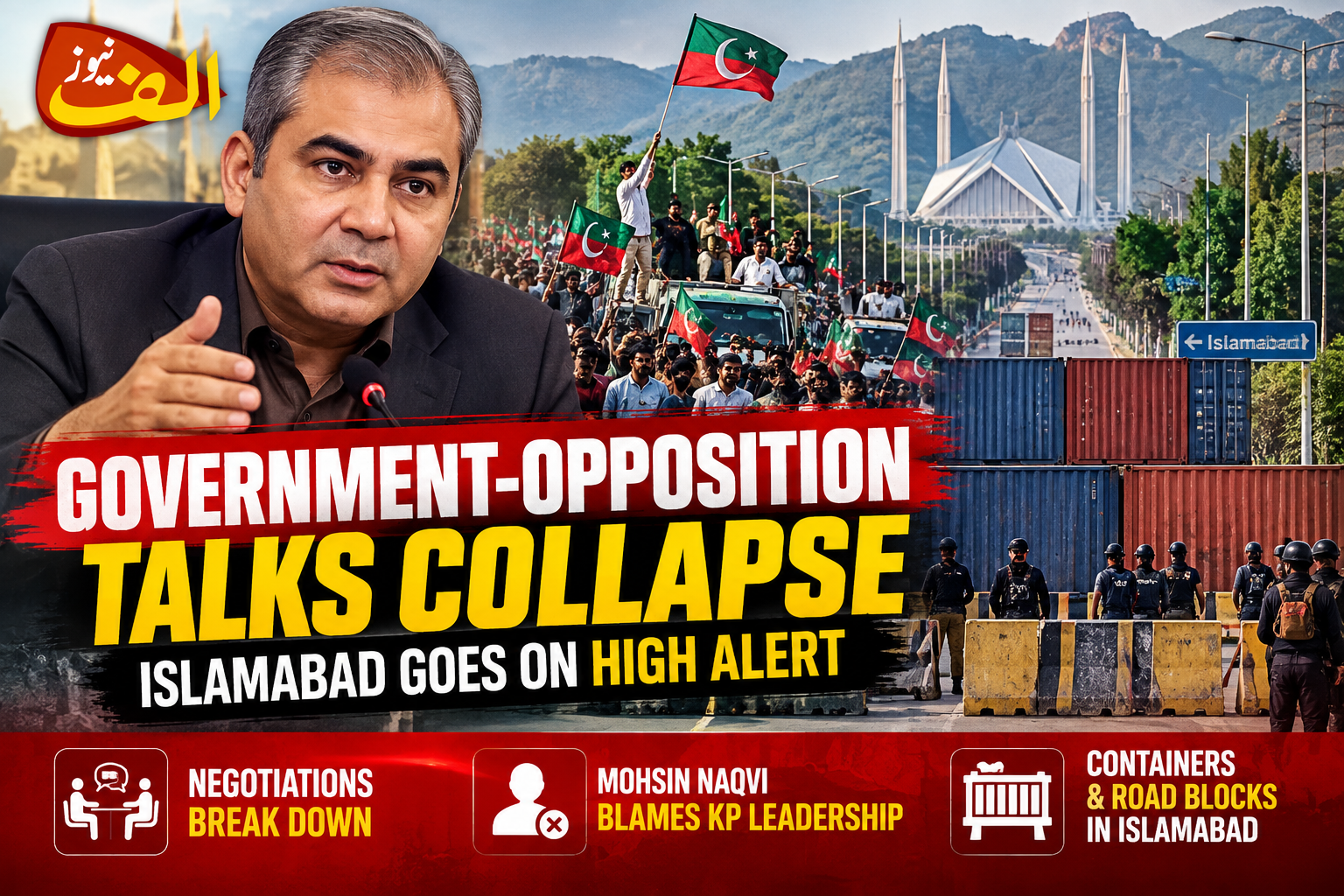
Interior Minister Mohsin Naqvi announced that the dialogue had effectively collapsed and accused Khyber Pakhtunkhwa Chief Minister Sohail Afridi of undermining the negotiations. The opposition, however, has rejected the government’s version of events and blamed the authorities for failing to accommodate its key demands.
The political deadlock has been accompanied by extensive security preparations in the federal capital. Containers and roadblocks have been positioned on important routes, law-enforcement personnel have been deployed, and authorities have warned that protesters will not be permitted to violate restrictions imposed around sensitive areas of Islamabad.
What Happened to the Government-Opposition Talks?
The federal government and opposition representatives held two rounds of negotiations in an effort to prevent the political confrontation from turning into another large-scale protest in Islamabad.
According to reporting on the negotiations, discussions continued for hours and multiple drafts of a possible agreement were prepared. However, the two sides remained divided over several important political and security-related issues.
Among the main disagreements were counterterrorism policy in Khyber Pakhtunkhwa, implementation of the National Action Plan, and opposition demands relating to imprisoned PTI founder and former prime minister Imran Khan.
Government officials said considerable progress had been made before the talks eventually broke down.
Interior Minister Mohsin Naqvi claimed that an agreement was almost complete and that the vast majority of points had been settled. He alleged that the process was derailed after additional changes were sought from the KP leadership.
PTI representatives presented a different account, arguing that the government had shown insufficient flexibility on issues considered fundamental by the opposition.
Mohsin Naqvi Blames KP Chief Minister Sohail Afridi
Following the collapse of the negotiations, Mohsin Naqvi publicly placed responsibility on Khyber Pakhtunkhwa Chief Minister Sohail Afridi.
Naqvi said the opposition’s negotiating team had engaged seriously in the discussions but alleged that intervention from the KP chief minister prevented the final agreement from being concluded.
According to Naqvi, several drafts had been prepared during negotiations and an agreement had reached an advanced stage. He said he had even taken a version of the draft to President Asif Ali Zardari before learning that further changes had been proposed.
The interior minister argued that these developments effectively destroyed the progress achieved during negotiations.
The allegation represents the federal government’s account of events and has been disputed by PTI, which has instead blamed the government’s position on key political and security issues for the deadlock.
Counterterrorism Emerges as a Major Sticking Point
One of the most significant issues in the negotiations concerned security and counterterrorism policy in Khyber Pakhtunkhwa.
The province has faced serious security challenges, particularly in areas affected by militant violence.
The federal government has argued that stronger cooperation is required between provincial authorities, federal security institutions and law-enforcement agencies.
According to the government’s account, the proposed agreement involved commitments relating to counterterrorism measures, cooperation with security institutions, implementation of elements of the National Action Plan and provincial responsibility for combating militancy.
PTI, however, has pushed for greater consultation between the federal government and provincial authorities regarding security operations.
The disagreement therefore goes beyond the immediate political confrontation and reflects a wider dispute about how Pakistan’s counterterrorism strategy should be implemented in KP.
Imran Khan Remains at the Center of the Political Dispute
Another major issue surrounding the negotiations is the status of PTI founder Imran Khan.
The former prime minister has been imprisoned since 2023 and continues to play a central role in Pakistan’s political crisis.
PTI has demanded greater access to Khan and has raised concerns regarding his detention and medical care. Supporters participating in the latest march are also demanding his release.
The government maintains that Khan is receiving appropriate treatment and argues that his legal cases must proceed through the judicial system.
The disagreement over access to Khan reportedly became one of the obstacles preventing the government and opposition from reaching a final settlement.
PTI Long March Moves Toward Islamabad
With negotiations unsuccessful, PTI supporters moved forward with their planned long march.
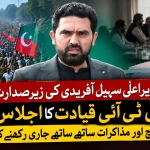
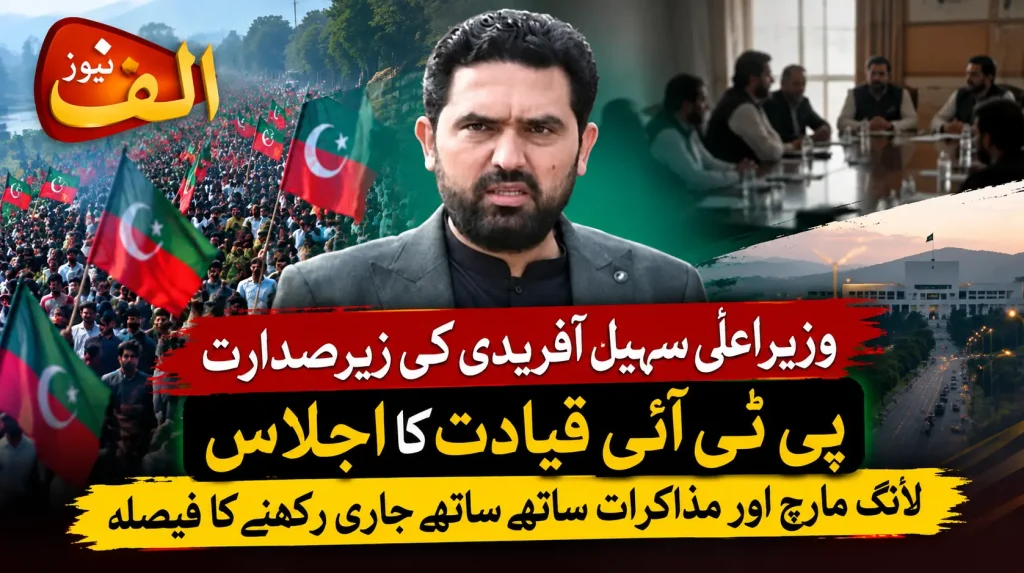
Thousands of supporters began travelling toward Islamabad from Khyber Pakhtunkhwa, with Chief Minister Sohail Afridi playing a leading role in the mobilisation.
The march is intended to increase political pressure on the federal government and highlight demands relating to Imran Khan and other political disputes.
PTI has described its protest as peaceful and maintains that citizens have a democratic right to demonstrate.
The government, however, has expressed concerns about possible disorder, pointing to violence during previous episodes of political unrest.
Authorities have therefore adopted extensive security measures to prevent protesters from entering restricted parts of Islamabad.
Islamabad Placed on High Alert
Security has been significantly strengthened across Islamabad as authorities prepare for the approaching protest.
Police and other law-enforcement personnel have been deployed around important locations, particularly near government buildings, entry points and the Red Zone.
Authorities have also positioned shipping containers on several roads to restrict access.
The Red Zone is one of the most sensitive locations in Islamabad because it contains Parliament House, the Supreme Court, the Prime Minister’s Office, diplomatic missions and several important federal institutions.
The presence of a large political demonstration near these locations creates major security concerns for the administration.
Officials say the measures are necessary to maintain public order and protect sensitive government infrastructure.
Containers Become a Familiar Sight in Islamabad
Shipping containers have increasingly become associated with political demonstrations in Pakistan.
During major protests, authorities frequently place containers across roads to control access to Islamabad and other strategically important areas.
Ahead of the latest confrontation, large numbers of containers were positioned along roads leading toward the capital.
Some routes connecting Islamabad with surrounding areas have also faced restrictions.
The security strategy may make it more difficult for protest convoys to enter central Islamabad, but it also creates serious difficulties for residents, businesses and transport operators.
Recent reporting has indicated that the use of containers has disrupted freight movement and affected commercial transport, with truck operators complaining about vehicles being requisitioned for security purposes.
Impact on Islamabad Residents
For residents of Islamabad and Rawalpindi, major political demonstrations often mean significant disruptions to daily life.
Road closures can increase travel times dramatically, while restrictions on important highways can affect workers travelling between the twin cities.
Public transportation may also be disrupted.
Students, government employees, private-sector workers and business owners can all be affected when roads around Islamabad are blocked.
People travelling toward the Red Zone, Faizabad, Srinagar Highway, Islamabad Expressway and major entry routes may face additional security checks or diversions depending on developments.
Residents are therefore advised to follow official traffic updates before travelling during periods of heightened political activity.
Economic Impact of Road Closures
The economic consequences of political protests can extend far beyond Islamabad.
Pakistan relies heavily on road transportation for the movement of goods between Karachi, Lahore, Islamabad, Peshawar and other major commercial centres.
When containers and trucks are used as roadblocks, normal freight operations can be interrupted.
Reuters reported before the march that the requisitioning of containers had already caused disruption in Pakistan’s logistics sector, including delays in cargo movement.
Transport companies can face additional costs when vehicles remain stranded, while businesses may experience delayed deliveries.
Long-term disruptions could eventually affect supply chains, transportation costs and market activity.
Government Warns Protesters Against Violence
Interior Minister Mohsin Naqvi has issued strong warnings regarding the protest.
The government says demonstrations must remain within legal limits and protesters will not be permitted to enter restricted locations.
Naqvi has also warned against any repetition of incidents similar to the violence witnessed on May 9, 2023.
He said authorities would enforce the law and take action if protesters violated court orders or security restrictions.
The government’s position is that peaceful political activity may take place within the law, but attacks on government property, security installations or public infrastructure will not be tolerated.
PTI Says Its Protest Is Peaceful
PTI has repeatedly argued that its supporters are exercising their constitutional right to protest.
Party leaders maintain that the long march is intended to place peaceful political pressure on the government.
The party says several unresolved political issues—including Imran Khan’s imprisonment—have left it with limited alternatives.
The government and PTI therefore present sharply different interpretations of the march.
The government emphasises security risks and previous violence, while PTI emphasises democratic rights and political grievances.
This disagreement makes the handling of the demonstration particularly sensitive.
Political Tensions Between Centre and KP
The latest dispute also highlights the increasingly difficult relationship between the federal government and the PTI-led Khyber Pakhtunkhwa administration.
Political disagreements between Islamabad and Peshawar have increasingly become connected with questions of governance, security and counterterrorism.
Because the long march is being led from KP, the role of the provincial administration has come under particularly intense scrutiny.
Federal officials argue that provincial authorities have responsibilities related to maintaining public order and addressing terrorism.
PTI leaders, meanwhile, argue that the federal government must consult the province more seriously when making decisions that directly affect KP.
Without greater cooperation between Islamabad and Peshawar, disputes over security and political authority could continue.
Could Emergency Measures Be Considered?
The political confrontation has also led to discussion of possible extraordinary constitutional or administrative steps if the security situation deteriorates.
Some government figures have publicly raised concerns regarding the functioning of the provincial government and its handling of security issues.
However, any major constitutional action against a provincial government would be politically controversial and would carry significant legal consequences.
For this reason, any such possibility would likely generate extensive political and judicial debate.
At present, the immediate focus remains on the protest movement, security arrangements and whether political negotiations can eventually resume.
Risk of Confrontation
The greatest concern surrounding the march is the possibility of confrontation between protesters and law-enforcement personnel.
Political marches involving large numbers of supporters can become difficult to manage, particularly when roads are blocked and protesters attempt to enter restricted areas.
Pakistan has experienced violent political protests in the past, making authorities especially cautious.
Both the government and opposition therefore face considerable responsibility.
The government will be expected to maintain law and order while avoiding unnecessary escalation.
PTI leadership will similarly be expected to ensure supporters remain peaceful and comply with legitimate legal restrictions.
Any serious violence could dramatically worsen Pakistan’s already tense political environment.
Why Dialogue Still Matters
Despite the collapse of the latest negotiations, dialogue remains one of the most practical ways of resolving Pakistan’s political disputes.
Street demonstrations can create pressure, but they rarely resolve deeper political disagreements on their own.
Similarly, administrative restrictions may control demonstrations temporarily but cannot eliminate political grievances.
Negotiations provide political rivals with an opportunity to discuss their differences without prolonged confrontation.
The fact that several drafts were reportedly exchanged suggests that both sides were capable of discussing areas of possible compromise.
The challenge now is determining whether enough political trust remains to restart that process.
What Could Happen Next?
Several possible scenarios could emerge.
The first is that the march continues toward Islamabad and the government maintains strict restrictions around the capital.
In this situation, negotiations may remain suspended while both sides attempt to strengthen their political positions.
A second possibility is renewed dialogue.
Political intermediaries, parliamentary leaders or other stakeholders could attempt to bring both sides back to negotiations in order to prevent confrontation.
A third scenario is prolonged political mobilisation in which demonstrations continue while the federal government increases administrative and legal pressure.
Much will depend on the behaviour of protesters, the government’s security response and whether senior political leaders remain open to compromise.
Wider Impact on Pakistan’s Political Stability
Pakistan has faced extended political uncertainty since the removal of Imran Khan as prime minister through a parliamentary no-confidence vote in 2022.
Since then, disagreements involving elections, court cases, political arrests, protest movements and civil-military relations have repeatedly dominated national politics.
The current confrontation therefore forms part of a broader political crisis rather than an isolated dispute.
Another prolonged confrontation could distract policymakers from economic reform, counterterrorism, investment and governance challenges.
Political instability can also influence investor confidence and affect Pakistan’s international image.
For that reason, the outcome of the present confrontation matters well beyond Islamabad.
Conclusion
The collapse of negotiations between the federal government and opposition has once again pushed Pakistan toward a tense political standoff.
Interior Minister Mohsin Naqvi has blamed Khyber Pakhtunkhwa Chief Minister Sohail Afridi for derailing the negotiations, while PTI has accused the government of failing to seriously address its political demands.
At the same time, the PTI long march has increased pressure on the federal government, prompting extensive security measures across Islamabad.
Containers, roadblocks and additional law-enforcement deployments demonstrate how seriously authorities are treating the situation.
The coming developments will determine whether Pakistan moves toward renewed dialogue or deeper political confrontation.
For both sides, the challenge will be to defend their political positions while preventing violence, protecting citizens and ensuring that disagreements remain within constitutional and democratic boundaries.
With thousands of supporters mobilised and Islamabad under heightened security, the political situation remains fluid, and further developments could significantly shape Pakistan’s political landscape in the days ahead.