

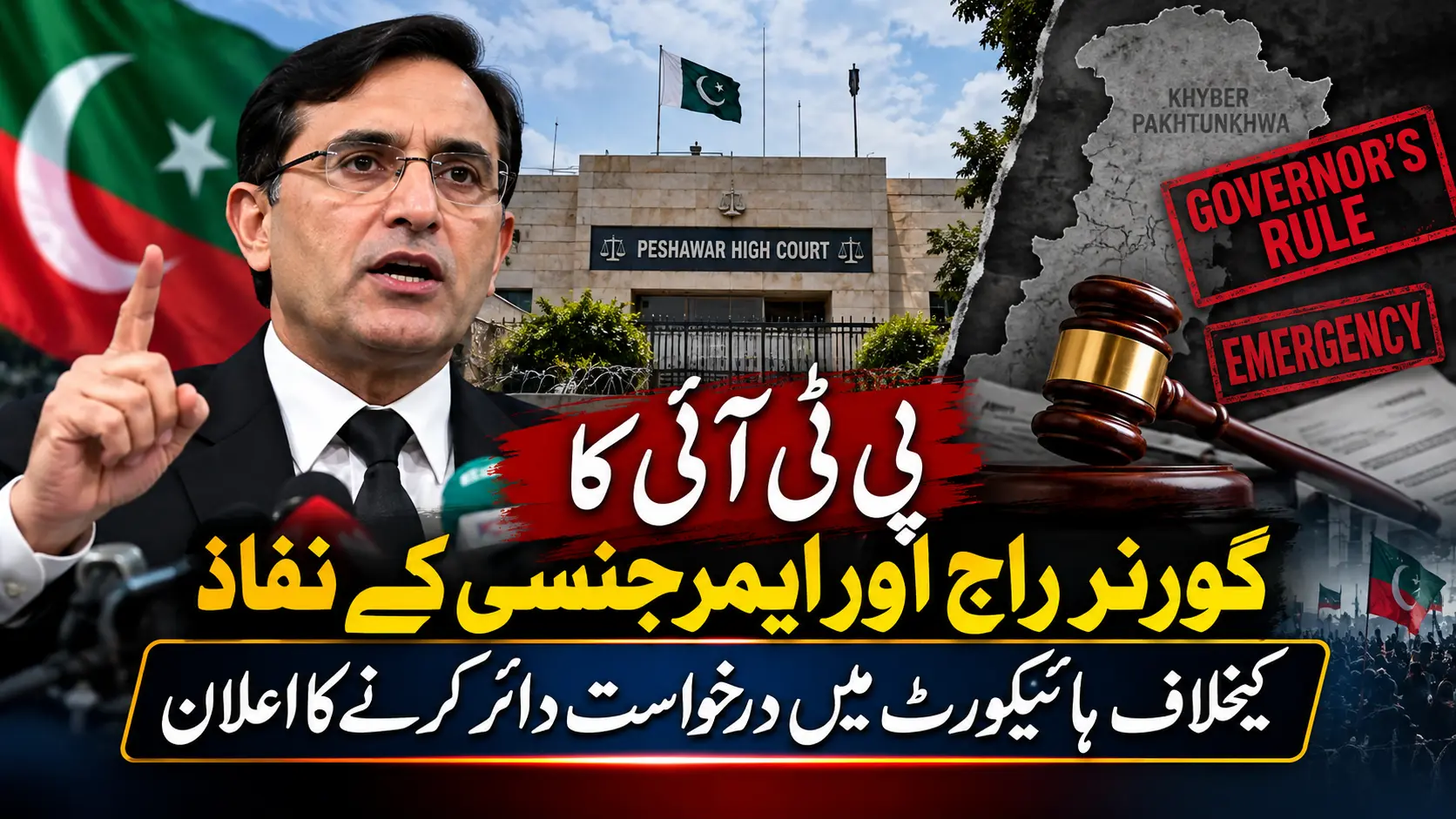
Peshawar, Pakistan: Pakistan Tehreek-e-Insaf (PTI) has announced its decision to challenge the imposition of governor’s rule and emergency measures in Khyber Pakhtunkhwa (KP) before the Peshawar High Court. The announcement comes amid escalating political tensions between the federal government and PTI, raising significant questions about constitutional authority, provincial autonomy, and the future of democratic governance in Pakistan.
PTI Governor Rule KP High Court
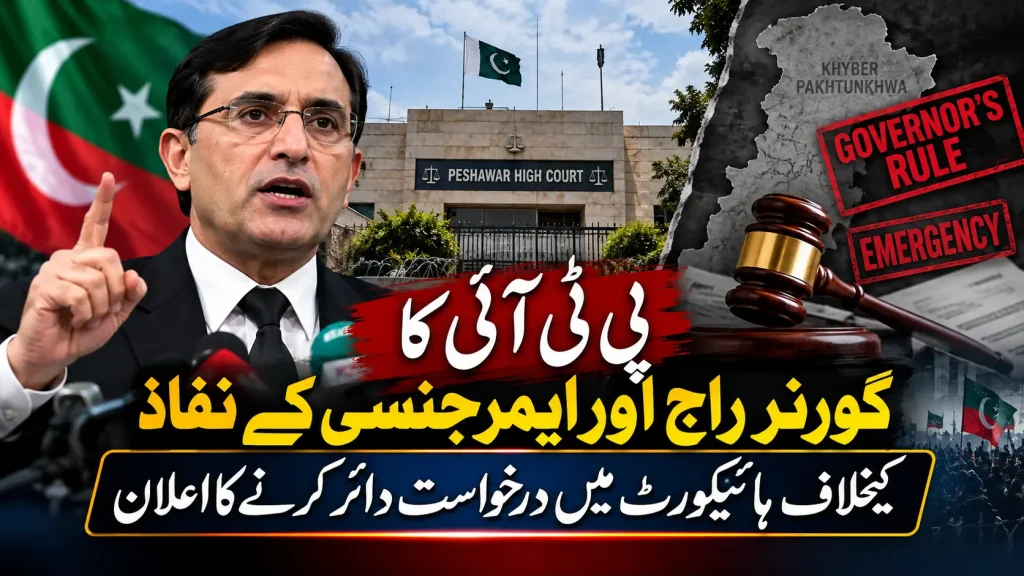
PTI Chairman Barrister Gohar Ali Khan has strongly condemned the federal government’s decision, describing the intervention as unconstitutional and a violation of the democratic mandate of the people of Khyber Pakhtunkhwa.
The development represents another major chapter in Pakistan’s ongoing political crisis, with legal proceedings, opposition protests, and national security concerns placing increasing pressure on the country’s political institutions.
PTI Chairman Barrister Gohar Announces Legal Action
Speaking to the media, PTI Chairman Barrister Gohar Ali Khan confirmed that the party would approach the Peshawar High Court to challenge the emergency measures and governor’s rule introduced in the province.
According to Gohar, the federal government’s intervention undermines the constitutional rights of the province and disregards the mandate given to its elected representatives.
He emphasized that PTI would pursue its opposition through constitutional and legal channels while continuing its political activities.
Gohar also indicated that the party would raise the matter at different political forums, including Parliament and the provincial assembly, to oppose the federal government’s decision.
PTI maintains that disagreements between political parties cannot, by themselves, justify removing the powers of an elected provincial administration.
Why Were Governor’s Rule and Emergency Imposed in KP?
The controversy began on October 11, 2026, when President Asif Ali Zardari approved emergency measures and governor’s rule in Khyber Pakhtunkhwa on the advice of Prime Minister Shehbaz Sharif and following a federal cabinet decision.
The federal government justified its intervention by pointing to the deteriorating security situation, an increase in militant attacks, and concerns about the provincial administration’s response to terrorism.
Federal officials argued that extraordinary measures were necessary to improve coordination between security institutions and restore effective governance in areas affected by militant violence.
The government also accused the PTI-led provincial administration of failing to take sufficient action against militant organizations. PTI has rejected those allegations and has argued that a lack of federal support, resources, and coordination has contributed to the province’s security challenges.
The intervention placed the province’s administration under the authority of the governor, significantly restricting the powers of the previously elected provincial government.
Petition Against Governor’s Rule Filed in Peshawar High Court
Separate from PTI’s announced legal challenge, a constitutional petition was filed in the Peshawar High Court on October 12, 2026, by Advocate Salman.
The petition named President Asif Ali Zardari, Prime Minister Shehbaz Sharif, and Khyber Pakhtunkhwa Governor Faisal Karim Kundi as respondents.
The petitioner argued that the imposition of governor’s rule and emergency measures violated fundamental constitutional principles, provincial autonomy, and the democratic mandate of the province.
The petition requested that the court declare the measures unlawful and suspend the relevant governor’s rule notification pending a final decision.
Barrister Gohar subsequently announced that he would personally challenge the federal government’s decisions in the Peshawar High Court on October 13.
These legal developments could bring the constitutional limits of federal intervention under judicial scrutiny.
What Does Pakistan’s Constitution Say About Governor’s Rule?
The Constitution of Pakistan includes provisions allowing extraordinary federal intervention in specific circumstances.
Article 234 — Failure of Constitutional Machinery in a Province
Article 234 provides a framework for presidential intervention when the government of a province cannot be carried on in accordance with the Constitution.
Under this provision, certain provincial government functions may be assumed by the federal authorities or exercised through the governor.
However, the authority is subject to constitutional procedures, parliamentary oversight, and time limits. The provision does not allow the president or governor to assume the powers of the high court.
Article 232 — Proclamation of Emergency
Article 232 addresses the proclamation of an emergency in situations involving serious threats to national security or internal stability.
Depending on the applicable constitutional conditions, an emergency may permit the federal government to exercise additional authority within a province.
Nevertheless, constitutional requirements concerning approval, duration, and the division of powers remain important.
The central legal question is whether the circumstances in Khyber Pakhtunkhwa justified the use of these extraordinary constitutional provisions and whether the prescribed procedures were followed.
PTI Raises Concerns Over Provincial Autonomy
PTI leaders argue that the federal government’s intervention threatens the principle of provincial autonomy, an important feature of Pakistan’s constitutional structure.
The 18th Constitutional Amendment significantly strengthened provincial responsibilities and authority, making the relationship between federal and provincial governments particularly important.
PTI maintains that the elected government of Khyber Pakhtunkhwa should be allowed to exercise its constitutional responsibilities.
Party representatives have also expressed concern that exceptional constitutional powers could be used to resolve political disagreements rather than address genuine administrative emergencies.
Supporters of the federal government’s position, however, argue that provincial autonomy must be balanced with national security and the government’s responsibility to protect citizens.
The dispute therefore extends beyond party politics and raises broader questions about the boundaries of federal authority.
Political Tensions Continue Across Pakistan
The legal challenge comes amid continuing political confrontation involving PTI, the federal government, and other opposition groups.
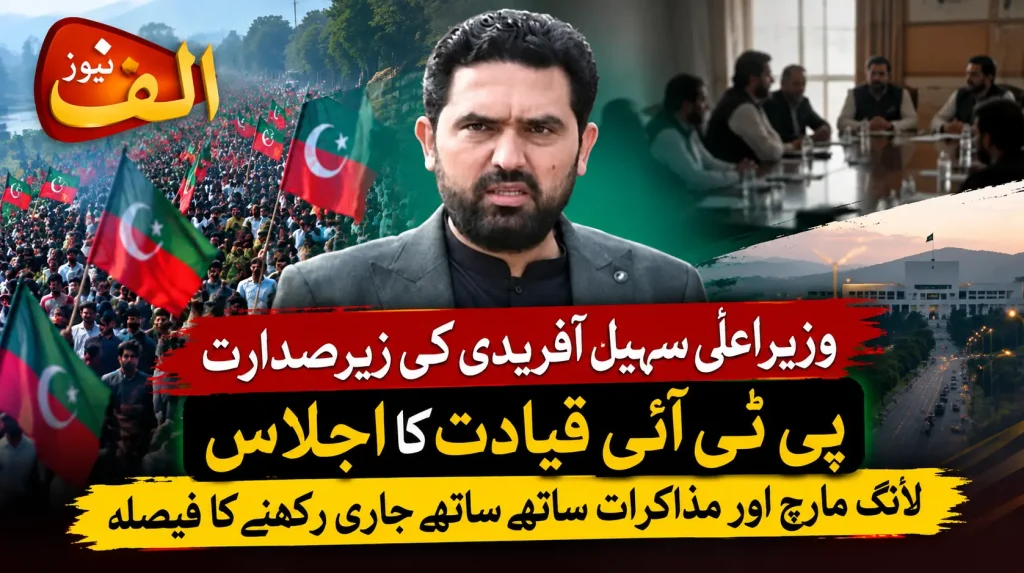
Before the emergency measures were imposed, PTI supporters had been participating in a protest movement led by Khyber Pakhtunkhwa Chief Minister Sohail Afridi.
The demonstrations were linked to demands concerning former Prime Minister Imran Khan, including calls for his release.
Following the federal intervention, reports emerged of the detention of Afridi and several PTI figures, further increasing political tensions.
Opposition leaders, including Mahmood Khan Achakzai, have criticized the government’s decision and expressed support for peaceful political protests and dialogue.
PTI has indicated that its political and constitutional struggle will continue despite the restrictions and the uncertainty surrounding the province’s administration.
Federal Government Defends Emergency Measures
The federal government maintains that security concerns, rather than political rivalry, motivated its decision.
Government representatives have pointed to militant attacks in Khyber Pakhtunkhwa and the need for stronger cooperation among civilian authorities, law enforcement agencies, and security forces.
Federal officials have also accused elements of the former provincial administration of inappropriate relationships with militant groups. PTI categorically denies these accusations.
The dispute highlights contrasting interpretations of the situation.
While the government presents the intervention as necessary to protect public safety and restore administrative effectiveness, PTI considers it an excessive and politically motivated use of federal power.
Whether the government’s evidence and constitutional justification are sufficient will be an important aspect of any judicial review.
How Could Governor’s Rule Affect the People of Khyber Pakhtunkhwa?
Beyond the immediate political controversy, the situation carries practical consequences for residents of the province.
The transfer of administrative authority may influence government decision-making, development planning, public services, and coordination between provincial and federal institutions.
Security remains a particularly sensitive issue for communities affected by militant attacks.
Businesses and investors may also watch the evolving political situation closely because prolonged uncertainty can affect commercial activity and confidence.
For ordinary citizens, the most important concerns include personal safety, access to public services, economic stability, and the continuation of democratic representation.
Any long-term administrative arrangement will need to address these issues while operating within Pakistan’s constitutional framework.
What Could Happen Next?
The Peshawar High Court proceedings may become a significant part of the wider political dispute.
The court could examine the constitutional basis of the emergency and governor’s rule, the procedures followed by federal authorities, and the claims raised by petitioners concerning provincial rights.
Depending on the legal arguments and evidence, the court may also consider requests for interim relief.
At the same time, political developments will remain important.
PTI has announced that it intends to continue its opposition to the measures, while federal authorities have emphasized the need to address security threats.
Parliamentary oversight, possible further litigation, and renewed negotiations between political stakeholders could all influence the direction of the crisis.
As of October 13, the ultimate outcome of PTI’s announced legal challenge remains uncertain.
Conclusion
PTI’s announcement that it will challenge governor’s rule and emergency measures in the Peshawar High Court marks a significant development in Pakistan’s political and constitutional landscape.
The controversy reflects deep disagreements over the federal government’s powers, the responsibilities of provincial administrations, and the measures required to address serious security threats.
While PTI argues that the intervention violates provincial autonomy and democratic representation, the federal government insists that national security concerns require decisive action.
The coming legal proceedings may help clarify the constitutional limits of emergency authority and determine whether the measures imposed in Khyber Pakhtunkhwa can withstand judicial scrutiny.
For Pakistan, the challenge will be to address genuine security concerns while preserving constitutional safeguards, democratic institutions, and the rights of its citizens.