

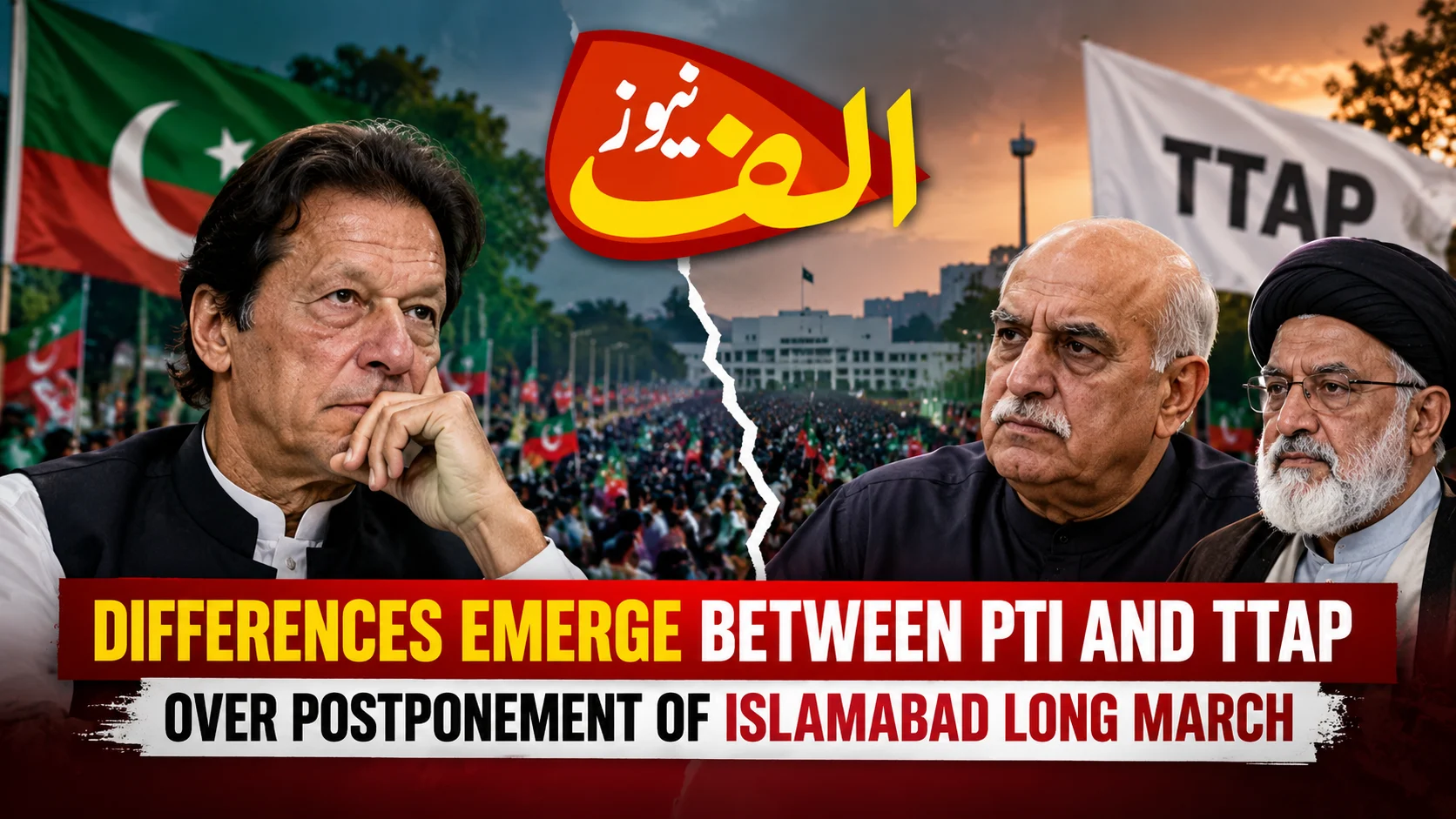
Political differences have emerged between Pakistan Tehreek-e-Insaf (PTI) and its opposition allies in the Tehreek Tahafuz Ayeen-e-Pakistan (TTAP) following PTI’s decision to postpone its planned long march towards Islamabad.
PTI TTAP Long March Differences
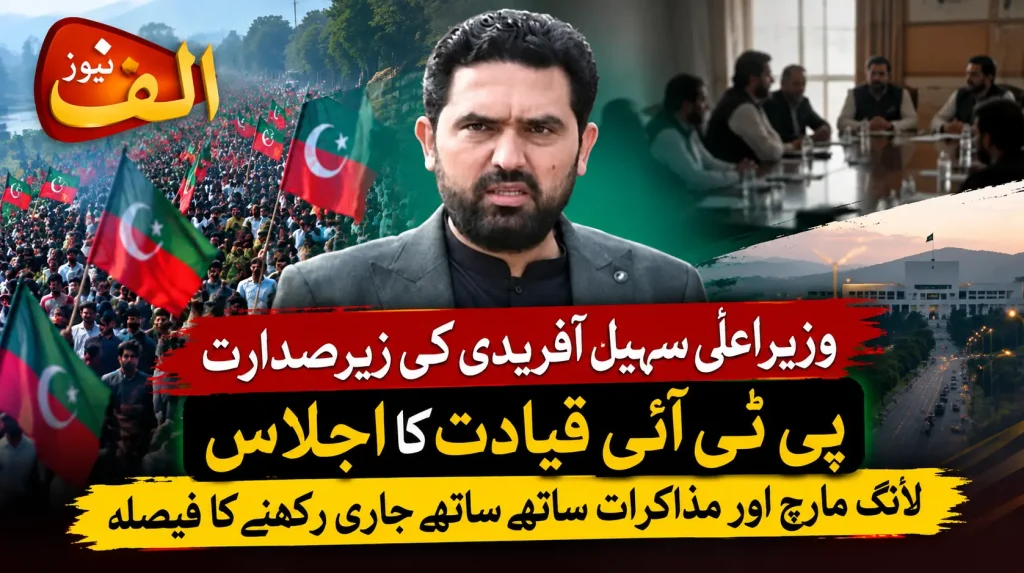
The march was originally scheduled for September 27, 2026, but PTI later announced that it would begin from Peshawar on October 4. Khyber Pakhtunkhwa Chief Minister Sohail Afridi said the decision had been approved unanimously by PTI’s political committee and presented the postponement as part of the party’s political strategy.
However, the decision has exposed differences between PTI and some of its key opposition allies, particularly over consultation and decision-making within the broader opposition alliance.
Why Was the Long March Postponed?
PTI had been preparing for a major march towards Islamabad as part of its continuing political campaign. Among the demands publicly discussed by party figures were the release of PTI founder Imran Khan and other political prisoners, fresh elections, and an inquiry into the events of May 9 and the November 26 crackdown.
In the days before the scheduled march, uncertainty emerged over whether PTI would proceed on September 27.
The federal government had also made extensive security preparations. Rangers were authorised for deployment in Islamabad and several districts of Punjab, while restrictions and road blockades were put in place ahead of the planned mobilisation.
PTI eventually shifted the march to October 4. CM Sohail Afridi described the move as a political strategy rather than a retreat from the protest campaign.
Reports, however, cited several other considerations discussed within the party. These included logistical difficulties, availability of transport and equipment, road blockades and questions about overall preparedness. Dawn reported that party insiders gave a range of explanations for the postponement, while PTI publicly emphasised strategic considerations.
TTAP Raises Concerns Over Lack of Consultation
The most significant political consequence of the postponement has been disagreement between PTI and the Tehreek Tahafuz Ayeen-e-Pakistan.
According to reports, TTAP figures were unhappy that they had not been adequately consulted before the decision to postpone the September 27 march was made. The concerns centred not only on changing the date but also on the broader process through which major decisions concerning the opposition movement were being taken.
TTAP leaders Mahmood Khan Achakzai and Allama Raja Nasir Abbas initially suggested that PTI should proceed according to the original plan. According to Dawn, they later agreed to respect PTI’s decision but did not endorse the postponement itself. TTAP’s spokesperson nevertheless said the alliance would support PTI’s October 4 march.
This distinction is politically important: the disagreement does not necessarily amount to a complete split between PTI and TTAP, but it highlights tensions over coordination and collective decision-making.
Raja Nasir Abbas Communicates Concerns
Reports on September 28 said Allama Raja Nasir Abbas had conveyed TTAP’s reservations to the PTI leadership and argued that the march should not have been postponed.
The disagreement therefore appears to be centred primarily on how the decision was reached rather than on whether the opposition should continue its political movement.
For an alliance made up of different political parties and groups, consultation is particularly important because each participant has its own leadership, supporters and political priorities. Decisions concerning nationwide protests can affect all alliance members, making coordination a central issue.
Mahmood Khan Achakzai’s Position
Mahmood Khan Achakzai also emerged as an important figure in discussions surrounding the march.
According to reports, PTI leadership contacted Achakzai as discussions over postponement continued. He initially maintained that the September 27 mobilisation should proceed. Reports indicated that he questioned why his input was being sought over postponement when the original date itself had not been properly discussed with him.
This episode illustrates the wider challenge facing opposition alliances: maintaining a common political objective does not automatically produce agreement over tactics.
PTI, with its larger organisational structure and support base, may take decisions based on its internal assessments. Its allies, meanwhile, may expect decisions announced in the name of a broader opposition movement to be made collectively.
Internal Debate Within PTI
The controversy was not limited to PTI’s relationship with TTAP.
Reports also indicated differing views within PTI about the timing and strategy of the march. Before the postponement was officially announced, some PTI representatives publicly rejected suggestions that a delay had already been decided.
On September 25, for example, PTI spokesperson Sheikh Waqas Akram said no proposal to postpone the march was under discussion at a party forum and maintained that only Imran Khan could take such a decision.
Subsequent discussions led the political committee to approve the postponement. Reports also suggested that party leaders debated whether a new date should immediately be announced, with concerns that postponing the march without giving supporters a fresh date could be interpreted as a withdrawal.
Ultimately, October 4 was announced as the new date.
Security Measures Add Another Dimension
The dispute unfolded against a tense security backdrop.
Ahead of the original September 27 march, authorities made significant preparations to prevent disruption and maintain security around Islamabad and routes leading towards the capital.
The federal government authorised Rangers deployments in Islamabad and parts of Punjab, while restrictions on roads and communications were also considered or implemented in connection with the protest preparations.
PTI leaders argued that delaying the march could force the government to maintain costly security preparations for longer. Party figures also presented the postponement as a way of changing the political and logistical calculations surrounding the demonstration.
These are PTI’s stated strategic arguments; reports citing party insiders also pointed to organisational and logistical considerations behind the delay.
What Do the Differences Mean for the Opposition Alliance?
The disagreement raises broader questions about how PTI and TTAP will coordinate future political activities.
A political alliance can contain disagreements without collapsing, particularly when its members continue to share major objectives. In this case, available reporting indicates that TTAP intends to continue supporting the October 4 march despite reservations about the postponement.
However, repeated disagreements over consultation could complicate future decision-making.
Major questions remain over who determines protest dates, how alliance leaders are consulted, whether strategies are approved collectively and how disagreements are communicated publicly.
The effectiveness of future opposition mobilisation may therefore depend partly on whether PTI and its allies establish a clearer process for making joint decisions.
October 4 Becomes the Next Key Date
Following the postponement, attention has shifted to October 4.
PTI says its long march will depart from Peshawar on that date. The party has maintained that the delay represents a change in strategy rather than abandonment of the protest.
For PTI, the coming days will involve preparations and mobilisation. For TTAP, they may also provide an opportunity to address concerns over consultation and clarify how the alliance will participate in the march.
The government’s response, security arrangements and any political negotiations before October 4 could also affect how events develop.
Conclusion
The postponement of PTI’s Islamabad long march from September 27 to October 4 has revealed differences between PTI and the Tehreek Tahafuz Ayeen-e-Pakistan over political coordination and consultation.
While PTI’s political committee approved the postponement and its leadership has described it as a strategic decision, TTAP leaders expressed reservations about being left out of key discussions. Mahmood Khan Achakzai and Allama Raja Nasir Abbas initially favoured maintaining the original plan, although the alliance subsequently indicated that it would support the October 4 mobilisation.
The episode therefore reflects a dispute over strategy and decision-making rather than, on current evidence, a formal break between the allies.
As October 4 approaches, the extent to which PTI and TTAP coordinate their next steps will be an important factor in the opposition’s planned mobilisation and in Pakistan’s broader political developments.