

Pakistan’s political landscape feels like a rubber band stretched to its absolute snapping point.
PTI September 27 protest legal showdown, Within a span of hours, the battle lines moved across three provincial arenas simultaneously: the Islamabad High Court (IHC) convened a larger bench to tackle a petition aimed at halting a nationwide march; Khyber Pakhtunkhwa Chief Minister Sohail Afridi drew a hard line in the sand on the streets of Sindh; and in Lahore, one of the opposition’s most prominent underground figures reemerged inside an anti-terrorism courtroom under heavy police guard.
For citizens trying to commute to work, run neighborhood businesses, or simply keep track of the evening bulletins, the feeling of déjà vu is palpable. It is a recurring national playbook where judicial benches, shipping containers, and political defiance converge into a single, high-stakes standoff.
1. The Capital on Notice: IHC Benches and the September 27 Shadow
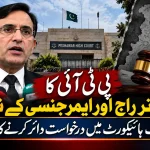
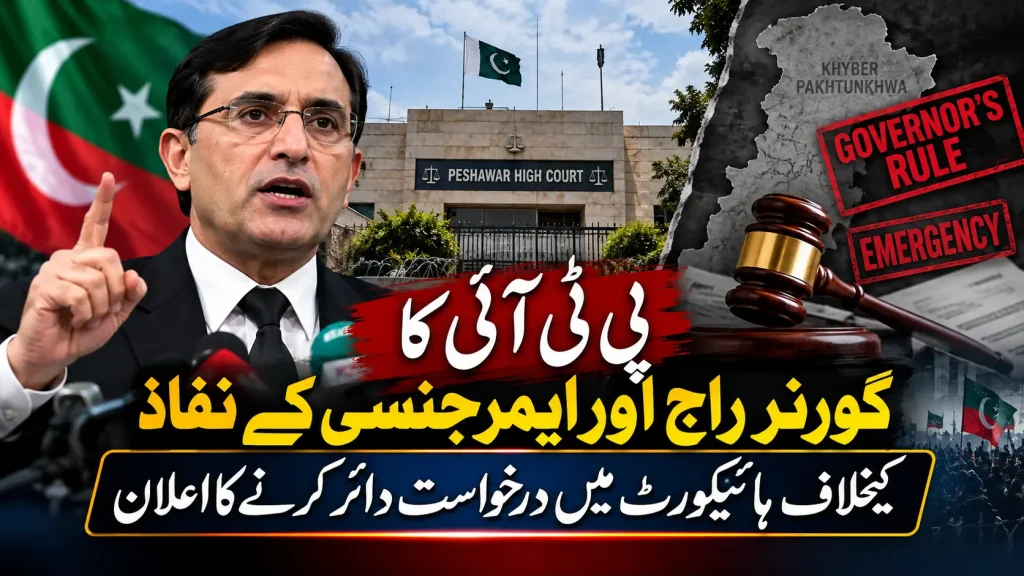
In Islamabad, the judicial gears turned rapidly. The Islamabad High Court constituted a larger three-member bench—led by Chief Justice Sardar Sarfraz Dogar alongside Justice Azam Khan and Justice Muhammad Asif—to hear a petition directly challenging Pakistan Tehreek-e-Insaf’s (PTI) planned September 27 march into the federal capital.
The legal filing, brought forward by an Islamabad trader, was not treated as routine paper traffic. Citing the profound constitutional and public-order questions involved, the bench issued direct summons to:
- The Advocate Generals and Chief Secretaries of all four provinces.
- The Inspectors General of Police (IGPs) of Punjab, Sindh, Khyber Pakhtunkhwa, and Balochistan.
- Islamabad’s Chief Commissioner, Deputy Commissioner, and police chief.
- The Attorney General for Pakistan.
PTI September 27 protest legal showdown
The courtroom arguments laid bare the real dilemma facing the capital: where does the constitutional right to assembly end, and the state’s mandate to protect civic life and commerce begin? The petitioner argued that previous mobilizations disrupted daily life, inflicted massive economic losses, and placed law enforcement in mortal danger.
With the opposition framing September 27 as a decisive public referendum demanding the release of party founder Imran Khan, the courtroom on Constitution Avenue has effectively become the immediate battleground over whether the march will even be allowed to leave provincial borders.
2. The Battle for Mazar-i-Quaid: Afridi’s Convoy Meets the Karachi Gridlock
While judges examined statutory precedents in Islamabad, the political friction was visceral on the asphalt of Karachi.
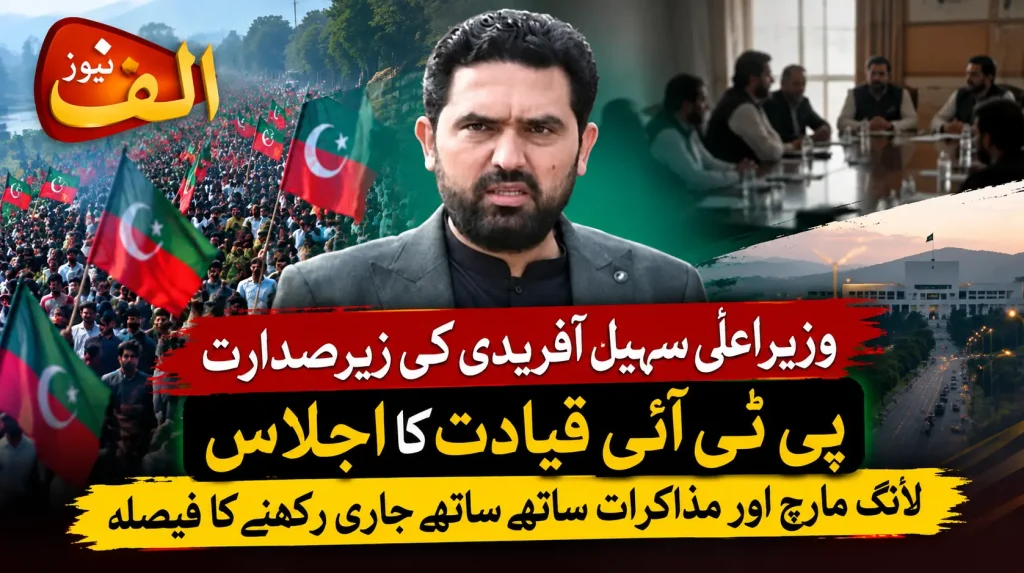
Khyber Pakhtunkhwa Chief Minister Sohail Afridi, spearheading a multi-day mobilization tour through Sindh to rally momentum for the September 27 deadline, hit a literal wall around the mausoleum of the Quaid-e-Azam.
As traffic diversions severed arterial passages around Shahrah-e-Quaideen and police locked down routes surrounding Bagh-e-Jinnah citing security threats, Afridi took an uncompromising posture. Declaring that he would not take a single step out of Sindh without staging a gathering in Karachi, the provincial chief executive challenged local administrative curbs head-on:
“If we cannot reach Karachi today, God willing, we will hold the rally tomorrow; if not tomorrow, then the day after… I will stay here until the objective is achieved.”
The scene illustrated the surreal federal friction defining contemporary governance: a sitting provincial chief minister from the northwest leading caravans across the southern coastline, while local municipal forces erect metal shipping containers and issue warnings of zero tolerance. For everyday Karachiites navigating sudden roadblocks in the sweltering coastal humidity, the political tussle translated into hours of stalled engines and bypassed intersections.
3. Lahore: The Quiet End of a Three-Year Disappearance
A thousand kilometers to the north, the focus turned somber inside an Anti-Terrorism Court in Lahore.
Former federal minister Hammad Azhar—who had spent roughly three years underground following the widespread crackdowns linked to the May 9, 2023 unrest—was formally produced before an ATC judge under tight security.
The court granted police a substantial 20-day physical remand. The development unfolded amid frantic legal wrangling by Azhar’s family, whose legal team filed petitions in the Lahore High Court demanding transparency regarding his initial detention in Multan and full disclosure of the dozens of cases registered against him.
Azhar’s transfer from prolonged hiding into state custody marks the closing of another chapter from the 2023 fallout. It serves as a stark reminder of the immense personal and legal costs bearing down on the party’s central leadership, even as its provincial grassroots attempt to revive large-scale street movements.
What It All Means for the Road Ahead
These three episodes are deeply intertwined parts of a single systemic crisis:
- The Stretched Judiciary: Courts are consistently forced to serve as frontline arbiters between executive security orders and opposition assembly rights, carrying an exhausting administrative load that tests institutional bandwidth.
- The Federal Breakdown: A sitting Chief Minister having his convoy blockaded in a sister province underscores the complete absence of inter-provincial dialogue or institutional norms.
- The Living Costs of Friction: While political forces calibrate their logistical might for September 27, the wider public bears the brunt of restricted movement, closed bazaars, and security alerts.
Whether through courtroom rulings or street demonstrations, Pakistan’s political trajectory over the coming weeks will determine whether cooler heads can carve out a path toward civic stability, or whether the country remains locked in this exhausting cycle of confrontations.