




Pakistan Tightens Fuel Conservation Measures as Petrol Costs Stay High, Pakistan has entered another phase of fuel conservation as the federal government moves to cut public-sector spending and reduce energy use amid higher international oil costs and continued uncertainty in the Gulf.
The measures announced on September 17 include a 50 percent reduction in fuel provided to many official government vehicles for three months, restrictions on foreign travel, a ban on new government vehicle purchases, tighter market timings and limits on official events. The government has presented the steps as part of a broader effort to reduce unnecessary expenditure and protect fuel supplies during a difficult period for global energy markets.
For ordinary Pakistanis, however, the story is not only about government offices and official cars. Higher fuel prices eventually reach almost every part of daily life, from transport fares and delivery costs to food prices, school runs and small businesses.
That is why the latest fuel conservation drive is being closely watched across the country.
Markets and Businesses Face Earlier Closing Times
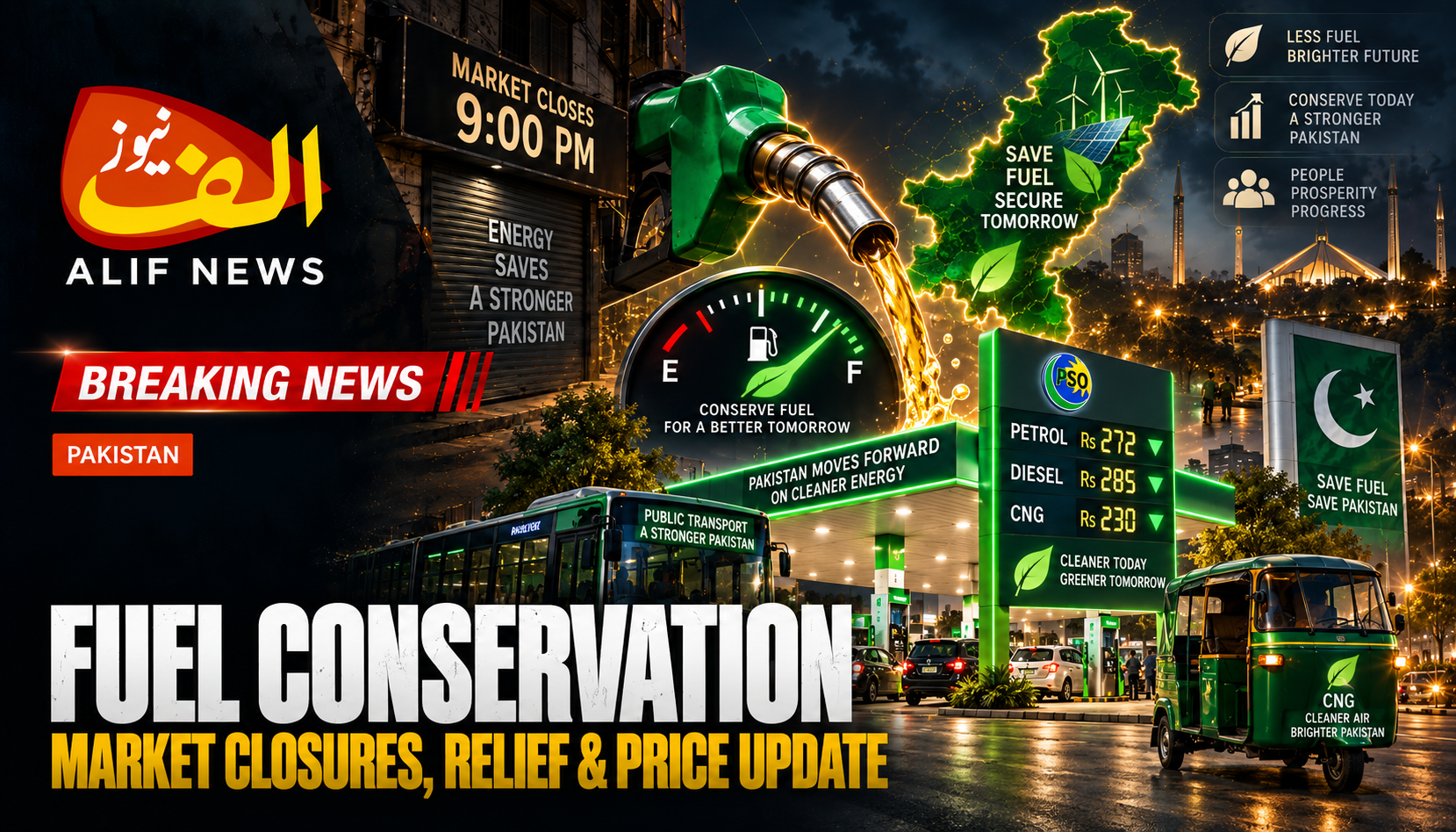
Under the announced measures, shops, markets, shopping malls, bazaars and general stores are expected to close by 9pm. Marriage halls and venues hosting festive events are to close by 10pm, while restaurants, cafés and food outlets can remain open until 11pm. Takeaway and home-delivery services are exempt from the restaurant closing restriction.
A number of essential and service-based businesses are exempt. These include pharmacies, hospitals, clinics, laboratories, standalone bakeries and tandoors, milk shops, petrol and CNG stations, electric vehicle charging points, gyms, sports facilities, IT companies and call centres.
The government has also asked provincial and regional administrations to consider adopting similar fuel-saving measures, meaning implementation may depend in part on decisions taken outside the federal government.
For shopkeepers, restaurants and wedding businesses, the impact will depend on how long the restrictions remain and how strictly they are enforced. Businesses that depend heavily on evening customers may have to adjust staffing, delivery schedules and opening hours.
Government Fuel Use Cut by Half
One of the most visible parts of the new austerity plan is the 50 percent cut in fuel allocations for official vehicles.
The reduction applies for three months, although operational vehicles belonging to the armed forces, civil armed forces, law-enforcement agencies, essential services and the Federal Board of Revenue are exempt. Administrative and non-operational formations are generally covered by the restriction.
The government has also prohibited the purchase of new vehicles and most durable goods, with an exception for IT-related procurement.
Official dinners have largely been banned, government-funded seminars and conferences restricted, and authorities have been encouraged to use teleconferencing instead of unnecessary travel for meetings.
These measures are intended to show that public institutions are also being asked to absorb part of the pressure created by rising fuel costs.
Prime Minister Shehbaz Sharif said the government and higher-income groups should make sacrifices first as the country responds to international energy pressures.
One-Dish Rule Returns for Weddings
The fuel conservation plan also includes a rule requiring one dish at marriage-related functions and events.
For Pakistanis, this is a familiar type of austerity measure. Wedding restrictions have been introduced at different times in the past, usually as part of efforts to reduce unnecessary spending or energy consumption.
Whether the rule significantly affects national fuel use will depend on implementation, but the government appears to be treating the measure as part of a wider message about reducing consumption during a period of pressure.
Petrol Price Falls Slightly, Diesel Goes Up
The timing of the austerity plan is particularly important because fuel prices remain high.
Effective September 18, the price of petrol was reduced by only Rs0.43 per litre, bringing the new price to Rs390.79 per litre.
High-speed diesel, meanwhile, increased by Rs3.47 per litre to Rs424.92 per litre. The revised rates are also reflected in Pakistan State Oil’s official fuel-price listing.
Diesel prices matter well beyond private vehicle owners.
Much of Pakistan’s goods transport, agriculture and commercial logistics relies on diesel. When diesel becomes more expensive, transport companies can face higher operating costs, which may eventually affect the prices consumers pay for food and other goods.
Fuel Relief Scheme Offers Help to Smaller Vehicles
Alongside conservation measures, the government has launched a targeted fuel subsidy programme for owners of motorcycles, rickshaws and smaller cars.
Under the approved plan, owners of two- and three-wheel vehicles can receive relief equivalent to Rs100 per litre on a limited monthly allocation. Owners of cars up to 800cc are also eligible for targeted relief under the scheme.
The government says the programme is designed to protect lower-income and middle-income households from some of the pressure created by expensive fuel.
Registration and delivery are being handled through a digital Fuel Pass System, with authorities aiming to limit the subsidy to eligible non-commercial users.
First-Day Problems Show the Challenge of Implementation
The launch has not been completely smooth.
On the first day of the nationwide rollout, some petrol stations reportedly refused or were unable to process subsidised fuel transactions because of technical and reimbursement concerns.
Petroleum dealers raised questions about how quickly they would receive the money they had effectively discounted for customers. Government officials later held talks with dealer representatives, while the State Bank mechanism was described as providing reimbursement within 48 hours for participating stations.
The government also directed authorities to establish complaint and technical-support mechanisms so that eligible consumers with valid tokens would not be turned away unnecessarily.
These early problems do not necessarily determine whether the scheme will succeed, but they show that a digital subsidy is only useful if petrol stations, consumers and government systems can work together reliably.
Why Pakistan Is Focusing on Fuel Conservation
The broader problem lies outside Pakistan’s borders as much as inside them.
International energy markets have been unsettled by conflict and disruption affecting Gulf supply routes. Pakistan remains dependent on imported energy, making the economy sensitive to sudden increases in global oil and gas prices. Reuters reported that the regional crisis has contributed to higher fuel costs and growing pressure on energy-importing countries, including Pakistan.
When international prices rise sharply, the impact can spread quickly through Pakistan’s economy.
Transport becomes more expensive. Businesses pay more to move goods. Electricity and industrial costs can come under pressure. Families have to devote a larger share of their income to daily travel.
That is the difficult environment in which the government is now trying to balance conservation, subsidies and public spending cuts.
What Happens Next?
The success of the latest austerity measures will depend less on announcements and more on implementation.
Markets will want clarity on closing rules. Petroleum dealers will need reliable reimbursement. Consumers will expect the fuel subsidy system to work without repeated technical problems. Government departments will also have to demonstrate that official spending restrictions are actually being followed.
For many Pakistanis, the most important question is simple: will these steps prevent the fuel crisis from becoming another major increase in household expenses?
There is no quick answer yet.
The government is trying to reduce demand while shielding some vulnerable consumers from the full cost of fuel. But with Pakistan still exposed to international oil prices, much will depend on how long regional energy disruptions continue.
For now, the new restrictions are a reminder of how quickly events thousands of kilometres away can reach a market, petrol pump or household budget in Pakistan.