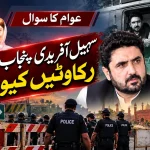





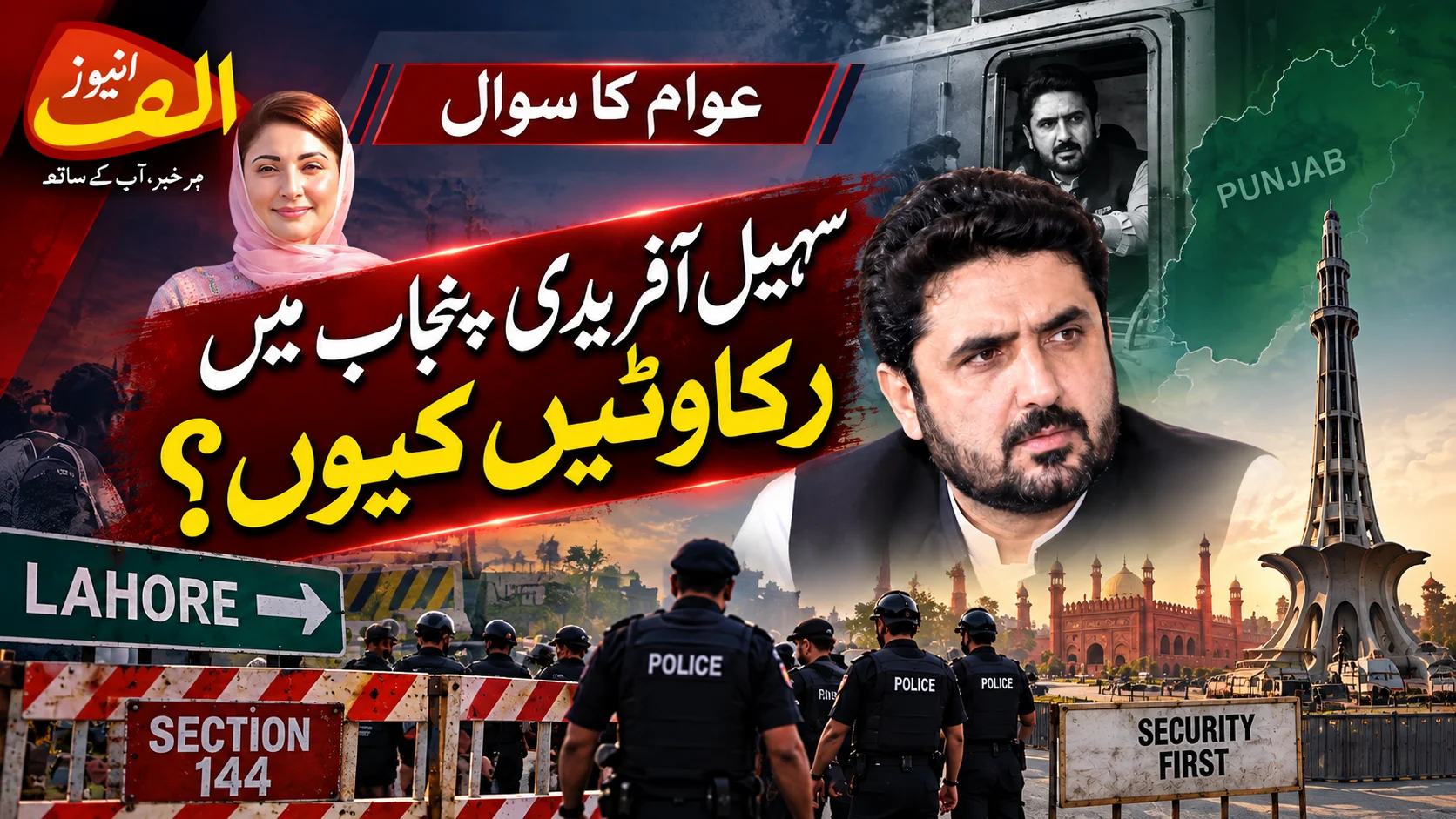
Khyber Pakhtunkhwa Chief Minister Sohail Afridi’s recent visit to Punjab, particularly Lahore, became the centre of a major political confrontation, with road blockades, police restrictions, detentions of PTI workers and competing claims between the Khyber Pakhtunkhwa and Punjab governments.
Afridi arrived in Lahore on September 14, 2026, during a wider political mobilisation by Pakistan Tehreek-e-Insaf (PTI). His trip was linked to the party’s planned street movement ahead of a protest drive scheduled for September 27. He also visited the family of deceased PTI worker Ishtiaq Ahmad.
So why did Sohail Afridi face so many obstacles in Punjab? The answer involves a combination of security restrictions, protest-related laws, police action and an increasingly tense political environment.
Section 144 and Restrictions on Political Gatherings
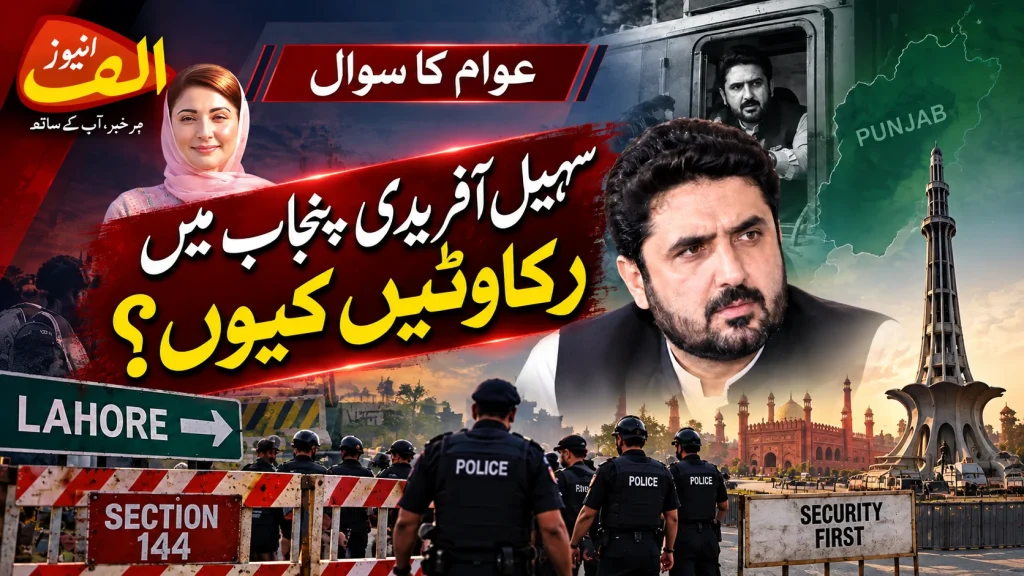
One of the biggest factors affecting Afridi’s Punjab visit was the enforcement of Section 144 across the province.
Ahead of the visit, the Punjab government imposed restrictions on gatherings of five or more people in public places, roads and open spaces. The order, which was in effect until September 17, also restricted processions and the public display of weapons.
Punjab authorities said the restrictions were intended to maintain law and order and cited security concerns surrounding large public gatherings.
Because Afridi’s visit involved meetings with PTI supporters and political mobilisation, the restrictions created immediate complications for the planned activities.
Police Blockades During the Lahore Visit
Reports from Lahore described police blockades and restrictions on routes as Afridi and his convoy travelled through the city.
According to Dawn, the KP chief minister and members of his cabinet encountered police blockades while entering Punjab and later inside Lahore. Entry and exit points were restricted, while tensions and occasional scuffles were reported between police and PTI supporters.
Afridi later alleged that police had blocked routes, detained party workers, removed tents and taken other measures intended to restrict PTI’s street movement. These were allegations made by the chief minister; the Punjab government disputed the broader portrayal of the operation as political victimisation.
Detention of PTI Workers
Another source of confrontation was the detention of PTI leaders and workers.
During Afridi’s Lahore activities, PTI Lahore president Mian Akram Usman and Shabbir Gujjar were reportedly detained. Afridi responded by entering a police van while demanding the release of detained party members.
Separate reports said at least 14 PTI workers were arrested in connection with rallies, protests, road blockages and slogan chanting during the Lahore visit.
Afridi later claimed that more than 2,000 PTI workers had been detained during the two-day Lahore mobilisation. That figure was presented as Afridi’s claim and should not be treated as an independently verified arrest total.
The Police Van Controversy
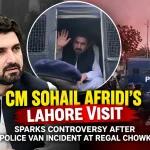
One of the most widely discussed moments of the visit occurred when Sohail Afridi entered a police van during a protest over the detention of PTI leaders.
The vehicle later moved away with Afridi inside and he was subsequently dropped near Lakshmi Chowk.
Afridi described the incident as an “abduction” by authorities. However, Punjab Information Minister Azma Bokhari rejected that account, saying Afridi had voluntarily entered the police vehicle. Video footage cited by news reports showed Afridi walking towards and entering the van before refusing requests to leave it.
The episode quickly became a major political dispute, with PTI presenting it as evidence of mistreatment while the Punjab government strongly rejected Afridi’s interpretation of events.
Why Was the Punjab Government on High Alert?
Afridi’s visit did not take place as an ordinary inter-provincial political trip.
PTI had announced plans for a 13-city Punjab mobilisation campaign as part of preparations for its September 27 protest drive. The planned route included several major Punjab cities before reaching Lahore.
At the same time, authorities were preparing for possible demonstrations in Islamabad and Punjab. This placed Afridi’s movements within a broader security and political context rather than treating the visit simply as an official trip by a provincial chief minister.
The Punjab government maintained that restrictions were related to security and public order. Afridi and PTI, meanwhile, argued that the measures amounted to political victimisation and an effort to restrict their political activity.
Political Tensions Between Punjab and Khyber Pakhtunkhwa
The events also highlighted the political tension between the PTI-led Khyber Pakhtunkhwa government and the PML-N-led Punjab government.
Afridi repeatedly criticised the Punjab administration over its handling of PTI supporters. Punjab officials responded by rejecting his allegations and questioning his political activities in Lahore.
As a result, routine questions involving security, public gatherings and police management became part of a wider political dispute between the two provincial leaderships.
Public Disruption and Traffic Problems
The political mobilisation also affected ordinary residents.
Large numbers of supporters gathered at different locations as Afridi travelled through Lahore. Frequent stops by the convoy, police measures and road restrictions contributed to significant traffic congestion in parts of the city, particularly around the Walled City and central Lahore.
This added another dimension to the controversy: balancing the right to political activity with security requirements and the movement of the general public.
What Does Sohail Afridi’s Punjab Visit Show?
Sohail Afridi’s Punjab visit demonstrated how quickly political mobilisation can become a confrontation when security restrictions, opposition protests and competing provincial governments intersect.
The obstacles he encountered included Section 144 restrictions, police blockades, detentions of PTI workers and disputes over access to protest locations. Afridi characterised many of these measures as political victimisation, while Punjab authorities said their actions were connected to law and order and rejected some of his most serious allegations.
The Lahore visit therefore became more than a provincial chief minister’s political tour. It turned into another prominent episode in Pakistan’s continuing debate over political protest, policing, public order and the space available for opposition mobilisation.