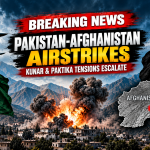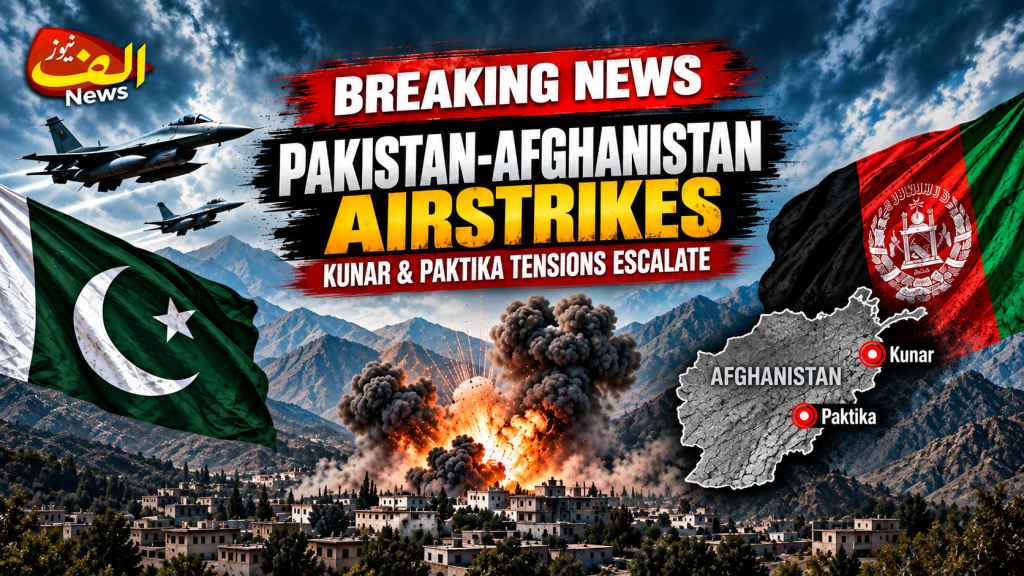





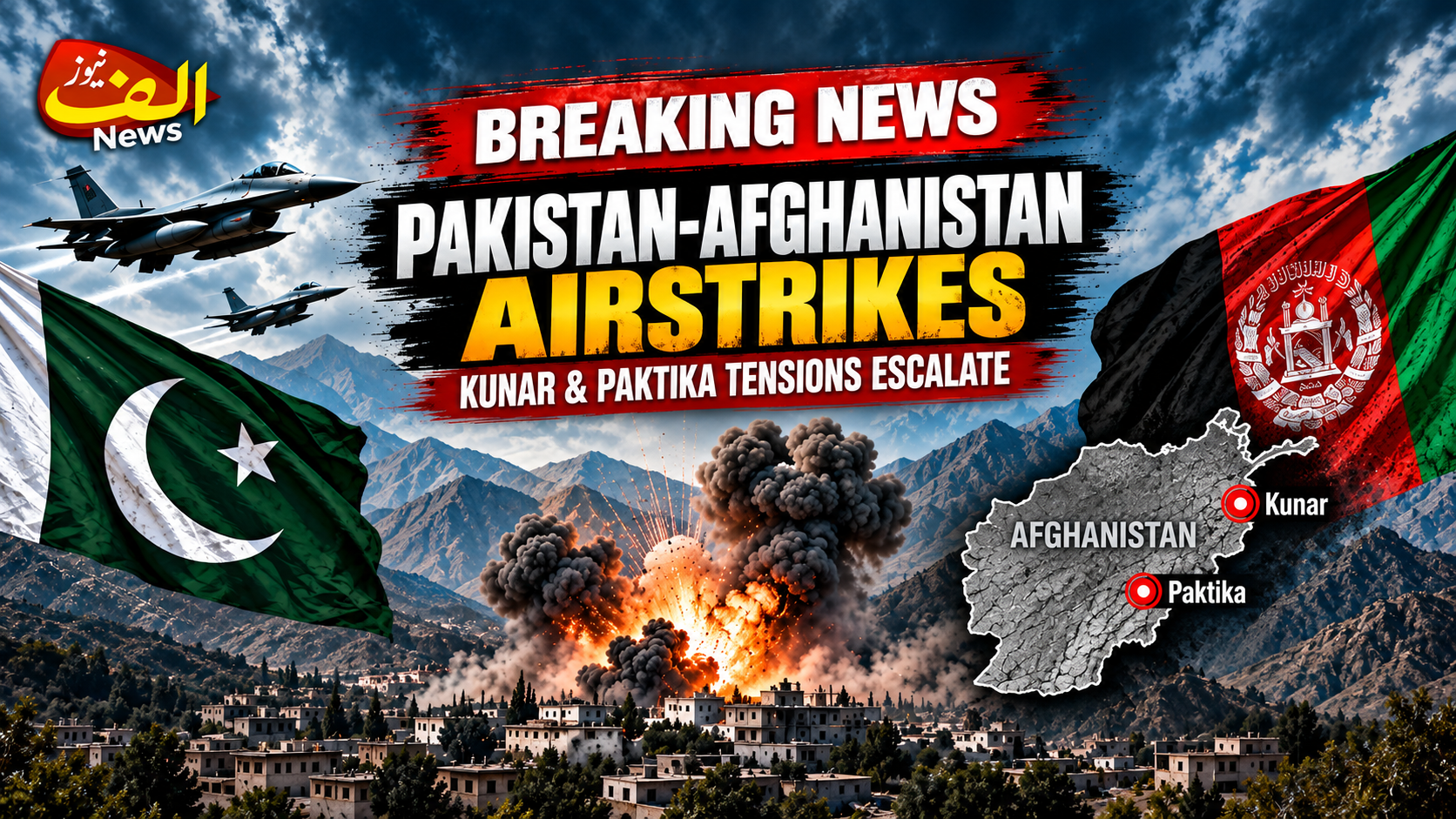
Pakistan Afghanistan Airstrikes 2026, Fresh tension between Pakistan and Afghanistan has returned to the headlines after Pakistani aircraft carried out strikes in eastern Afghanistan on September 21, 2026, according to Afghan officials and international news agencies.
The strikes reportedly hit locations in Kunar and Paktika provinces, bringing renewed attention to the already difficult relationship between Islamabad and Kabul. Pakistani security officials cited by the Associated Press said the operation targeted suspected militant hideouts and claimed 28 militants were killed. Afghan authorities, however, said three civilians from the same family were killed and four others were wounded in Kunar.
The sharply different accounts underline one of the biggest challenges in covering the Pakistan-Afghanistan security crisis: both governments agree that violence along the border is a serious problem, but they strongly disagree about its causes, responsibility and the impact of military action.
What Happened in Kunar and Paktika?
According to Afghan officials, strikes were reported in Kunar province as well as the Barmal district of Paktika.
Taliban deputy spokesman Hamdullah Fitrat said a house in Kunar was hit, killing three members of a family and injuring four others. He said two locations were also struck in Paktika, where a shop and an empty house were damaged without reported casualties. Reuters reported that Pakistan’s military had not immediately responded to its request for comment at the time of publication.
The Associated Press later reported that Pakistani security officials described the targets as suspected militant hideouts and said 28 militants had been killed. Afghanistan’s authorities rejected that account and described those killed in Kunar as civilians.
At this stage, the conflicting casualty claims have not been independently reconciled.
That distinction matters. Reporting the Pakistan Afghanistan Airstrikes 2026 versions separately is important because presenting either side’s claim as independently established fact would go beyond what the available evidence currently supports.
Why Have Pakistan Afghanistan Airstrikes 2026 Tensions Increased?
The latest strikes did not happen in isolation.
Pakistan has repeatedly accused militant groups, particularly the Tehreek-e-Taliban Pakistan, of operating from Afghan territory and carrying out attacks inside Pakistan. Afghanistan’s Taliban government rejects accusations that it allows its territory to be used for attacks against Pakistan and has argued that Pakistan’s militancy problem is primarily an internal matter.
Pakistan’s Foreign Office publicly restated its position only days before the latest strikes. In a September 17 briefing, the ministry said Pakistan wants an assurance that terrorism originating from Afghan territory will stop. It also said Islamabad remains willing to pursue dialogue and has involved countries including Qatar, Türkiye and China in mediation efforts.
That creates a difficult situation: Pakistan says cross-border militancy has reached an unacceptable level, while Kabul disputes Islamabad’s allegations about militant sanctuaries.
Kohat Attack Put Security Back in the Spotlight
The latest escalation came after another deadly period inside Pakistan.
On September 18, an explosives-laden vehicle struck a police compound in Kohat during Friday prayers, followed by an armed assault. Reuters initially reported at least 16 deaths and dozens of injuries, while later reports put the death toll higher. No group immediately claimed responsibility, and the TTP publicly denied involvement.
Alif News previously reported on the Kohat Police Lines attack and the provincial response, including emergency medical measures ordered after the incident.
The attack added to broader security concerns in Khyber Pakhtunkhwa, where militant violence has remained a major challenge.
Pakistan Says Cross-Border Militancy Is the Core Issue
Islamabad’s public position has remained consistent for months.
Pakistan’s Foreign Office has argued that elements based in Afghanistan are supporting or enabling militant attacks in Pakistan. In its September 17 briefing, the ministry said Pakistan would be ready to expand trade, connectivity and normal relations if Afghanistan took action to prevent terrorism from being launched from its territory.
Earlier Pakistani statements have similarly described the security issue as central to relations with Kabul. Pakistan says military action has been directed at militant infrastructure rather than Afghan civilians, while Afghan authorities have repeatedly disputed Pakistan’s account of casualties and condemned strikes on their territory.
For readers trying to understand the dispute, this is the central disagreement:
Pakistan says militants are using Afghan territory to attack Pakistan. Kabul denies providing such safe havens and condemns Pakistani military action inside Afghanistan.
Why Kunar and Paktika Matter
Kunar and Paktika sit close to Pakistan’s border and have repeatedly appeared in reporting about militant activity and cross-border security.
The mountainous geography across parts of the frontier makes surveillance and border control particularly difficult. Militant networks can also operate across areas where communities have longstanding family, tribal and economic links on both sides of the border.
For Pakistan, attacks in Khyber Pakhtunkhwa make security along this frontier a domestic issue as well as a foreign-policy problem.
Alif News has previously covered the wider connection between regional diplomacy and Pakistan’s counter-terrorism operations, noting that internal security increasingly affects trade, investment and Pakistan’s broader regional strategy.
Could the Latest Strikes Lead to Wider Fighting?
The immediate risk is a further cycle of retaliation. Pakistan Afghanistan Airstrikes 2026,
Afghanistan’s Taliban government condemned the latest strikes and said it reserved the right to respond. Pakistani officials, meanwhile, have repeatedly argued that the country cannot remain passive when attacks against Pakistani civilians and security personnel are linked, in Islamabad’s view, to militants operating from across the border.
However, there is also an active diplomatic track.
Pakistan’s Foreign Office has said it prefers resolving disputes through dialogue and diplomacy and has referred to mediation involving regional partners.
That means the relationship currently contains two competing forces: military pressure and diplomatic efforts to stop further escalation.
Whether one overtakes the other will depend heavily on what happens along the border in the coming days.
What This Means for Pakistan
For ordinary Pakistanis, the issue extends beyond foreign policy.
A worsening security situation affects border communities first, but the consequences can spread further.
Persistent instability can disrupt trade routes, raise transport and security costs, discourage investment and place additional pressure on government resources.
Pakistan has also been trying to improve regional trade and connectivity with Central Asia. Afghanistan is geographically important to many of those ambitions, which means a prolonged breakdown in relations carries economic as well as security consequences.
This is one reason Islamabad continues to speak publicly about both counter-terrorism and dialogue.
The Information War Matters Too
Another feature of the Pakistan-Afghanistan conflict is how quickly competing casualty figures and battlefield claims circulate online.
Within hours of an incident, social media can fill with photographs, casualty numbers and claims about targets. Some may come from officials, some from local residents and some from accounts whose information cannot easily be verified.
For a news organisation, speed matters, but attribution matters more.
At the time of writing, the key verified position is that strikes occurred in Kunar and Paktika. Pakistani security officials cited by AP said militant positions were targeted and claimed 28 militant deaths, while Afghan authorities reported three civilian deaths and four injuries.
Those claims should remain attributed unless independent evidence establishes more.
What Happens Next?
The next few days will be important.
Attention will be on whether Afghanistan responds militarily, whether Pakistan provides a formal detailed account of the operation, and whether regional governments attempt to lower tensions through diplomacy.
China, Qatar and Türkiye have all featured in previous efforts to reduce tensions between Islamabad and Kabul, according to Pakistan’s Foreign Office.
The broader challenge has not changed.
Pakistan wants an end to militant attacks that it says originate from Afghan territory. Afghanistan rejects Pakistan’s allegations and opposes strikes inside its borders.
Until that disagreement is resolved, even a single major militant attack or cross-border operation can quickly push the relationship back toward confrontation.
For now, the Pakistan Afghanistan airstrikes 2026 have once again put border security, terrorism and regional diplomacy at the centre of Pakistan’s national news agenda.